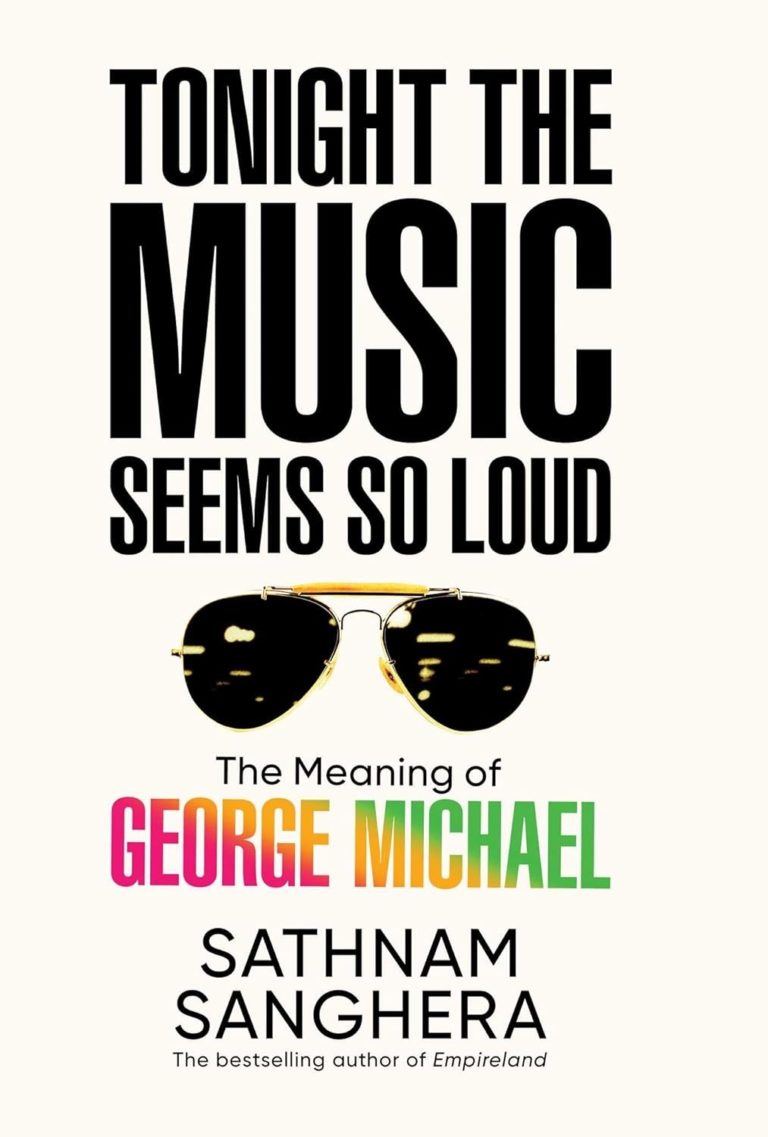
George Michael finally gets the serious cultural reckoning he’s long been denied. Award-winning author Sathnam Sanghera makes the argument in ‘Tonight the Music Seems So Loud: The Meaning of George Michael’, out now via Pegasus Books, a deeply personal study of the pop superstar and a kaleidoscopic window into fame, homophobia, the 80s and 90s, creative genius and addiction.
Sanghera’s thesis is pointed. While shelves groan with earnest books on Bowie, Dylan and Lennon, Michael rarely draws that kind of analysis, more often filed as a celebrity than a cultural figure. The book pushes back, showing how his life and work broke extraordinary boundaries and helped define an era.
The details make the case. A second-generation immigrant and son of a Greek-Cypriot restaurateur, Michael could barely read music and played no instrument formally, yet wrote hit songs in a single afternoon and played nearly everything on recordings that became totemic. He mastered both rock and R&B, and after Freddie Mercury’s death was seriously floated as a replacement frontman for Queen.
The contradictions are the heart of it. A symbol of eighties excess who quietly played benefit gigs and gave in secret, a teen crush kept in the closet by homophobia who became an impassioned campaigner for gay rights, a star adored and ridiculed and praised by tough critics all at once.
The reviews back up the ambition. Kirkus called it a spirited and nuanced portrait of a complex pop icon in a starred review, while Booklist likened Sanghera’s voice to a friend convincing you their favorite band is the best. Publishers Weekly framed it as a worthy reassessment of an influential star.
Sanghera brings real range to the work. A historian, novelist and memoirist whose ‘Empireland’ was a Sunday Times bestseller, he’s been shortlisted twice for the Costa Book Awards and elected a Fellow of the Royal Society of Literature. Across 288 pages, he explains why the love for George Michael has only deepened since his death on Christmas Day 2016.