


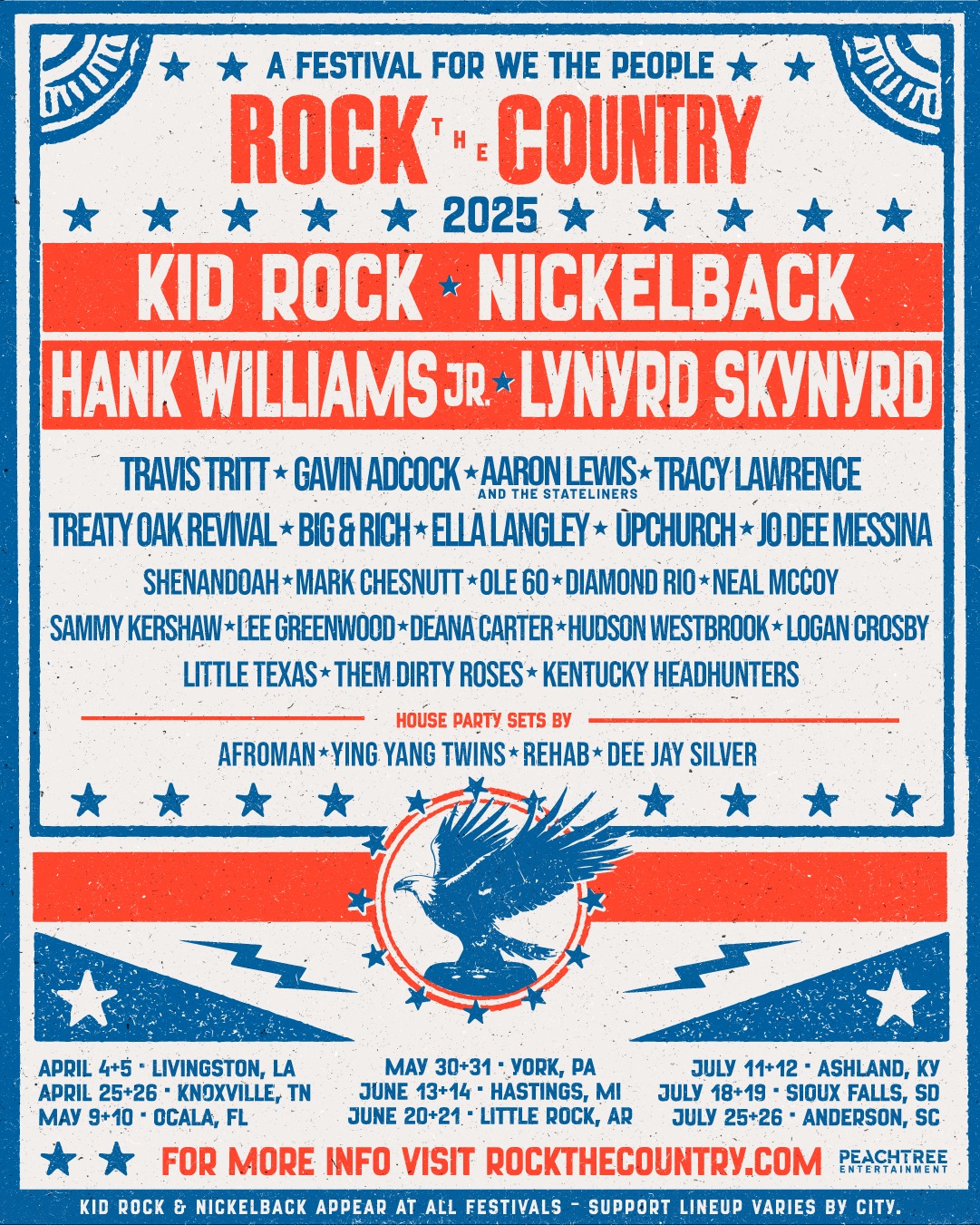
Canadian rock juggernaut Nickelback is hitting the road this summer as part of the Rock the Country tour, a small-town U.S. festival co-headlined by Kid Rock. Billed as a celebration of “hardworking, God-fearing patriots,” the event includes rotating acts like Lynyrd Skynyrd, Hank Williams Jr., and Lee Greenwood—and, perhaps unexpectedly, Alberta’s own Chad Kroeger and crew. The inclusion has raised some eyebrows, especially among Canadian fans who associate Nickelback more with radio hits than red-state rallies.
But before you grab your pitchfork—or your Maple Leaf flag—let’s talk about why Nickelback showing up on this tour isn’t the betrayal some are making it out to be. In fact, it’s perfectly fine. Here’s why:
It’s a Gig, Not a Political Statement
Bands take shows for all kinds of reasons—exposure, pay, access to new audiences—not to endorse everything happening around them. Nickelback’s participation doesn’t mean they’re suddenly aligned with any political figure or message. It means they were booked, they said yes, and they’re going to play their songs. That’s showbiz.
They’re Musicians, Not Policymakers
Nickelback has never claimed to be a political band. They’re not out here giving stump speeches or tweeting about election cycles. They write songs, not policies. Expecting them to serve as political symbols misunderstands what musicians are actually hired to do on a festival stage.
They’re Reaching New Audiences
Rock the Country stops in towns that don’t often host big rock shows. For Nickelback, this is a chance to connect with fans who’ve only ever seen them on YouTube or heard them on FM radio. That’s not political—that’s just smart touring. And in today’s live music economy, you take those chances when you can.
Music Crosses Borders
Sure, they’re Canadian. But last time we checked, the border didn’t block guitar riffs and singalongs. Music has always been about connection—regardless of passport. Nickelback playing an American patriotic tour doesn’t erase their Canadianness. It just proves that good music doesn’t need a visa.
They Didn’t Organize the Tour
Nickelback didn’t write the press release, create the marketing, or book the other artists. They were invited. Treating them like co-architects of the event is a reach. Sometimes a band joins a tour because it’s the right time, the right stage, and the right crowd to rock.
Their Fan Base Is Broad
From pickup trucks to downtown clubs, Nickelback has always drawn from a wide swath of fans. That includes the kind of everyday folks Rock the Country targets. This isn’t them selling out—it’s them showing up for fans who’ve been singing along since Silver Side Up.
They’ve Played All Kinds of Festivals
Over the years, Nickelback has hit Canadian festivals, global stages, and everything in between. Sharing a lineup with Kid Rock in Alabama doesn’t define them any more than sharing one with The Glorious Sons in British Columbia. It’s one show. Part of a tour. One moment in a long career.
They’re Not Headlining a Political Rally
Yes, Kid Rock is openly political. But Nickelback hasn’t said a word about the political backdrop. They’re not playing under a campaign banner or streaming Trump videos before their set. They’re doing what they always do—playing their music for whoever shows up.
No One Owns Patriotism
The tour is branded with Americana and traditional values, but loving your country—any country—doesn’t require you to sign on to a specific ideology. Nickelback playing for American patriots doesn’t make them traitors to Canada. It just makes them musicians who are working.
It’s Part of Their Job
Touring isn’t optional for bands anymore—it’s essential. Festivals like this one pay the bills, support the crew, and keep the momentum going. Turning down gigs based on someone else’s politics would be a fast track to irrelevance. And Nickelback didn’t become one of Canada’s biggest musical exports by turning down the work.
Double Standards Don’t Help Anyone
When Bruce Springsteen headlines a pro-union rally or plays during a Democratic campaign, he’s celebrated as an artist with a voice—someone whose music transcends entertainment. But when a band like Nickelback plays a tour that leans the other way politically, suddenly it’s “just stick to music.” If we truly believe artists are allowed to stand for something—or nothing—we can’t selectively apply that based on whether we agree with the crowd.
So, is it surprising to see Nickelback on this lineup? Maybe. Is it scandalous? Not even close. They’re not waving flags—they’re playing chords. Let them rock.