


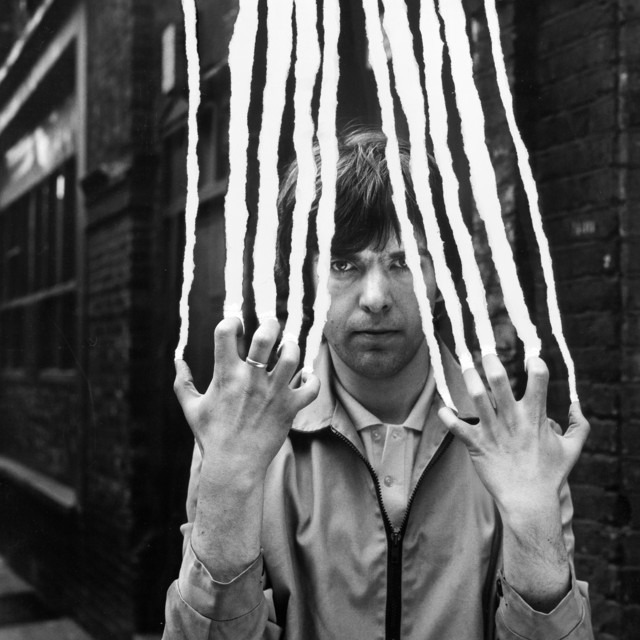
Released on this day, June 2, 1978, Peter Gabriel (often called Scratch) was his second solo album after leaving Genesis—and it was full of bold choices. With Robert Fripp as producer and a willingness to explore both structure and sound, Gabriel turned experimentation into a work of art. Here are five surprising facts about the album that made it stand out—then and now.
1. The Album’s Title Isn’t Really “Scratch”—But Fans Gave It One
Peter Gabriel released his first four solo albums under the same name—Peter Gabriel. To tell them apart, fans gave them nicknames based on their cover art. This one? Scratch, thanks to the striking Hipgnosis-designed artwork that shows Gabriel scraping his own image apart. The effect was done with torn paper, Tipp-Ex (White Out to North Americans), and a lot of clever photography. Gabriel didn’t need a title—he had a visual story.
2. Robert Fripp Didn’t Want Full Credit—So He Got Creative With It
King Crimson’s Robert Fripp produced the album but felt that Gabriel had such a strong creative hand in it, he shouldn’t take full credit. His suggestion? “Produced by Robert Fripp for Peter Gabriel.” It was Fripp’s way of saying, “This isn’t all me—this is Peter’s vision too.” Fripp also introduced techniques like “secret reverb” (if you could hear it, it was too loud) and used Frippertronics on the haunting track “Exposure.
3. “On the Air” Was About a Fantasy Radio Star Named Mozo
Gabriel’s song “On the Air” introduced Mozo, a lonely outsider who builds a new identity on shortwave radio. It was more than a song—it was part of a bigger universe Gabriel had imagined, with fragments of Mozo’s story appearing across future albums. “On the Air” became the sound of someone escaping into static and wires to become something more. Gabriel even explored turning Mozo into a film character.
4. “D.I.Y.” Was Inspired by Punk’s Spirit—but Done Gabriel’s Way
Rather than mimic the Sex Pistols, Gabriel channeled their do-it-yourself energy into something more acoustic and structured. He wrote “D.I.Y.” as a response to the punk wave but kept it uniquely his own, filled with time signature changes and playful musical details. The song even includes a processed voice spelling out “do it yourself.” The message? You have the power to create, and you don’t need permission.
- 5. Creative Tension Sparked the Album’s Raw Sound
Fripp and Gabriel didn’t always agree. They debated arrangements, argued over synths, and even clashed on vocal takes. Gabriel wanted lightness, Fripp wanted rawness. That friction didn’t break the project—it shaped it. Songs like “White Shadow” and “On the Air” show the results of those push-pull moments: intricate, unpredictable, and totally unique. It wasn’t polished—it was alive. - Peter Gabriel may have come from friction and left turns, but it laid the foundation for everything that followed. The experiments with texture, character, and sonic space became part of Gabriel’s creative DNA. That willingness to explore—musically and emotionally—would eventually lead to the refined, global, and groundbreaking sound of So in 1986. Every scratch, glitch, and whispered lyric on this album was a step toward something even bigger. Massively bigger.