


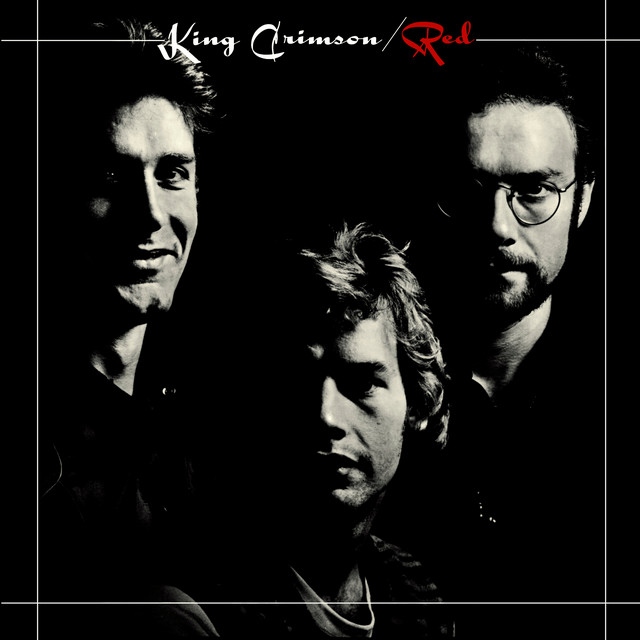
King Crimson’s Red, released in October 1974, wasn’t just the band’s seventh album—it was their final roar before imploding. Three musicians. Five guest players. A whole lot of tape hiss, fuzz, and fury. Critics didn’t quite get it at the time. But fans? They heard the future. The album became a blueprint for everything from math rock to metal, all while refusing to compromise an inch. Here are five wild facts about Red that go deeper than the distortion.
1. “Red” Was Born From a Missing Song Called “Blue”
Robert Fripp originally planned to make a companion piece to an unreleased song titled “Blue.” Instead, “Red” took on a life of its own. Constructed with razor-sharp riffs and rhythmic bricks courtesy of Wetton and Bruford, it’s one of the most menacing instrumentals in progressive rock. The band didn’t even know if it worked—Bruford shrugged and said, “I don’t get it.” Wetton’s response? “We’ll use it.” Its unresolved tension was so potent, Fripp later revisited elements for THRAK’s “VROOOM VROOOM” over 20 years later.
2. “Starless” Was Rejected… Then Resurrected as a Masterpiece
John Wetton originally pitched “Starless” for the Starless and Bible Black album, but it got a lukewarm reception. The early version was just the vocal section. Fripp added a haunting intro, Bruford contributed a hypnotic groove, and the song mutated into a 12-minute journey from melancholy to eruption. Its mathy 13/8 middle section is a masterclass in musical suspense. The finale? Saxophone, overdriven guitars, and emotional overload. Wetton later sneaked unused lyrics into a U.K. song. Some songs die. Starless evolved.
3. “Providence” Was a Live Jam With a Fired Bandmate
David Cross didn’t know he’d been fired until the day before recording began. But he still appears—on a track recorded live in Providence, Rhode Island. “Providence” is a cut of raw improvisation: eerie violin, free-jazz drums, and ambient chaos. The studio version was heavily edited, but later releases revealed the full jam. It’s not just a moody interlude—it’s a sonic ghost, the final trace of a member who was gone before the ink dried on the studio logbook.
4. “Fallen Angel” Is Built From a Lost Ballad and a Gang Story
Parts of “Fallen Angel” trace back to a live improvisation from 1972 and a Wetton ballad called “Woman.” But lyrically, it’s one of the most emotional tracks Crimson ever cut—a heartbreaking tale of a younger brother stabbed on the streets of New York. Fripp’s acoustic arpeggios mix with Mark Charig’s cornet and Robin Miller’s oboe, lending it both intimacy and sorrow. For decades, the band never played it live—until a triumphant performance in 2017. A song ahead of its time finally got its due.
5. The Album Cover Was a Composite—Because the Band Couldn’t Be in the Same Room
The stark black-and-white cover? It looks like a moody band portrait, but the truth is weirder. Fripp hated the photo session. Wetton, Bruford, and Fripp were each photographed separately because of rising tensions—and then stitched together into one image. The back cover was supposed to feature blown-out mixing board meters, symbolizing the music’s intensity. But the label wanted something more “marketable.” The result is strangely perfect: three disconnected figures staring into the void, unknowingly capturing a band on the brink of collapse.
Red wasn’t meant to be a swan song, but it became one. Fripp dissolved King Crimson weeks before the album hit shelves, and it took seven years to return. Heavy, haunting, and decades ahead of its time, Red remains a jagged monument to what happens when three visionaries push themselves—and each other—to the edge.