


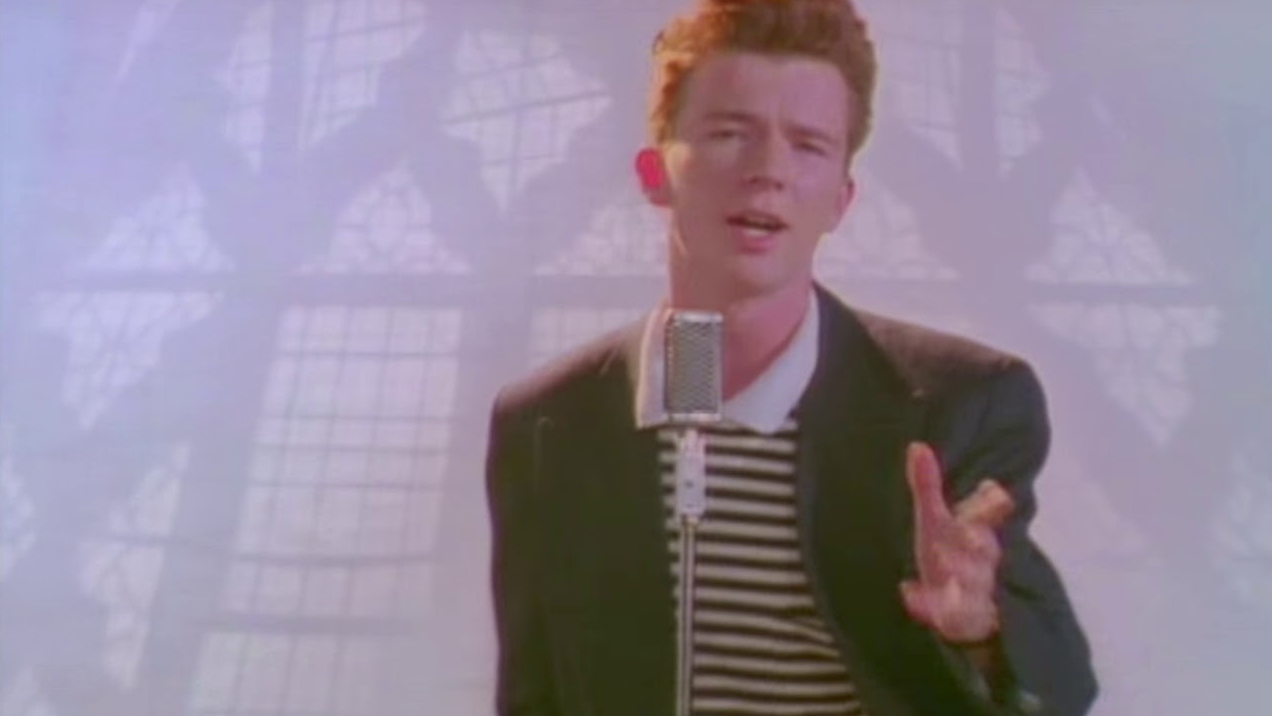
On July 27, 1987, the world first heard a promise it would never forget: Never Gonna Give You Up. Released by RCA Records as the lead single from Rick Astley’s debut album Whenever You Need Somebody, the song introduced a fresh-faced English singer with a rich baritone, courtesy of the powerhouse production trio Stock Aitken Waterman. Few could have predicted just how enduring this cheerful pop anthem would become—nor how it would eventually shape the digital culture of the 21st century.
Crafted at PWL Studios in South London, the song was built on the foundation of tight 1980s synth-pop: Yamaha DX7 basslines, Linn 9000 drum sequencing, and Fairlight-sculpted strings. Mike Stock credits Colonel Abrams’ “Trapped” as a rhythmic influence, while Pete Waterman suggested the title based on Astley’s real-life devotion to his girlfriend. The trio sculpted the song specifically to showcase Astley’s surprisingly mature vocals, creating a track that sounded both familiar and fresh.
Upon release, “Never Gonna Give You Up” raced to the top of the U.K. Singles Chart, staying there for five weeks and ending 1987 as the nation’s best-selling single. It didn’t stop there. The song topped charts in 25 countries, including the U.S., Canada, Australia, and West Germany. Its success marked Stock Aitken Waterman’s most triumphant global moment and positioned Astley as one of the breakout stars of the late ’80s. He would go on to sell over 40 million records worldwide.
The music video, directed by future Con Air filmmaker Simon West, was filmed in and around London’s Harrow Club. With Astley’s clean-cut look, confident dance moves, and that bright blue background, it was a quintessential slice of 1980s pop culture. Today, it stands as one of the most recognizable videos on the internet—with over 1.6 billion views on YouTube.
But it was in 2007, two decades after the single’s release, that “Never Gonna Give You Up” became something else entirely. An anonymous user on 4chan created a bait-and-switch prank: users expecting a trailer for the game Grand Theft Auto IV were instead redirected to Astley’s video. Thus, rickrolling was born. It quickly spread as a playful internet meme, reaching its cultural apex in 2008 when YouTube rickrolled every featured video for April Fools’ Day.
Astley took the meme’s revival in stride. “That’s what’s brilliant about the internet,” he told the Los Angeles Times in 2008. Far from resenting the joke, he embraced it—most memorably by crashing the Macy’s Thanksgiving Day Parade that same year to lip-sync the song live. The internet’s prank had become a nostalgic celebration, introducing the track to an entirely new generation.
In the years since, “Never Gonna Give You Up” has only grown in stature. Billboard ranked it among the 500 best pop songs of all time in 2023. It appeared in films, commercials, viral campaigns, and even on Ted Lasso, where a funeral sing-along left audiences both laughing and crying. Rick Astley continues to perform it—often closing his shows with the track that never leaves us.
“Never Gonna Give You Up” is more than a catchy chorus and a retro video. It’s a pop milestone, a meme, and a reminder that sometimes, the most lasting musical promises come wrapped in synths and sincerity. On this day in 1987, Rick Astley gave us his word—and decades later, he’s still keeping it.