


A great guitar riff carries more than melody. It sets tone, defines identity, and often becomes the heartbeat of a song. Some riffs spark movements. Others turn young listeners into lifelong players. All of them make a mark that keeps echoing through music history.
Here are 20 guitar riffs that changed everything—from tone to technique to culture.
Chuck Berry – “Johnny B. Goode” (1958)
A rock and roll blueprint. Berry’s riff brought lightning to the fretboard and paved the way for electric guitar as a lead instrument.
The Rolling Stones – “(I Can’t Get No) Satisfaction” (1965)
Keith Richards plugged a fuzz pedal into the mainstream with this hypnotic, swaggering hook. The riff says everything before the lyrics begin.
The Kinks – “You Really Got Me” (1964)
Raw, distorted, and razor-sharp. Dave Davies’ power-chord riff opened the floodgates for hard rock and punk.
Jimi Hendrix – “Purple Haze” (1967)
With blazing tone and a tritone intro, Hendrix introduced a psychedelic vocabulary that still expands minds and possibilities.
Cream – “Sunshine of Your Love” (1967)
Eric Clapton’s fat, descending riff blends blues and power, delivering a groove that locks in deep.
Led Zeppelin – “Whole Lotta Love” (1969)
Jimmy Page’s riff roars with primal force. It helped define the riff as a central force in hard rock storytelling.
Black Sabbath – “Iron Man” (1970)
Tony Iommi’s menacing riff slowed things down and added weight, creating a foundation for what would become heavy metal.
Deep Purple – “Smoke on the Water” (1972)
Built on four notes and pure attitude. Ritchie Blackmore delivered a riff every beginner plays and every arena still loves.
David Bowie – “Rebel Rebel” (1974)
A glam rock anthem driven by a slinky, strutting riff. One of Bowie’s most guitar-forward tracks, it became a rite of passage for rock fans.
AC/DC – “Back in Black” (1980)
Angus Young carved a riff so crisp and confident, it became one of the most iconic openers in hard rock history.
Michael Jackson – “Beat It” (1982)
Eddie Van Halen’s solo is legendary, but Steve Lukather’s opening riff sets the fire. A pop song with a rock heart and serious edge.
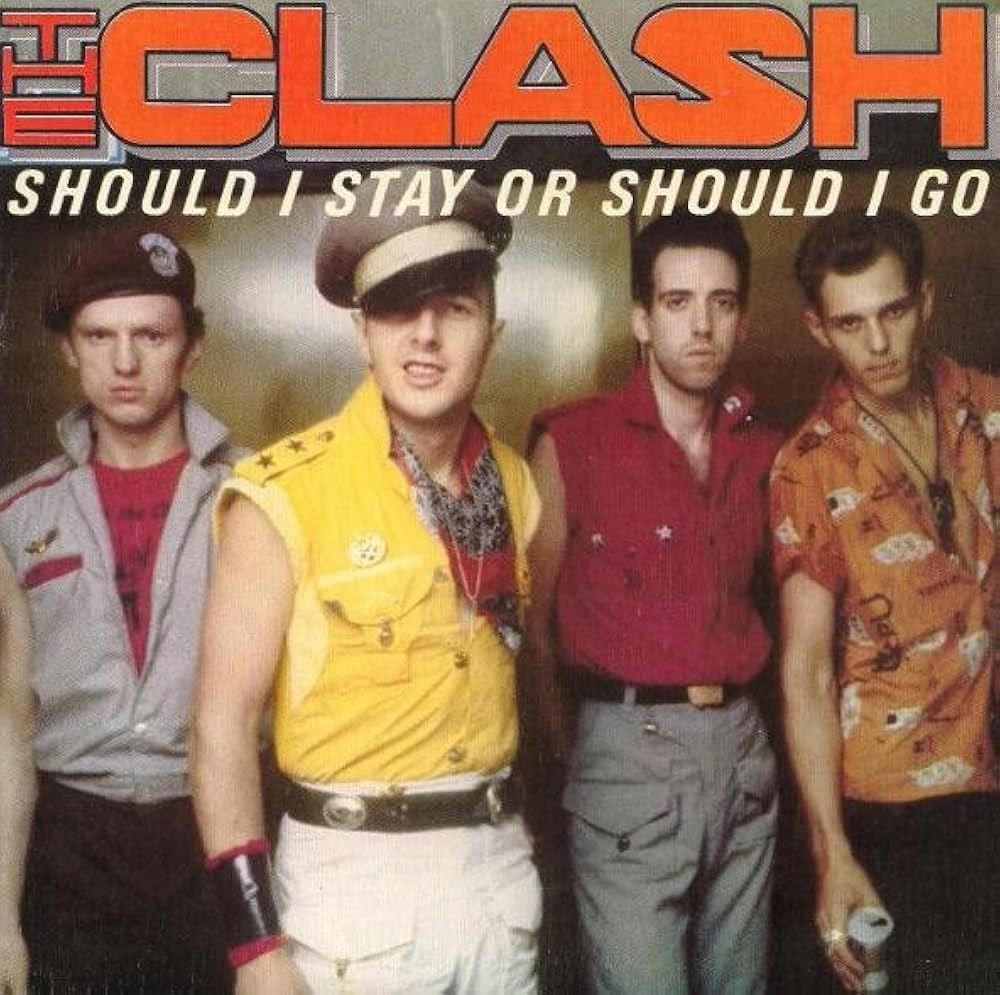
The Clash – “Should I Stay or Should I Go” (1982)
Simple and punchy. Mick Jones created a call-and-response riff that keeps energy high and crowds moving.
Guns N’ Roses – “Sweet Child O’ Mine” (1987)
Slash’s opening riff began as a warmup and became one of the most beloved intros in rock. Bright, melodic, unforgettable.
Metallica – “Enter Sandman” (1991)
James Hetfield’s tight, chugging riff set the tone for a new era of metal—arena-sized and instantly gripping.
Nirvana – “Smells Like Teen Spirit” (1991)
Kurt Cobain’s riff cracked the mainstream open for grunge. Fuzzy, loose, and explosive—it turned disaffection into a roar.
Rage Against the Machine – “Killing in the Name” (1992)
Tom Morello’s riff flips funk and metal into protest. Built on power and precision, it still energizes movements and mosh pits.
Radiohead – “Just” (1995)
Johnny Greenwood’s jagged riff twists, turns, and erupts with restless tension. A reminder that complexity can still rock hard.
The White Stripes – “Seven Nation Army” (2003)
Jack White wrote a riff that’s now chanted in stadiums, protests, and clubs around the world. Minimalist. Monumental.
Arctic Monkeys – “I Bet You Look Good on the Dancefloor” (2005)
Alex Turner’s scrappy, high-speed riff helped launch a new wave of British guitar bands with energy and wit.
Tame Impala – “Elephant” (2012)
Kevin Parker fused fuzz and groove into a hypnotic stomp. A psych-rock standout that roars across generations.
These riffs continue to inspire players and producers alike. They aren’t just parts of songs—they’re part of the musical DNA that shapes how guitars are played, loved, and remembered.