


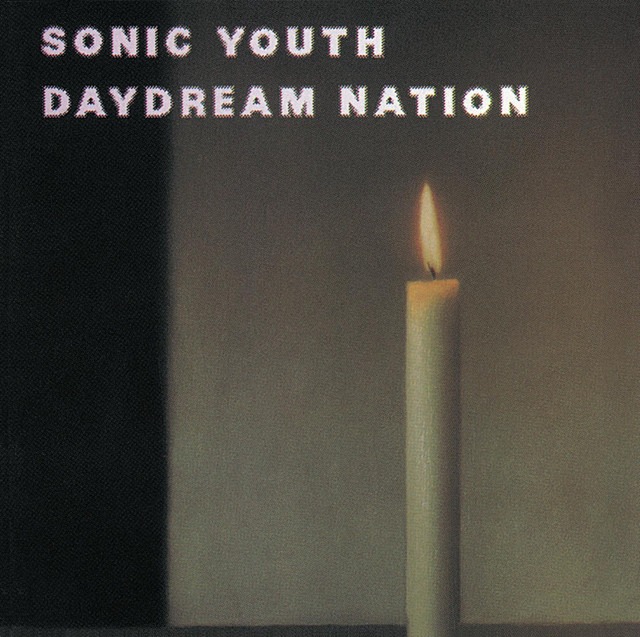
Released in October 1988, Daydream Nation stands as a turning point in Sonic Youth’s catalog and in alternative rock at large. With its open-ended song structures, noise-driven improvisations, and experimental tunings, the double album captured a raw yet composed intensity that connected the downtown New York art scene with a new generation of indie rock fans. While it’s widely celebrated for its influence and ambition, the album’s creation also involved a series of overlooked details and oddv choices that give it its enduring mystique.
Here are five surprising facts about Daydream Nation that even longtime fans may not know.
1. The album’s mixing deadline forced an all-nighter to finish the “Trilogy.”
Although most of the recording was efficiently handled, time ran short as the band approached their August mastering date. With pressure mounting, Sonic Youth spent an entire night finalizing the mix for the ambitious three-song suite known as the “Trilogy” (“The Wonder,” “Hyperstation,” “Eliminator Jr.”). Kim Gordon later noted that some of her vocals were rushed, and she remained unsatisfied with a few takes—an unusual admission for a project often viewed as meticulously executed.
2. The producer was a hip-hop engineer who had never worked with a rock band.
Nick Sansano had previously engineered Public Enemy’s “Black Steel in the Hour of Chaos” and Rob Base and DJ E-Z Rock’s “It Takes Two,” but Daydream Nation was his first time working with a guitar-based band. His background in layered, sample-heavy production influenced the album’s drum sound and dense mix. Sonic Youth embraced his unfamiliarity with rock conventions, and that outsider approach helped shape the album’s unusual sonic character.
3. “Providence” was built from a home-recorded piano and voicemail messages.
The haunting interlude “Providence” is constructed from a lo-fi Walkman recording of Thurston Moore playing piano at his mother’s house, layered with voicemails left by Mike Watt from a payphone in Providence, Rhode Island. The static-laced amp noise included in the track came from an overheating Peavey Roadmaster. Rather than treating it as filler, the band used this collage as a purposeful pause—highlighting their interest in non-linear, ambient storytelling.
4. The guitar tunings were more complex than most fans realize.
Sonic Youth’s alternate tunings on Daydream Nation weren’t just experimental—they were borderline mathematical. For example, “Teen Age Riot” used a rare pentatonic GABDEG tuning for Moore’s part and a GGDDGG setup for Ranaldo. These tunings were created not for novelty, but to access chord voicings and dissonant intervals that standard tuning simply couldn’t provide, giving the songs their signature harmonic tension.
5. The band originally considered titling the album Tonight’s the Day.
“Daydream Nation” is a lyric pulled from the song “Hyperstation,” but another working title was Tonight’s the Day—a nod to Neil Young’s Tonight’s the Night. The phrase also appears in “Candle,” one of the album’s more melodic tracks. Ultimately, Daydream Nation better captured the album’s scale, ambition, and its merging of dreamlike abstraction with political unease.
Daydream Nation endures not just because of what it sounded like in 1988, but because of how thoroughly it captured the tension, ambition, and experimentation of its moment. These lesser-known details reveal a band operating on instinct and intent, weaving punk, poetry, noise, and structure into something expansive and alive. Even today, its influence echoes—still jarring, still open, still on fire.