


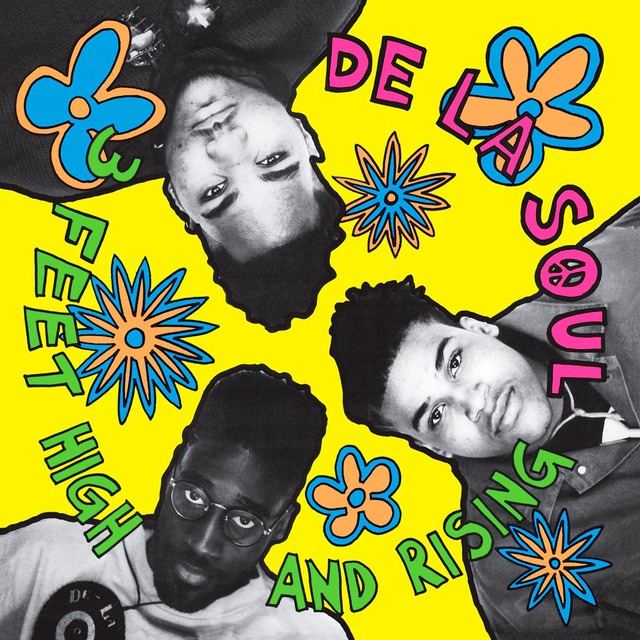
Released on February 6, 1989, 3 Feet High and Rising marked the arrival of De La Soul as one of hip-hop’s most inventive voices. Produced in collaboration with Prince Paul, it blended playful lyricism, genre-bending sampling, and a fresh visual identity to stand apart from the dominant gangsta rap of the era. The result was a critical and commercial breakthrough that still ranks among the most influential albums in rap history.
Here are five fascinating facts about this trailblazing debut.
1. A Positive Alternative to Late-’80s Gangsta Rap
At a time when gangsta rap’s hardcore themes dominated, 3 Feet High and Rising embraced surreal humor, unexpected topics like gardening and dandruff, and “Dr. Dolittle-esque” animal interactions. The group lampooned materialism in hip-hop while promoting their own “D.A.I.S.Y. Age” ethos—short for “Da Inner Sound, Y’all.” This sunnier, playful approach led critics to label them “hippies,” a tag they rejected but one that highlighted their unique space in the genre.
2. A Sample Palette That Redefined Hip-Hop’s Sound
The album’s production reached beyond the typical funk and soul crates of the era, incorporating doo-wop, psychedelic rock, and even children’s music. Using a Casio RZ-1 drum machine and an Eventide harmonizer, De La Soul and Prince Paul layered unconventional song structures with an intricate patchwork of sounds. The approach helped earn the album the reputation as “the first psychedelic hip-hop record.”
3. The Birth of the Hip-Hop Skit
3 Feet High and Rising is frequently credited with inventing or popularizing the hip-hop skit through its quiz show-themed interludes. These playful breaks threaded the album together, creating a narrative style that influenced countless rap albums in the decades to follow. At the time, the skits were as distinctive as the music itself, reinforcing the group’s offbeat identity.
4. An Album Cover That Broke Hip-Hop Visual Codes
Designed by Toby Mott of the Grey Organisation, the cover placed the group’s heads in a triangle surrounded by fluorescent, hand-drawn flowers. The design was a deliberate move away from macho hip-hop aesthetics, matching the D.A.I.S.Y. Age concept. Interestingly, De La Soul initially wanted an entirely different cover—an elevator halfway up with only their faces—but embraced the flower-adorned concept after seeing the final result.
5. “Eye Know” Became a Cult Classic Without a U.S. Single Release
The upbeat love song “Eye Know,” built from samples of Otis Redding, Steely Dan, The Mad Lads, Lee Dorsey, and Sly & the Family Stone, reached #14 in the UK but was never released as a single in the U.S. From 2004 to 2008, it was used as background music on the BBC’s Match of the Day 2. Its B-side, “The Mack Daddy on the Left,” featured a 12-year-old guest rapper—David Jolicoeur’s cousin Jeff—who later appeared on the group’s AOI: Bionix.
From its psychedelic sampling and anti-materialist lyrics to its groundbreaking skits and bold visual style, 3 Feet High and Rising remains a singular achievement in hip-hop history. Certified platinum and preserved in the U.S. National Recording Registry, its influence still ripples through rap culture. More than three decades later, De La Soul’s debut stands as a reminder that innovation, humor, and individuality can change the game.