


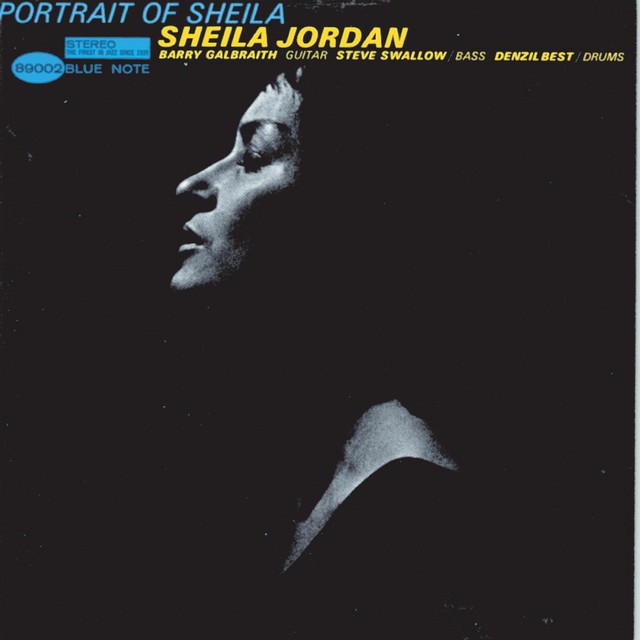
Sheila Jeannette Jordan (née Dawson, November 18, 1928 – August 11, 2025) lived nearly a century as one of jazz’s most fearless voices. Known for her pioneering use of bebop phrasing, improvisation, and her bold choice to pair her voice almost exclusively with an upright bass, she carved out a lane that no one else could occupy. With her passing at age 96, we remember her through 50 surprising and illuminating facts that define her artistry, her resilience, and her extraordinary contribution to the music.
- Sheila Jordan was born in Detroit in 1928, the same day Mickey Mouse first appeared on screen.
- Her father left soon after she was born, and she was raised by her grandparents in Pennsylvania.
- Her childhood home had no running water and relied on an outhouse.
- Winters meant huddling under blankets without sheets or pillowcases.
- Despite the poverty, music gave her hope and direction.
- She began singing in Detroit clubs as a teenager.
- Charlie Parker became her greatest influence.
- Parker introduced her to audiences as “the lady with the million dollar ears.”
- She formed the vocal trio Skeeter, Mitch & Jean, who wrote lyrics to Parker’s solos.
- The trio often sang with Parker in Detroit.
- Sheila moved to New York in 1951 to pursue jazz full-time.
- She studied harmony and improvisation with Lennie Tristano.
- She also studied with Charles Mingus.
- In 1952, she married Parker’s pianist Duke Jordan.
- She often joked she was “chasin’ the Bird” by moving to New York.
- In 1962, she recorded a landmark version of “You Are My Sunshine” with George Russell.
- That same year she released Portrait of Sheila on Blue Note.
- It was the first vocal album ever issued by Blue Note Records.
- Her pairing of voice and bass was seen as radical.
- She began a lifelong collaboration with pianist Steve Kuhn.
- Her marriage to Duke Jordan ended due to his heroin addiction.
- She raised her daughter, Tracey, largely alone.
- To support herself, Sheila worked as a typist and legal secretary for 20 years.
- She stepped away from clubs and sang in churches during the 1960s.
- She didn’t return to full-time music until she was nearly 60.
- In the 1970s she recorded with Don Heckman, Lee Konitz, and Roswell Rudd.
- She became Artist-in-Residence at City College of New York in 1974.
- She taught at CCNY from 1978 until 2005.
- In 1976 she released Sheila with bassist Arild Andersen.
- In 1979 she founded a quartet with Steve Kuhn, Harvie S, and Bob Moses.
- She recorded multiple bass-and-voice albums with Harvie S during the 1980s.
- She balanced advertising work until 1987 while still performing.
- In 1989 she released Lost and Found, returning to her bebop roots.
- She collaborated with the George Gruntz Concert Jazz Band.
- She also recorded with Carla Bley and Steve Swallow.
- She became a master teacher at the Vermont Jazz Center and Interplay Jazz and Arts.
- She gave international jazz workshops across Europe and beyond.
- Sheila received the MAC Lifetime Achievement Award in 2006.
- In 2012 she was named an NEA Jazz Master.
- She was deeply influenced by poets and set Robert Creeley’s poetry to music.
- She often sang jazz liturgies in churches during the 1960s.
- She was among the few singers who preferred duets with bass rather than full bands.
- Her 1983 album Old Time Feeling with Harvie Swartz highlighted standards she loved.
- She was admired for sweeping, unpredictable pitch changes in her live performances.
- She published her biography Jazz Child: A Portrait of Sheila Jordan in 2014.
- She openly discussed her struggles with addiction in the book.
- She performed worldwide into her 90s, especially with bassist Cameron Brown.
- Together they released I’ve Grown Accustomed to the Bass and Celebration.
- Critics praised her ballads as emotionally transcendent and incomparable.
- The New York Times once wrote that “Her ballad performances are simply beyond the emotional and expressive capabilities of most other vocalists.”
Sheila Jordan’s story is one of resilience, creativity, and uncompromising artistry. From the coal towns of Pennsylvania to the world’s most celebrated jazz stages, she created a body of work that defied categories and inspired generations. With her passing in 2025, jazz has lost not only a master but a pioneer whose voice will continue to echo wherever musicians prize honesty, daring, and heart.