


The concept album remains one of music’s boldest experiments—an artist’s chance to turn a record into a world. By threading songs together with narrative ambition, sonic detail, and thematic unity, musicians elevate albums into immersive experiences that extend far beyond their tracklists. Artists gravitate to this form because it allows them to fuse storytelling with sound, transforming a collection of songs into a single canvas where every note, lyric, and transition carries purpose. Concept albums ask listeners not just to hear, but to inhabit.
ected by tone and arrangement, creating a dreamlike diary of innocence, doubt, and desire.
Beyoncé – Lemonade
Lemonade unfolds like a visual and sonic journey through heartbreak, healing, and reclamation. Beyoncé curates genres from country to trap into a cohesive arc of resilience, binding them with deeply personal lyrics and cinematic production that render the record an intimate epic.
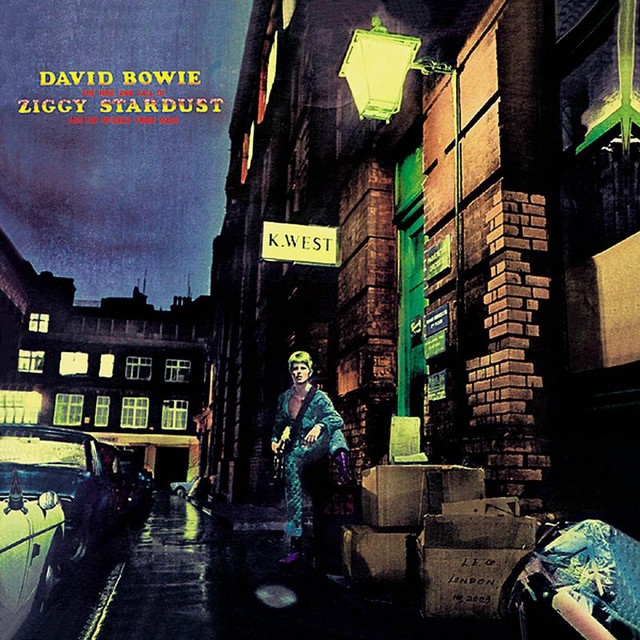
David Bowie – The Rise and Fall of Ziggy Stardust and the Spiders from Mars
Bowie introduces Ziggy as a persona and constructs an album where glam theatrics and cosmic anxiety collide. The record functions as a serialized narrative, with each song serving as a chapter in the saga of an alien rock star whose brilliance burns out as quickly as it shines.
Green Day – American Idiot
Green Day reimagines punk urgency as theater, using American Idiot to narrate a suburban antihero’s disillusionment in a fractured America. The record’s explosive riffs and tightly sequenced suites create a coherent, character-driven drama that feels both intimate and politically universal.
Janelle Monáe – The ArchAndroid
Monáe designs The ArchAndroid as a sprawling Afrofuturist film without visuals, channeling sci-fi myth and radical politics into genre-blurring compositions. From orchestral overtures to funk odysseys, the album sustains its conceptual throughline while celebrating innovation as a form of liberation.
Kendrick Lamar – good kid, m.A.A.d city
Kendrick Lamar crafts a coming-of-age memoir that plays like a film, with skits, recurring motifs, and narrative arcs binding the tracks together. Each song feels like a scene in his Compton story, where personal detail and universal themes intertwine into a fully realized narrative record.
Liz Phair – Exile in Guyville
Phair structures Exile in Guyville as a song-for-song response to the Rolling Stones’ Exile on Main St., turning the framework into a fiercely personal statement. The album achieves cohesion through its raw intimacy, sharp lyricism, and conceptual ambition, transforming critique into a fully realized world of its own.
Marvin Gaye – What’s Going On
What’s Going On channels political urgency into a continuous suite, with tracks bleeding into each other as though part of one long prayer. Gaye layers lush arrangements with social commentary, creating an album that feels like a singular statement on humanity, empathy, and hope.
Pink Floyd – The Dark Side of the Moon
This record operates like a philosophical cycle, where each track flows seamlessly into the next, exploring time, mortality, greed, and madness. Its sound design and lyrical motifs create a closed system of thought, transforming the album into a sonic meditation on the human condition.
Radiohead – Kid A
Radiohead dissolve traditional rock structures into glitch, electronic textures, and spectral melodies, yet the record remains tightly bound by atmosphere. Kid A unfolds as a dystopian soundscape where disorientation itself becomes the unifying concept, pulling the listener into its haunted cohesion.
The Who – Tommy
Pete Townshend transforms rock into opera, sculpting Tommy as a narrative of trauma, transcendence, and messianic spectacle. Musical themes reappear and evolve across the album, ensuring that the story of the “deaf, dumb, and blind kid” carries coherence both lyrically and musically.