


By 1979, Led Zeppelin were both battered and brilliant. Out of exile, grief, and excess came In Through the Out Door — an album recorded in Stockholm that blended samba rhythms, synth experiments, and smoky barroom blues into a strangely forward-looking final chapter.
1. The ABBA Connection
The album was recorded at ABBA’s Polar Studios in Stockholm, a space more associated with shimmering pop than heavy rock. Zeppelin turned it into their own laboratory, with John Paul Jones’ Yamaha GX-1 synthesizer coloring tracks like “Carouselambra” in ways that felt futuristic.
2. Six Hidden Covers
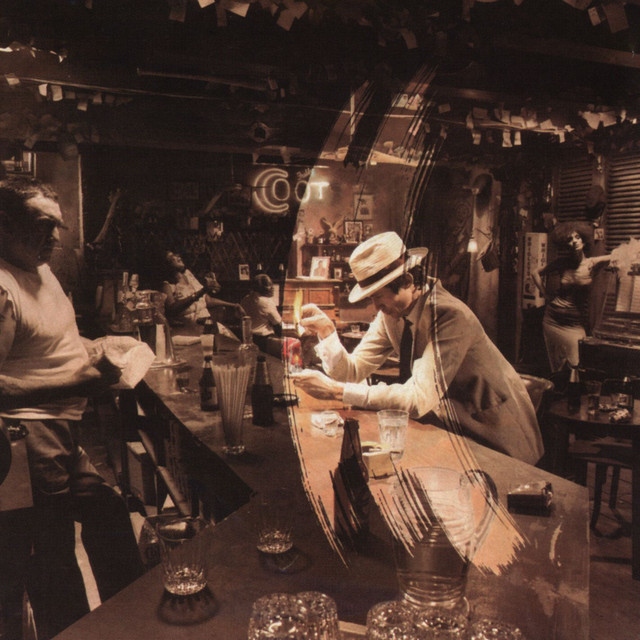
The sleeve design was a trickster’s delight. Each copy came wrapped in a plain brown paper bag, hiding one of six alternate bar-room photo covers. Fans had no idea which version they owned until peeling the wrapping, turning every purchase into a lucky dip for collectors.
3. Samba Meets Shuffle
“Fool in the Rain” drew inspiration from the samba rhythms Plant had absorbed during the 1978 World Cup broadcasts. The result — Bonham’s Purdie shuffle colliding with carnival swing — was one of the band’s most surprising rhythmic left turns, and their last US hit single.
4. A Song for Karac
“All My Love” was Robert Plant’s tribute to his late son Karac. Co-written with Jones, the song’s tender heart is marked by a classically-styled synth solo. For a band known for thunder, this ballad stood as one of their most openly vulnerable moments.
5. A Puzzle of Perspectives
The Hipgnosis artwork told its own story: a man burning a Dear John letter in a New Orleans-styled bar, observed by six others. Each of the six covers offered a different perspective of the same scene — a clever nod to fractured viewpoints within the band itself.
In Through the Out Door stands as both a swan song and a bold experiment, filled with synths, samba grooves, and one last blast of Zeppelin grandeur. Wrapped in brown paper mystery and recorded far from home, it captured a band still chasing new sounds on the edge of their story.