


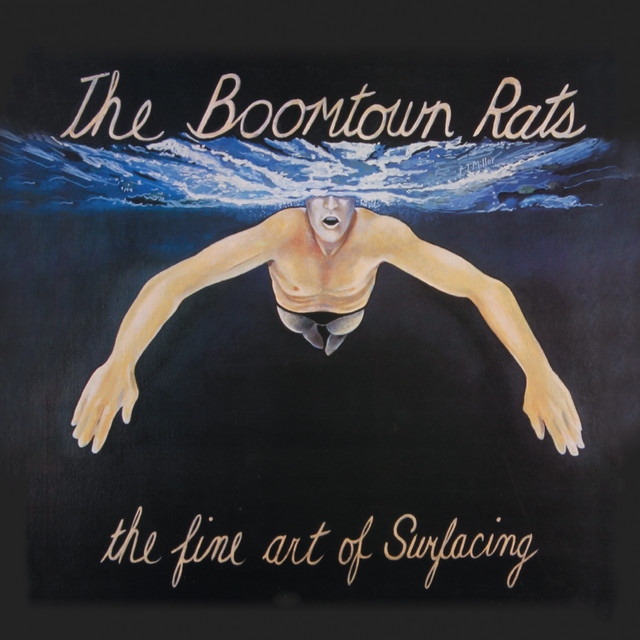
By 1979, the Boomtown Rats had already scored a #1 with “Rat Trap.” But The Fine Art of Surfacing turned them into household names, anchored by “I Don’t Like Mondays” and their sharp-eyed take on American culture. The record swings between satire, darkness, and playful absurdity, and its backstory is full of surprising turns.
1. A Telex Sparked “I Don’t Like Mondays”
Bob Geldof first saw the news of Brenda Ann Spencer’s school shooting on a telex machine during a radio interview in Atlanta. Her chilling line—“I don’t like Mondays”—hit Geldof instantly. By the time he got back to his hotel, he had already written the song’s unforgettable opening line.
2. Apple Inspired the Lyrics
The opening line about a “silicon chip” was a wink to Geldof’s connection with Apple. Steve Jobs had previously asked the Rats to perform for the company, and the lyric slipped technology into a song about senseless violence, making it one of the eeriest pop crossovers of the era.
3. A Greenpeace Rally Found Its Way In
“Someone’s Looking at You” paints a picture of surveillance culture, but its roots were personal. Geldof referenced his appearance at a Greenpeace anti-whaling rally in London’s Trafalgar Square. A line about “saving some fish” became a sly nod to activism hidden inside a chart hit.
4. The Top of the Pops Strike Hurt “Diamond Smiles”
When the band released “Diamond Smiles,” a song about a debutante’s tragic suicide, it climbed the charts but stalled at #13. The Rats later suggested the single might have gone higher if not for a strike by TV lighting technicians that limited Top of the Pops exposure.
5. Geldof Once Planned “Mondays” as a B-Side
“I Don’t Like Mondays” was nearly buried. Geldof thought of it as a throwaway flip until the band’s U.S. tour proved audiences reacted strongly. It became their biggest international hit, winning Ivor Novello Awards for both Best Pop Song and Outstanding British Lyric.
The Fine Art of Surfacing was restless, theatrical, and unafraid to veer from gallows humor to political unease. It captured the Boomtown Rats at their sharpest, combining wit, tragedy, and hooks that still echo decades later.