


Music history isn’t a straight line—it’s a series of ruptures, reinventions, and revelations. Certain records didn’t just capture their moment; they redefined what was possible in sound, culture, and technology. These are 12 albums, arranged chronologically, that altered the landscape forever.
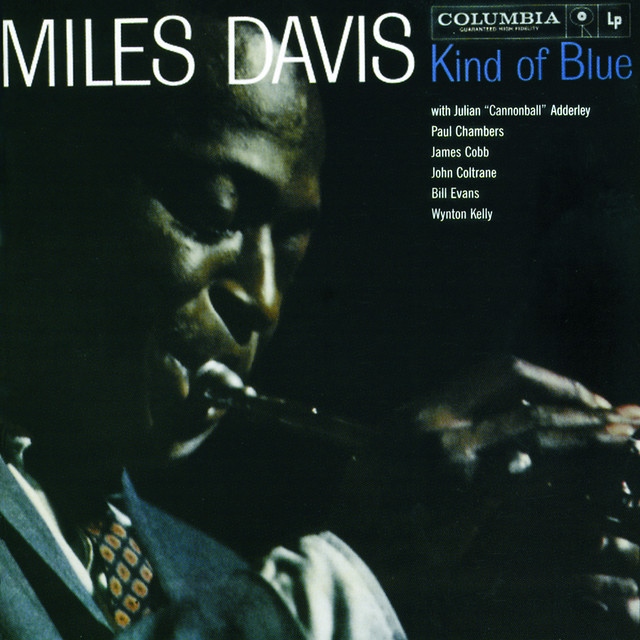
Miles Davis – ‘Kind of Blue’ (1959)
Modal jazz crystallized in these five tracks, shifting the genre from virtuosic complexity to spacious improvisation. Davis’ ensemble—including John Coltrane and Bill Evans—found transcendence in restraint, opening endless pathways for improvisers across genres. It remains a blueprint for freedom.
The Beatles – ‘Sgt. Pepper’s Lonely Hearts Club Band’ (1967)
A technicolor dream that transformed the album into an art form. Studio wizardry, conceptual ambition, and cultural omnipresence collided here, establishing rock’s potential for experimentation while still commanding mass attention. Psychedelia’s crown jewel became a cultural touchstone.
Marvin Gaye – ‘What’s Going On’ (1971)
Gaye blurred soul, gospel, and jazz into a seamless suite of social consciousness. Rejecting Motown’s pop formulas, he delivered a protest album of rare intimacy and scale—an urgent meditation on war, inequality, and ecological despair that reshaped soul’s possibilities.
Pink Floyd – ‘The Dark Side of the Moon’ (1973)
An immersive sonic architecture built on tape loops, conceptual unity, and existential dread. It proved that progressive rock could be both deeply experimental and commercially dominant, becoming one of the best-selling and most technically ambitious albums of all time.
Ramones – ‘Ramones’ (1976)
Four leather-jacketed New Yorkers obliterated excess with a barrage of two-minute songs. The Ramones rewrote rock language—stripped down, fast, and sneering—igniting punk’s global firestorm. What once sounded primitive now feels like a foundation.
Michael Jackson – ‘Thriller’ (1982)
The best-selling album in history wasn’t just a blockbuster; it was a cultural detonation. With Quincy Jones’ cinematic production and Jackson’s unmatched vocal precision, Thriller bridged pop, R&B, and rock, while the music video era redefined how albums lived in the public imagination.
Prince – ‘Purple Rain’ (1984)
Prince fused funk, rock, pop, and sexuality into a singular vision of liberation. The album’s theatrical sweep and guitar heroics expanded pop’s vocabulary, while its crossover success cemented him as one of music’s most fearless innovators. A genre unto himself.
Public Enemy – ‘It Takes a Nation of Millions to Hold Us Back’ (1988)
A political grenade disguised as hip-hop, its dense production layers and Chuck D’s baritone sermons reimagined rap as insurgent art. The Bomb Squad’s sonic collages mirrored urban chaos, while the lyrics demanded revolution. Hip-hop would never sound safe again.
Nirvana – ‘Nevermind’ (1991)
With one distorted riff, the underground stormed the mainstream. Nevermind demolished the hair-metal edifice and made alternative rock a global lingua franca. Kurt Cobain’s wounded melodies and Dave Grohl’s punishing drums turned grunge into both a movement and a marketplace.
Lauryn Hill – ‘The Miseducation of Lauryn Hill’ (1998)
Hill redefined hip-hop and R&B through intimacy, vulnerability, and poetic dexterity. Her only solo studio album blended rap, soul, and reggae with unmatched grace, centering a Black woman’s voice in ways that still reverberate. It set a standard for authenticity.
Radiohead – ‘Kid A’ (2000)
OK Computer was the classic, but with a rejection of rock stardom’s trappings, Kid A replaced guitars with glitch, jazz, and digital haze. Its anxious soundscapes mirrored millennial uncertainty, pushing mainstream audiences toward the avant-garde. What seemed alien at release became the language of modern rock.
Beyoncé – ‘Lemonade’ (2016)
A multimedia opus that intertwined personal betrayal with collective resilience. Lemonade dismantled the boundaries between genres—trap, country, soul, and rock—and between pop spectacle and political art. Its celebration of Black womanhood and its innovative visual album format expanded what a global pop statement could be.