


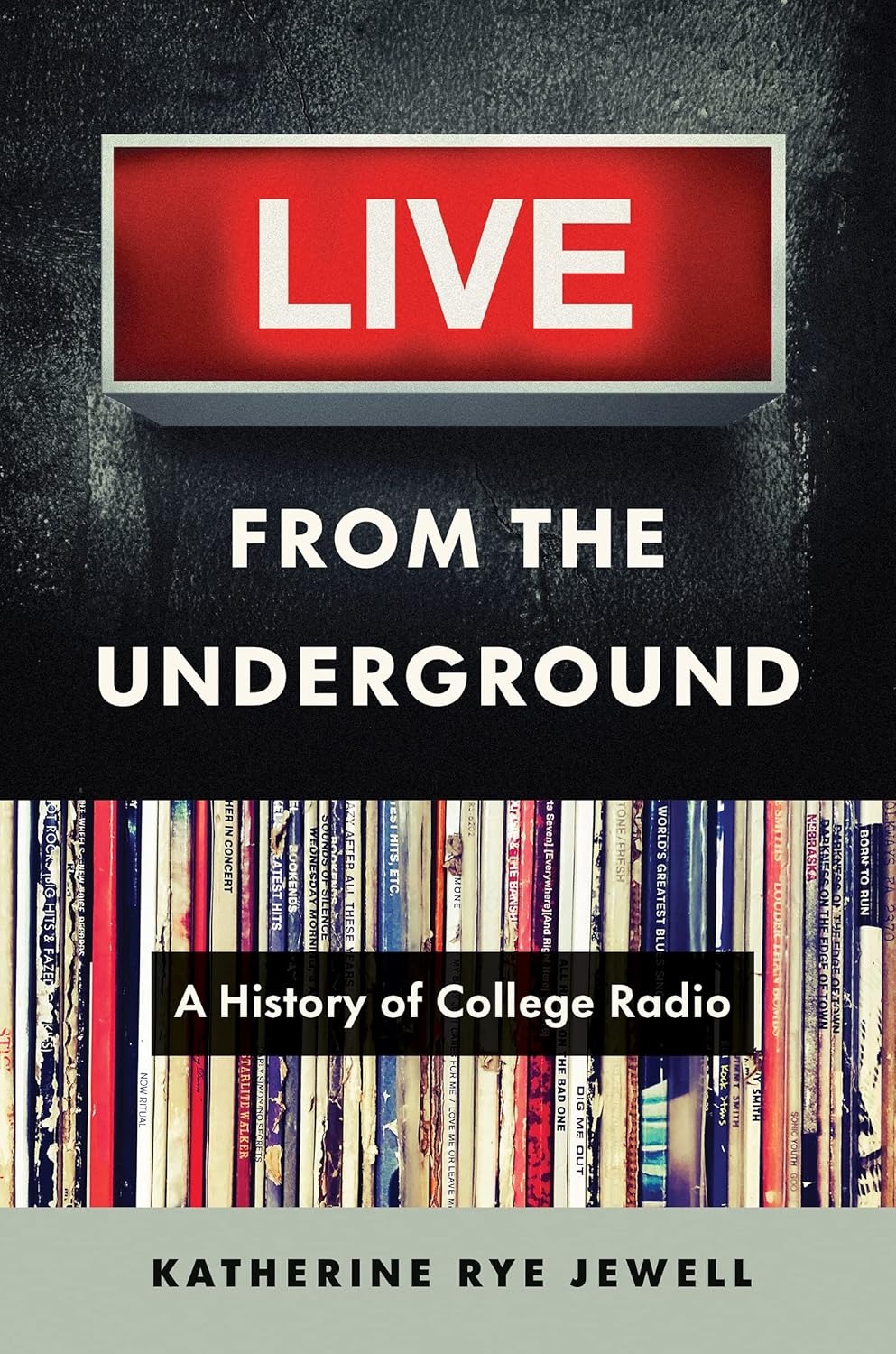
Bands like R.E.M., U2, Public Enemy, and Nirvana found success as darlings of college radio, but the extraordinary influence of these stations and their DJs on musical culture since the 1970s was anything but inevitable. As media deregulation and political conflict over obscenity and censorship transformed the business and politics of culture, students and community DJs turned to college radio to defy the mainstream—and they ended up disrupting popular music and commercial radio in the process. In this first history of US college radio, Katherine Rye Jewell reveals that these eclectic stations in major cities and college towns across the United States owed their collective cultural power to the politics of higher education as much as they did to upstart bohemian music scenes coast to coast.
Jewell uncovers how battles to control college radio were about more than music—they were an influential, if unexpected, front in the nation’s culture wars. These battles created unintended consequences and overlooked contributions to popular culture that students, DJs, and listeners never anticipated. More than an ode to beloved stations, this book will resonate with both music fans and observers of the politics of culture.
Katherine Jewell is professor of History at Fitchburg State University in Massachusetts, where she teaches modern American history. A historian of the business and culture of politics, her work explores how ordinary Americans experience, interpret, challenge, and shape policy and culture. She is the author of two books, and her work has appeared in several outlets including the OAH’s American Historian magazine and the Washington Post. She earned her Ph.D. and M.A. in History from Boston University and her B.A. in History and Anthropology from Vanderbilt University.