


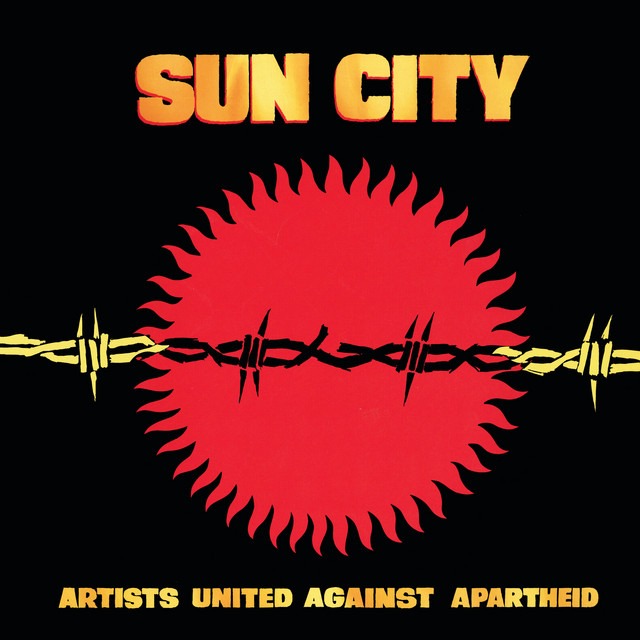
‘Sun City’ stands as one of the most powerful musical collaborations for human rights. In 1985, Steven Van Zandt brought together artists from rock, jazz, hip hop, funk, and soul to raise awareness about apartheid in South Africa. The song and album united voices across genres and continents, calling for equality through rhythm and conviction. The message spread far beyond the charts and became an anthem for change, proving that music can carry the sound of solidarity.
1. More than 50 artists joined the project
Steven Van Zandt, Arthur Baker, and Danny Schechter gathered an extraordinary group of performers that included Bruce Springsteen, Bono, Bob Dylan, Lou Reed, Run-DMC, Herbie Hancock, Miles Davis, Peter Gabriel, Keith Richards, and Ronnie Wood. The collaboration created one of the most wide-reaching musical statements of its time.
2. “Sun City” became a pledge of artistic unity
The chorus “I ain’t gonna play Sun City” carried a message of commitment and awareness. The resort represented inequality, and by refusing to perform there, each artist aligned themselves with the global call for justice. The song’s rhythm and chorus built a unifying voice against apartheid.
3. Bono wrote “Silver and Gold” in one night
Inspired by the sessions, Bono composed “Silver and Gold” in his hotel room and recorded it with Keith Richards, Ronnie Wood, and Steve Jordan. The song appeared as an unlisted track on the album and reflected the urgency and creativity that filled every part of the project.
4. Miles Davis recorded with complete intensity
When Miles Davis entered the studio, he created a moment of pure focus. Working with Herbie Hancock, Ron Carter, and Tony Williams, he played with depth and control that matched the power of the cause. His presence added a sense of gravity and artistry to the album’s energy.
5. The album supported global awareness and education
‘Sun City’ reached listeners around the world and raised more than one million dollars for programs supporting equality and education. It premiered at the United Nations and strengthened international awareness about apartheid, leaving a lasting example of collaboration and purpose in music.