


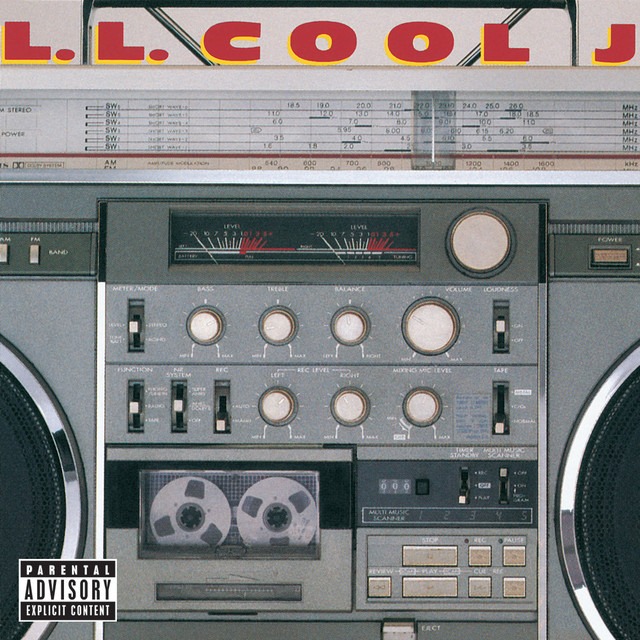
LL Cool J came out the gate in 1985 with fire in his voice, gold in his pen, and a boombox blasting over every block. His debut album ‘Radio’ wasn’t just the first LP from Def Jam—it was a seismic shift. Produced by Rick Rubin with hard-hitting beats and stripped-down swagger, ‘Radio’ brought hip hop from the lunch tables to the charts. One mic, one DJ, and one vision launched LL into legend status, sparking a new-school revolution that echoed coast to coast.
Here are 5 groundbreaking facts about ‘Radio’—the album that lit the fuse and let the bells ring:
1. LL was 17 with a demo and a dream
James Todd Smith sent his homemade tapes all over NYC, but it was Def Jam that saw the vision. His stage name—Ladies Love Cool James—was already a flex. When “I Need a Beat” dropped in 1984, it sold 100,000 copies and made LL a star before the album even hit. That single helped secure Def Jam’s distribution with Columbia and built the hype for ‘Radio’.
2. The first Def Jam album was all street, no filler
‘Radio’ hit with no gimmicks—just raw drum machines, scratching, and LL’s voice tearing through speakers. Rick Rubin’s “Reduced by” production style brought boom-bap minimalism into the mainstream. It was recorded at Chung King Studios and mastered on 42nd Street with one goal: make heads nod and radios explode.
3. “I Can’t Live Without My Radio” made the boombox a star
This wasn’t just a song—it was a street anthem. The JVC RC-M90 on the cover became iconic. LL’s love letter to his radio blasted through Krush Groove, rocked the charts, and landed at No. 15 on the R&B charts. It also brought him to Saturday night TV, where he became the first hip hop artist to perform on American Bandstand.
4. “Rock the Bells” had no bells, just bars
LL dropped the third single from ‘Radio’ with unmatched swagger. The album version skips the bells but not the impact—every rhyme hits like a heavyweight. The original 12-inch version clocked over 7 minutes and inspired remixes, samples, and even LL’s own “Mama Said Knock You Out” years later.
5. ‘Radio’ built the bridge to hip hop’s golden age
This was more than an album—it was a movement. ‘Radio’ kicked open doors for Def Jam, influenced Public Enemy and Boogie Down Productions, and took hip hop from block parties to platinum plaques. LL toured with Run-DMC and Beastie Boys, rocked stages with Cut Creator, and showed the world that hip hop had arrived with power, poetry, and presence.