


By Darryl Sterdan of Tinnitist.com
NASHVILLE, TENN. — Muscle Shoals has always punched far above its weight. But now, the tiny Alabama town that became the unlikely epicenter of southern soul, R&B and rock is flexing in a big way.
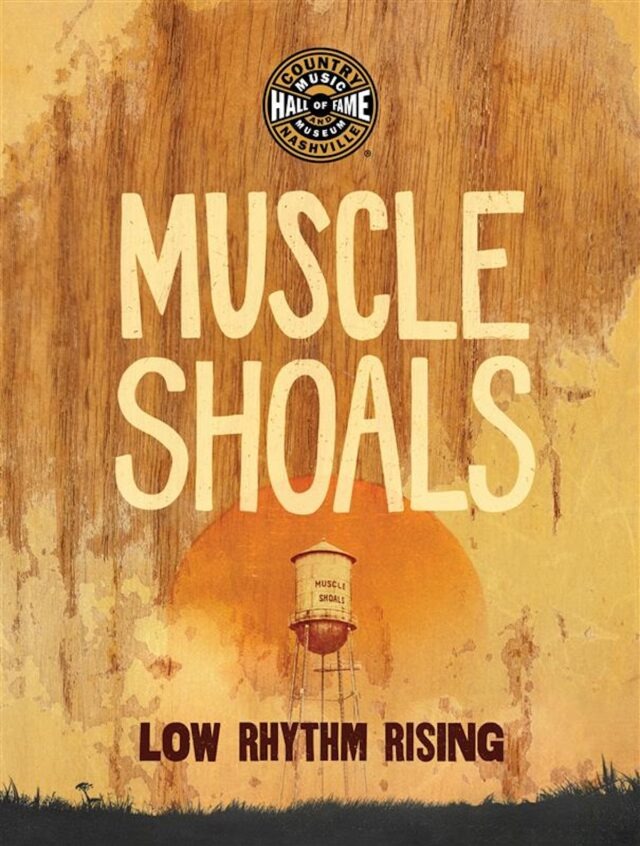
Nashville’s Country Music Hall Of Fame And Museum just opened the doors on its fantastic new exhibit Muscle Shoals: Low Rhythm Rising. The landmark show celebrates the beloved ‘Muscle Shoals Sound‘ — a swampy mix of deep grooves, funky basslines, rich keyboards and punchy horns that fuelled hundreds of immortal songs and albums over decades — and honours the singers, songwriters, studio musicians, producers and entrepreneurs who conjured it into being like so much sonic alchemy in the freewheeling ’60s. And I was the only Canadian journalist in the room. I got to preview the exhibit, tour Muscle Shoals’ landmark studios, and attend a star-studded VIP launch, which included a slate of incredible performances. More on those in a bit, but first, back to the exhibit:
Painstakingly and lovingly curated and assembled over the course of years, the 5,000-square-foot display is, like the rest of the museum, a treasure trove of prized, priceless artifacts and memorabilia. Including:
• The piano Aretha Franklin played on her breakthrough hit I Never Loved A Man (The Way I Love You).
• Vintage instruments played by the legendary session band The Swampers, who backed Franklin on that single and others. It was the first of countless hits they helped create for a musical who’s who that includes Wilson Pickett, Percy Sledge, Paul Simon, The Rolling Stones, Bob Dylan, Rod Stewart, Cher, Bob Seger, Bobbie Gentry, Boz Scaggs and scores more.
• A Fender Stratocaster and Telecaster played by slide-guitar hero Duane Allman, who worked with artists like Pickett and Franklin before forming The Allman Brothers Band.
• Stage clothes worn by The Staple Singers — who cut their civil-rights era anthems I’ll Take You There and Respect Yourself at Muscle Shoals Sound — along with outfits sported by Pickett, Franklin and others.
• Instruments played by more recent local heroes like Drive-By Truckers (whose singer-guitarist Patterson Hood is the son of Swampers bassist David Hood, the sole surviving member of the crew) and Jason Isbell (who also loaned his grandfather’s banjo to the exhibit).
• Scores of documents, manuscripts, photographs, classic video footage, new footage and vintage records that chronicle one of the most fertile and unforgettable periods in contemporary music history.
Not surprisingly, it’s all been one long labour of love for curator Michael Gray, VP of museum services. “We got officially greenlighted about three years ago, but really, we’ve been working toward it for a long time — going all the way back to 2010, 2011,” he says. On a personal level, his dedication goes back even further — all the way to high school, when he first heard and fell in love with the Muscle Shoals Sound and started learning the story behind the music.
For those who aren’t up to speed, the exhibit covers a lot of that too. Naturally, if you want the whole (sometimes-sordid) saga, you’d be better off with a book or the definitive 2013 documentary Muscle Shoals. But in a nutshell, the scene started when irascible maverick Rick Hall opened FAME (Florence Alabama Music Enterprises) Studios in 1960, determined to finally make his mark in music after years of frustration and failure. Soon, the funky grooves and earthy sound emanating from his studio and its musicians lured the likes of Franklin, Pickett, Allman, Otis Redding, Etta James and more down to the sleepy southern community — along with Atlantic Records’ hard-nosed executive Jerry Wexler, who started spreading the sound around the world. Hall’s dream had finally come true.
But then came the rude awakening. Hall’s controlling, uncompromising ways eventually drove away Wexler. Worse, it soured his relationship with The Swampers — guitarist Jimmy Johnson, bassist Hood, drummer Roger Hawkins and keyboardist Barry Beckett. Having graduated from local house band to in-demand session players, they balked at signing an exclusive contract with Hall, opting to take their ball and open their own Muscle Shoals Sound studio a couple of miles down the road. After having Cher as their first customer — her 1969 album 3614 Jackson Highway borrowed the studio’s address for its title, and pictured the building on its cover — they soon had their own celebrity client list, topped by The Rolling Stones, who dropped in mid-tour the same year to cut Brown Sugar, Wild Horses and You Gotta Move for Sticky Fingers. (Fun fact: The bill for Wild Horses totalled $1,009, mostly for studio time at the princely sum of $65 per hour.)
Gray says both FAME and Muscle Shoals Sound were gracious enough to throw open the vaults and files for the exhibitors, and to give them access to important pieces of equipment. That’s especially impressive when you consider that both facilities are still working studios that host contemporary artists like The Black Keys, My Morning Jacket, St. Paul & The Broken Bones and more (and remain surprisingly economical and available for venues with such rich legacies and storied histories).
“Rick Hall’s son Rodney and wife Linda are just so kind and helpful and just loaned us anything we wanted,” Gray says. “They even let us come into the studio and film interviews there. Granted, when we asked them about the Aretha piano, they had to talk about it for a minute. I mean, they give their own tours there, you know? But when we assured them that it would be the centerpiece of the exhibit and we would take great care of it, they said, ‘All right, come get it.’ ”
Musicians like Isbell were just as generous, he says. “People just kept showing up at every turn. We didn’t know necessarily what Jason was going to give us. And then he’s like, ‘Hey, you know, my grandfather played this banjo every day of his life, and these are my roots. I would love to let you have it.’ And we just said, ‘We’ll take it!’ ”
Isbell’s generosity and commitment continued at Thursday night’s VIP launch. As a few hundred VIPs, movers / shakers and media were wined and dined with open bars and southern-fried fare like okra, grits and sausage sliders, Isbell — a musical prodigy who grew up near Muscle Shoals — dug into the studios’ back catalog, playing solo acoustic covers of Arthur Alexander’s You Better Move On, Paul Simon’s Kodachrome and The Rolling Stones’ Wild Horses. Also on the musical menu: Singer-songwriter Dan Penn and MVP pianist Spooner Oldham, who teamed up on the former’s I’m Your Puppet; and vocalist Bettye LaVette, who sang an abbreviated version of George Jones’ Choices backed by Oldham. All of them (except Isbell) will also take part in a full-scale opening concert Friday night, along with Jimmy Hall, Tiera Kennedy, Wendy Moten, Maggie Rose, Shenandoah, Candi Staton, John Paul White and a crew of Muscle Shoals session players (including some latter-day Swampers).
The exhibit itself runs until March 2028, so you’ve got some time to plan your visit. But personally, I wouldn’t wait. I would also recommend you include a trip to Muscle Shoals in your itinerary so you can get the full picture (and eat some incredible food; the town also punches above its weight on the culinary side).
Come back to read more about my Alabama adventures in a few days, but for now, listen to a playlist of Muscle Shoals classics below and check out video clips from the exhibit and the VIP launch above.