

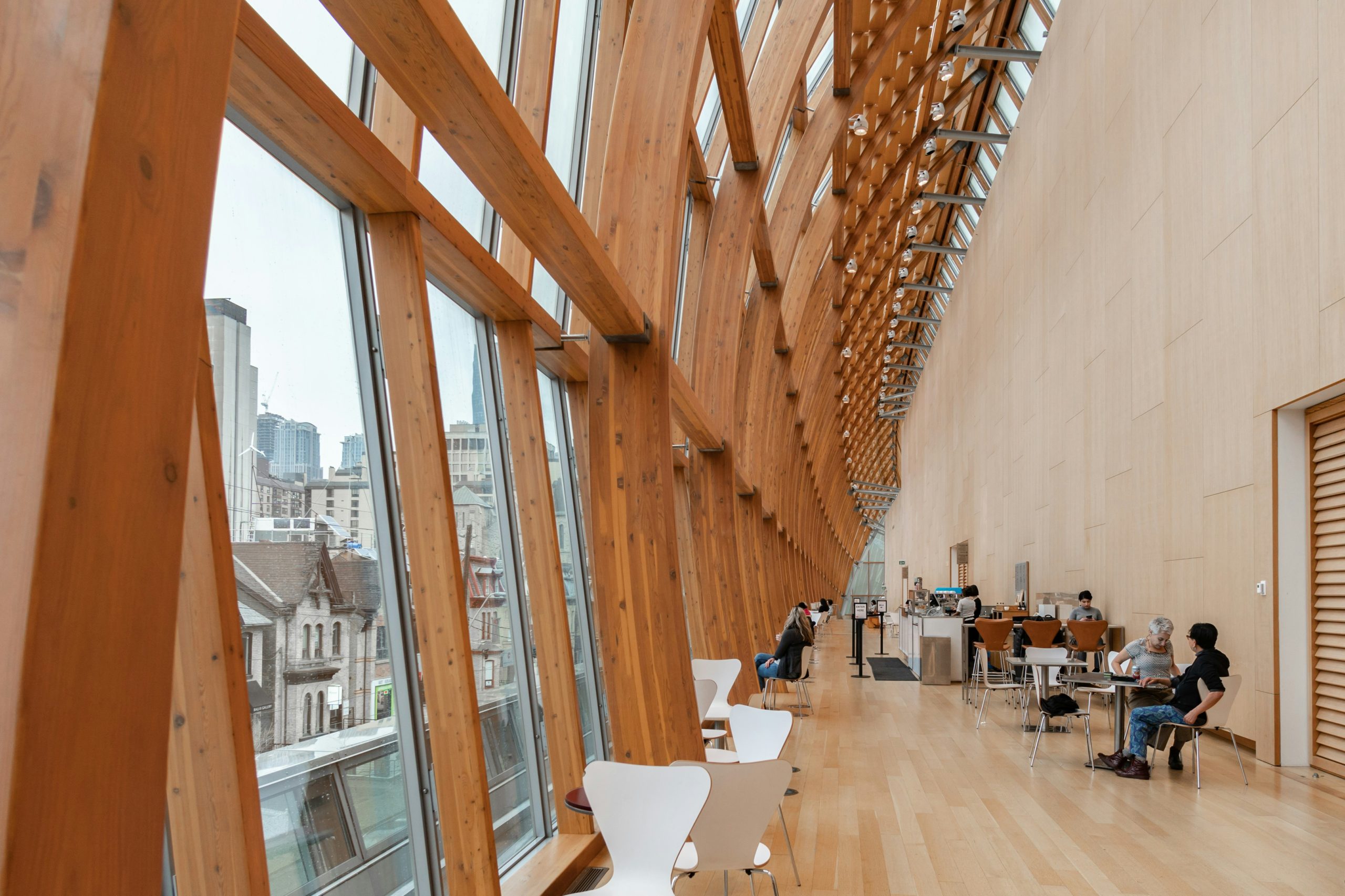

Frank Gehry reshaped skylines, rewrote the rules of contemporary design, and changed the way the world thinks about architecture. His buildings felt alive. They moved, curled, shimmered, and sparked emotion with a level of energy rarely seen in the built environment. Gehry died at home in Santa Monica at the age of 96 after a brief respiratory illness, leaving behind a legacy that transformed cities, influenced generations of designers, and proved that architecture can be both imaginative and deeply human.
Gehry is best remembered for the Guggenheim Museum Bilbao, a structure that seemed to burst from the ground in a sweep of titanium curves. Its arrival revived an entire city and introduced what planners later called the Bilbao effect. His Walt Disney Concert Hall in Los Angeles became one of the most admired cultural spaces in the world. His Fondation Louis Vuitton in Paris created a new dialogue between art, technology, and form. Across continents and decades, Gehry kept creating with a sense of freedom that inspired awe.
He often spoke of architecture as an emotional art. He designed for feeling. His buildings reached outward with movement and inward with intention, using materials like stainless steel, plywood, chain link, and titanium to challenge what architecture could communicate. His work felt bold but also personal, rooted in memories of a Toronto childhood filled with hardware store shelves, scraps of wood, and afternoons watching a live carp swim in the bathtub.
Gehry won every major architectural honor, from the Pritzker Prize to the National Medal of Arts to the Companion of the Order of Canada. He taught at universities around the world, designed for museums, orchestras, schools, and public programs, and influenced fields far beyond architecture. Furniture, jewelry, software technology, and even sports trophies carry his imprint.
He worked until the very end of his life. In his nineties he continued designing major civic projects, cultural spaces, and buildings for some of the largest institutions in the world. His influence on contemporary architecture is immeasurable.
To honor his life and work, here are 50 things you may not know about Frank Gehry.
- He was born Frank Owen Goldberg in Toronto in 1929.
- His grandmother encouraged his creativity by building imaginary cities with wood scraps.
- His grandfather owned a hardware store that shaped Gehry’s love of raw materials.
- His family moved from Toronto to Los Angeles after his father’s health declined.
- He once worked as a truck driver while attending Los Angeles City College.
- He tried radio announcing and chemical engineering before discovering architecture.
- He first studied ceramics before shifting into architecture at USC.
- His first major design inspiration came from memories of fish.
- He legally changed his surname from Goldberg to Gehry in the 1950s.
- His earliest architectural job involved designing shopping malls.
- He opened his own practice in Los Angeles in 1962.
- His first built house design was in Idyllwild, California.
- He lived in and redesigned his Santa Monica home for four decades.
- The Santa Monica house made him an international figure in architecture.
- He often walked around construction sites collecting discarded materials for ideas.
- He resisted labels such as postmodern or deconstructivist.
- His furniture line Easy Edges was made entirely of cardboard.
- He designed jewelry collections for Tiffany and Co.
- He created a vodka bottle design for Wyborowa.
- His first European commission was for Vitra in Germany.
- He once said the artists of Los Angeles influenced him more than other architects.
- He became close friends with surf culture artists in the 1960s.
- He hated the idea of pure or perfect architecture and preferred irregular shapes.
- His iconic Bilbao museum created a surge of tourism that rejuvenated the city.
- Philip Johnson saw Bilbao for the first time and cried.
- Herbert Muschamp compared the building to Marilyn Monroe.
- The term Bilbao effect came from the economic revival sparked by his design.
- The Walt Disney Concert Hall took more than a decade to complete.
- He redesigned the master plan for the Los Angeles River as pro bono work.
- He designed the trophy for the World Cup of Hockey in 2004 and again in 2016.
- He was a passionate hockey fan and created an office league named FOG.
- He taught at USC, Yale, Harvard, Columbia, and other major universities.
- He designed folding cardboard chairs that are now considered collector’s pieces.
- He appeared as himself on Arthur.
- He appeared as himself on The Simpsons.
- He regretted the Simpsons appearance because it made people think he designed by crumpling paper.
- He collaborated with filmmaker Sydney Pollack on a documentary about his work.
- His early exhibitions at LACMA shaped museum display trends.
- He helped design installations for exhibitions on Japan, Assyrian reliefs, and Tutankhamen.
- His Bilbao design used software originally created for the aerospace industry.
- That software later led to Gehry Technologies, a major tech company.
- He designed a yacht named Foggy.
- He created a performance set for Lucinda Childs and John Adams.
- He once flipped off a reporter who accused him of being showy.
- He received the Presidential Medal of Freedom in 2016.
- He received more than a dozen honorary university degrees.
- He loved working with stainless steel because it caught light in unexpected ways.
- His work for the Luma Foundation was inspired by the rocky landscapes of Arles.
- He remained a Canadian citizen throughout his life while also becoming a naturalized American.
- He continued designing major cultural projects into his nineties.