


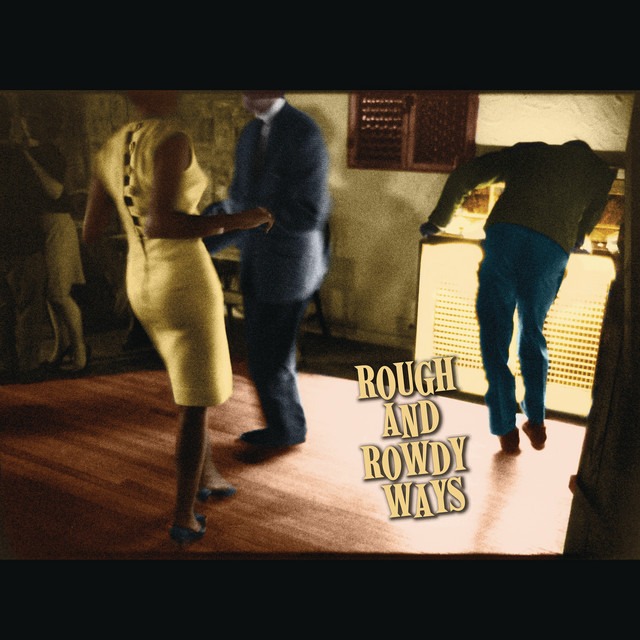
Bob Dylan delivered a staggering and timeless triumph with the 2020 release of his thirty-ninth studio album ‘Rough and Rowdy Ways’. Breaking an eight-year silence on original material, the legendary Nobel laureate returned with a lyrically dense and rhapsodic journey through the heart of Americana, folk, and electric blues. Recorded during the early months of the pandemic at Sound City Studios, the record showcases a master at the height of his craft, backed by his incredible Never Ending Tour band and guests like Fiona Apple. The album achieved universal acclaim, topping charts in over ten countries and marking a factual milestone as Dylan became the first artist to have a Top 40 album in every decade since the 1960s. Every verse on this project reflects a daring spirit of introspection and a deep connection to the story of the human race. Witnessing the transition from his recent focus on pop standards to this expansive and wordy narrative is a true highlight for any music enthusiast.
The 17-Minute Record-Breaking Single
The album’s closing track, “Murder Most Foul,” made history as the longest song Bob Dylan has ever released, clocking in at 16 minutes and 56 seconds. This epic masterpiece surpassed his 1997 song “Highlands” to become a sprawling meditation on the assassination of John F. Kennedy and the broader landscape of American culture. Despite its extreme length and lack of a traditional refrain, it became Dylan’s first-ever song to top a Billboard chart, reaching number one on the Rock Digital Song Sales list shortly after its unannounced release.
Fiona Apple’s Insecure Studio Moment
For the recording of the nearly 17-minute lead single, Dylan recruited Fiona Apple to provide piano accompaniment alongside Alan Pasqua. Apple famously shared that she felt incredibly insecure during the session, but Dylan provided a warm and encouraging environment to help her through. He reportedly told her that she was not there to be perfect, but rather she was there to be herself, allowing for a raw and authentic performance. Her piano work sits at the center of the final mix, recorded in a single day alongside Benmont Tench and Alan Pasqua.
The “Trance State” Songwriting Process
During a rare interview with historian Douglas Brinkley, Dylan described the composition of the songs on this record as occurring in a “trance state.” He explained that he did not have to grapple much with the lyrics, instead piling up stream-of-consciousness verses on instinct before pulling the final story together. This method resulted in what critics have called one of his wordiest and most lyrically dense works, where names like Anne Frank, Indiana Jones, and the Rolling Stones are locked together in a profound and tangible narrative.
BOLD Experimental Recording Methods
While the album is rooted in “old” sounds and “old” methods, producer and guitarist Blake Mills revealed that the team utilized some very bold and non-classic techniques in the studio. Mills noted that while the record sounds elegant and musically sophisticated, the actual methods used to capture those sounds were not at all “correct” by traditional engineering standards. This innovative approach allowed the band to capture the spontaneous energy of a “poet jazz musician,” where arrangements were often worked out on the spot as Dylan sang over various grooves.
The Jimmie Rodgers Cover Connection
The title ‘Rough and Rowdy Ways’ and the album’s inner packaging pay a factual homage to the pioneers of country music, specifically Jimmie Rodgers and the Carter Family. The title itself is a clear reference to the 1929 Rodgers song “My Rough and Rowdy Ways,” while the inside artwork features a famous 1931 photograph of Rodgers with the Carter Family. This visual and titular connection reinforces the album’s themes of Americana and the role of the artist in society, bridging the gap between classical antiquity and the present day.