


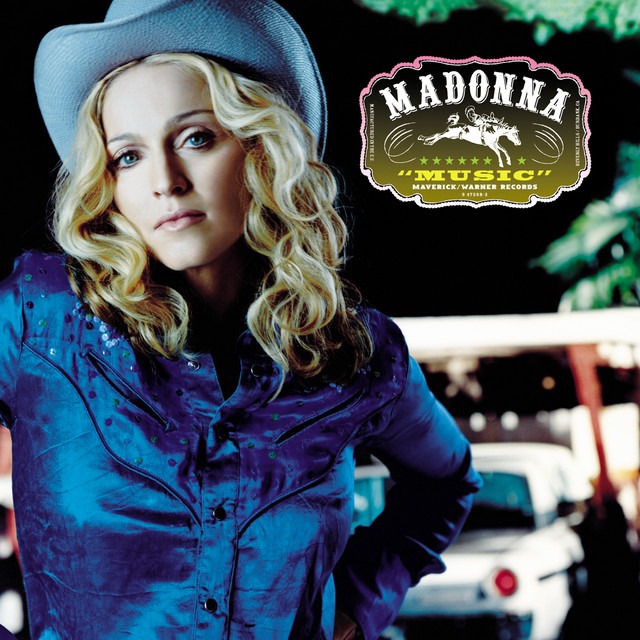
Madonna redefined the global pop landscape at the turn of the millennium with the high-energy release of her eighth studio album ‘Music’. After the introspective success of her previous work, the legendary performer sought a bold, experimental sound to distinguish herself from a rising generation of teen pop stars. By collaborating with French producer Mirwais Ahmadzaï, she created a vibrant dance-pop and electronica masterpiece that fearlessly blended funk, house, techno, and even country-folk. The record arrived with a massive splash, selling four million copies in its first ten days and eventually moving over 11 million units worldwide. Embracing a vibrant western motif, Madonna reimagined herself as a cyber-cowgirl, a reinvention that remains one of the most iconic transformations in her storied career.
The album’s legacy is built on its innovative production and its ability to anticipate major musical trends like electro-house and vocal manipulation. Achieving number-one status in over 20 countries, ‘Music’ proved that Madonna remained a dominant commercial force and a fearless sonic pioneer. Beyond the club-ready anthems, the project explored themes of love and motherhood, reflecting a sense of wonderment following the birth of her son. The accompanying Drowned World Tour further solidified the album’s impact, grossing over $75 million and becoming the highest-grossing tour by a solo act in 2001. Every chopped-up acoustic riff and pitch-shifted vocal on this project serves as a factual testament to her status as a visionary artist. Witnessing the uniting power of the title track is a total win for anyone who believes that music makes people come together.
The Great William Orbit Scrapping
Following the massive success of their previous collaboration, Madonna initially recorded nine songs with producer William Orbit for this project. However, she grew concerned that the tracks sounded too similar to her old work and that Orbit’s signature sound had become too ubiquitous in the mainstream. In a bold move to stay ahead of the curve, she decided to throw out nearly everything they had created and start over with a fresh, undiscovered collaborator. This creative reset led her to Mirwais Ahmadzaï, whose “pulverizing rhythms” provided the edgy, European sound she was seeking.
Sting As The Secret Muse
The inspiration for the global hit “Music” struck Madonna while she was attending a Sting concert at New York City’s Beacon Theatre. She noticed that the polite and well-behaved audience suddenly lost all inhibitions and began dancing together the moment the singer performed old hits by The Police. This specific observation of people “holding hands” and forgetting their politeness moved her so deeply that she immediately wrote the hook about music mixing the “bourgeoisie and the rebel.” This factual moment served as the catalyst for the entire album’s tone of celebration and spontaneity.
The Cement Garden Sample Breakthrough
For the sophisticated track “What It Feels Like for a Girl”, producer Guy Sigsworth utilized a poignant spoken word sample from the 1993 British film ‘The Cement Garden’. The voice of actress Charlotte Gainsbourg opens the song with a powerful monologue about the double standards women face in society. Madonna heard the demo and felt it perfectly captured her own feelings of vulnerability and the “bitter pill” of being an independent woman in a male-dominated world. The song was completed in just four days at Sarm West Studios after Madonna insisted on keeping the rough, magical noises from the original demo.
High Stakes At The Catch One Party
To celebrate the album’s release, Madonna hosted a lavish £1.4 million party at the Los Angeles dance emporium Catch One. Invitations were delivered in white leather boxes lined with black fur, containing a gold necklace spelling out the word “MUSIC” that served as the mandatory entry pass. The event was a high-profile gathering of stars including Gwen Stefani and George Clinton, though it also featured a minor scuffle. Security guards famously got into a shoving match with Madonna’s then-boyfriend Guy Ritchie because they did not recognize him as he attempted to enter the VIP lounge.
The Accidental Cowboy Aesthetic
While the cowboy kitsch of the ‘Music’ era became a global fashion trend, the aesthetic was actually suggested by photographer Jean Baptiste Mondino during a photoshoot. Madonna was initially reluctant to embrace the western motif, but she fell in love with the final images featuring rhinestone-embellished shirts and cowboy hats. This visual direction, styled by Arianne Phillips, was inspired by the photography book ‘Rodeo Girl’ and was intended to both celebrate and satirize Americana culture. The “cowgirl” image was eventually adopted across the entire promotional cycle and the Drowned World Tour.