


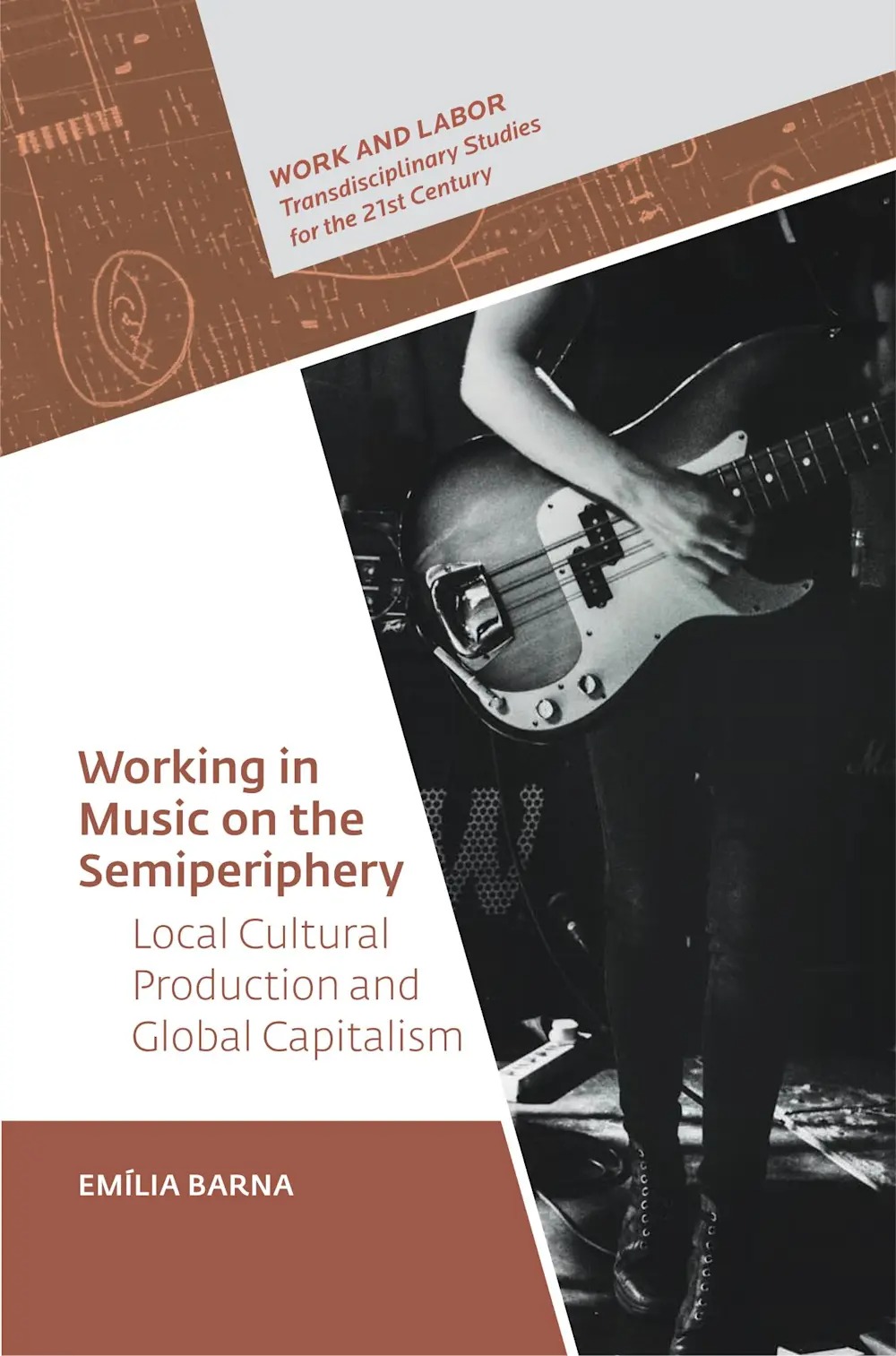
Emília Barna’s ‘Working in Music on the Semiperiphery: Local Cultural Production and Global Capitalism’ explores how informality permeates power relations and resource allocation in the music sector, proving that creative labor operates far differently than traditional capitalist models suggest. Drawing from field data collected in Hungary between 2018 and 2021, Barna examines the significant level of informal household involvement in creative and reproductive processes, revealing how home-based work and paid work remain unbalanced in semiperipheral contexts. The study covers the widest possible range of music workers across all genres from high art to commercial, observing various workers in the production chain beyond musicians and giving special treatment to niche segments like YouTube-based commercial hip hop.
Barna’s research employs multiple empirical methods to examine trends pushing workers toward digital entrepreneurship and platform work on one side and live performance on the other, while the semiperipheral context reveals considerable state involvement through subsidies and the crucial role of gatekeepers’ political capital. The focus on domestic work and informality provides a feminist analysis that illuminates gendered divisions of labor and forms of self-exploitation that typically remain invisible in discussions of creative work. The book proposes a new model of cultural autonomy accounting for the semiperipheral relationship between music industry workers, institutions, the market, and the state, offering essential insights into how global capitalism shapes local cultural production.