


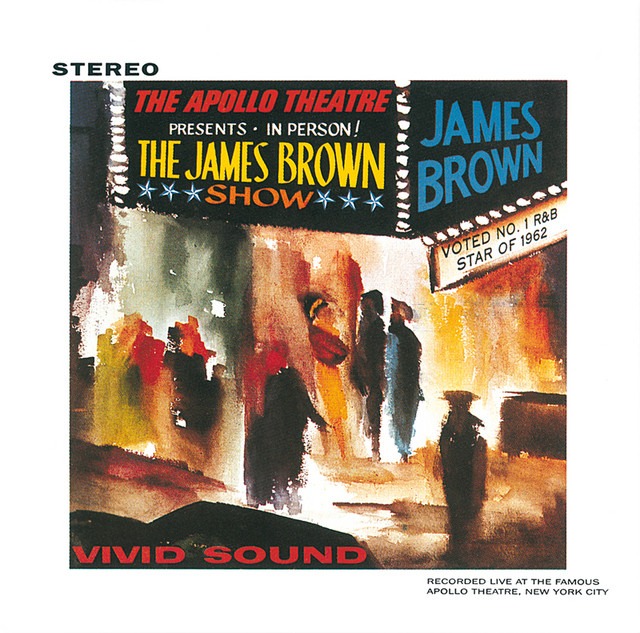
When James Brown personally funded the recording of his October 24, 1962 Apollo Theater performance, King Records founder Syd Nathan didn’t just oppose the project. He thought it was a waste of money that would never sell without a single to promote it. Nathan had already dismissed Brown’s “Please, Please, Please” demo as “the worst piece of crap I’ve heard in my life” years earlier, so his judgment wasn’t exactly bulletproof. The resulting album spent 66 weeks on the Billboard Top Pop Albums chart, peaked at number two, and became so popular that R&B DJs would play entire sides without interruption except for commercials. This wasn’t just Brown capturing his stage show for the first time on record. This was the moment soul music announced itself as a cultural force that would define the entire decade, proving Nathan spectacularly wrong while cementing Brown’s status as Mr. Dynamite, The Hardest Working Man in Show Business, and eventually The Godfather of Soul.
The Original Master Tapes Were Lost For Decades In A Vault Containing 100,000 Reels
The master recordings for ‘Live at the Apollo’ vanished for years inside King Records’ massive vault holding 100,000 reels, making a proper CD reissue impossible until 1990. Jazz historian Phil Schaap accidentally found the tape while searching for a Max Roach master, pulling an anonymous box labeled “Second Show James Brown” off the shelf. He handed it over saying “I think you need to hear this,” and the tapes were finally recovered in late 1989, decades after the performance that changed soul music forever.
King Records Added Canned Applause And Screams Because They Didn’t Trust The Real Audience Response
King Records originally issued the album with canned applause and screams added in post-production, which ranks as one of the most unnecessary decisions in music history. The actual Apollo crowd that night delivered some of the most perfectly timed audience reactions ever captured on record, especially during the ten minute “Lost Someone” where female fan screams punctuate every emotional peak. The real thing was always more powerful than anything manufactured afterward, proving the label had no idea what they actually had on tape.
Brown Had Nine Consecutive Flops After His First Hit Before “Try Me” Saved His Career
After “Please, Please, Please” hit regionally in 1956, James Brown’s next nine consecutive singles flopped badly and almost got him dropped from Federal Records before his eleventh single “Try Me” became a national hit. Those lean years nearly made Syd Nathan’s harsh assessment of Brown prophetic, but “Try Me” saved his career and gave him four more years to build The James Brown Revue into the best live act in the business. By October 1962, Brown had gone from one flop away from obscurity to demanding the precision and intensity that made ‘Live at the Apollo’ legendary.
MC5 Guitarist Wayne Kramer Said ‘Live at the Apollo’ Inspired ‘Kick Out The Jams’ And Their Entire Performance Style
Wayne Kramer credited ‘Live at the Apollo’ as the direct inspiration for MC5’s ‘Kick Out the Jams,’ revealing the Detroit band listened to it endlessly on acid and played it on 8-tracks in the van before gigs to get pumped up. Every Detroit band before MC5 covered “Please, Please, Please” and “I Go Crazy” as standards, and MC5 modeled their entire approach on Brown’s records with everything done on a gut level about sweat, energy and anti-refinement. That single Wednesday night set at the Apollo in 1962 rippled through decades of American music, connecting soul to garage rock to punk through shared intensity and raw power.