


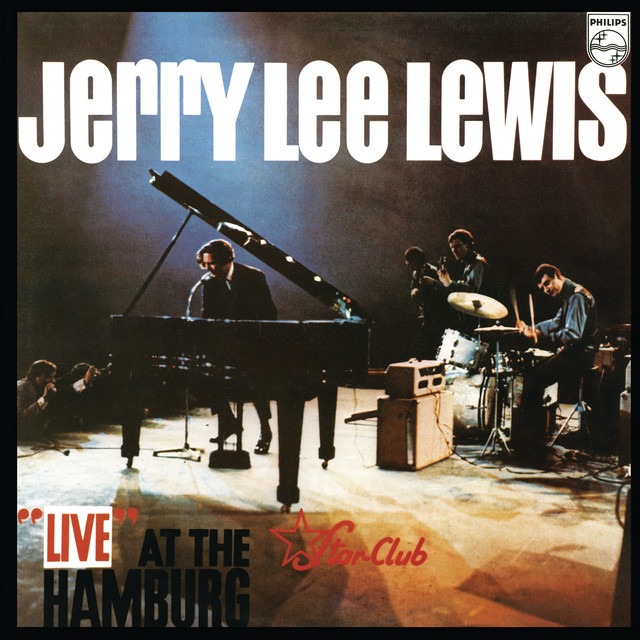
When Jerry Lee Lewis tore through two sets at Hamburg’s Star-Club on April 5, 1964, producer Siggi Loch captured what many consider the greatest live rock and roll album ever made. Lewis was in his wilderness years following the scandal around his marriage to his 13-year-old cousin, but relentless touring across Europe had sharpened his skills into something ferocious and untamed. The album showcases Lewis’ brutal piano attack and wild stage presence at its absolute peak, recorded with microphones placed as close to the instruments as possible and a stereo mic in the audience to capture the chaos. There’s a reason why he’s called “The Killer.” This album proves it.
The Producer Was A Jazz Executive Who Decided To Start Recording Rock Bands At The Star-Club
Siggi Loch ran the jazz department at Philips Records when he realized young British bands were obsessing over Chuck Berry and white American rock and rollers as their heroes. He approached the Star-Club owner with a proposal to start recording live performances at the venue, creating a setup that prioritized raw energy over technical perfection. The recording captured something brutally honest about Lewis that night, the primal center of rock and roll without any studio polish to soften the impact. You can hear Lewis feeling the energy of the crowd with his own whoops and hollers at the end of several tracks.
Two Songs From The Performance Were Lost And One Was Left Off The Original Album Due To A Sound Fault
Sixteen songs were recorded across two sets but “Down The Line” got left off the original LP because of a sound fault, only surfacing later on a French Mercury single before appearing on CD reissues. The tapes for “You Win Again” and Lewis’ current single “I’m On Fire” are believed to have been lost entirely, meaning we’ll never hear how those performances sounded. What survived is still enough to prove Lewis was operating at a level of intensity that few performers have ever matched on a live recording.
Detractors Complained The Piano Was Mixed Too Loud And Everything Sounded Too Noisy
Critics who didn’t get it complained the album was crashingly noisy, that Lewis lacked subtlety revisiting the songs, and that the piano dominated the mix too aggressively. That’s exactly what makes the recording work, capturing Lewis hammering his instrument without restraint while the Nashville Teens struggled to keep up with his ferocious energy. The lack of subtlety wasn’t a flaw, it was the entire point of documenting what Lewis sounded like when he was playing like his life depended on it.
Lewis Remained Proud Decades Later That He Kept Rock And Roll Alive When Others Abandoned It
Speaking in 2014, Jerry Lee Lewis told Rolling Stone he was proud that he “stuck with rock & roll when the rest of them didn’t, I kept the ball rollin’ with that” during years when his career had been destroyed by scandal. While Elvis went to Hollywood and Little Richard found religion, Lewis kept touring Europe and playing rock and roll with the same intensity he brought in the 1950s. The Star-Club recording proved that exile and controversy couldn’t diminish his power as a performer, and that rock and roll had at least one true believer who refused to let it die.