


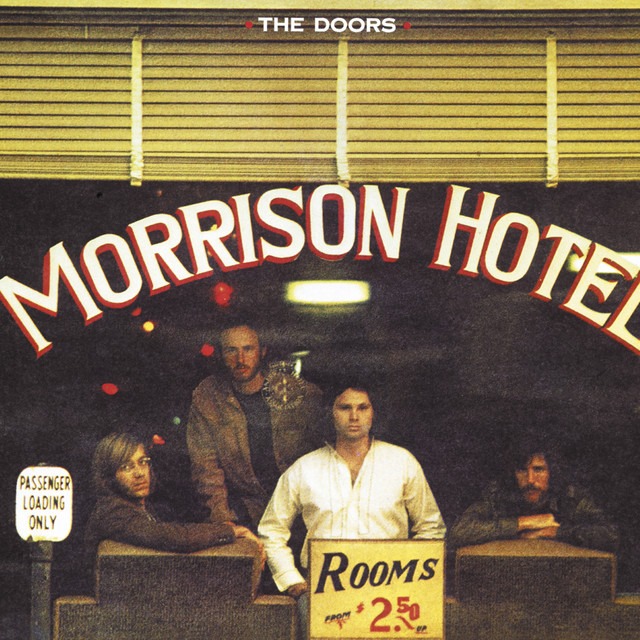
The Doors’ ‘Morrison Hotel’ stands as a pivotal album in the band’s catalog and a defining moment in rock history. Released on February 9, 1970, by Elektra Records, the album marked a deliberate return to the band’s blues rock roots after the heavily orchestrated ‘The Soft Parade’ in 1969. Divided into two separately titled sides, “Hard Rock Café” and “Morrison Hotel,” the record reached number 4 on the Billboard 200 and became the group’s highest-charting studio album in the United Kingdom, where it peaked at number 12. Despite containing no major hit singles, it features some of the band’s most popular songs, including “Roadhouse Blues” and “Peace Frog,” which became staples of classic rock radio and helped the band regain momentum after a turbulent period.
The Album Was A Response To Financial And Critical Disasters
‘Morrison Hotel’ stemmed from the group’s dismay over the protracted sessions for ‘The Soft Parade’, which took nine months to record and cost $86,000, far more expensive than any previous Doors record. The band had been stung by the critical reception to that album and wanted to return to basics. The back-to-basics approach represented not just an artistic choice but a practical necessity after twenty-five dates on their next tour were cancelled and their records were blacklisted from radio airplay following Jim Morrison’s March 1, 1969 performance at the Dinner Key Auditorium in Coconut Grove, Florida, where he was charged with indecent exposure.
The Iconic Cover Photo Was Taken Without Permission
The cover photo was taken by Henry Diltz at the Morrison Hotel on South Hope Street in Downtown Los Angeles without permission. The band were not given authorization to photograph, so they did it while the clerk was called away from the desk, jumping right behind the windows and hitting their places without shuffling as Diltz took the shot. The rear cover features a photograph of the Hard Rock Café at nearby 300 East 5th Street, and in early 1983, thirteen years after the album’s release, parts of Michael Jackson’s music video for “Beat It” were filmed inside the former Hard Rock Café on 5th Street.
“Roadhouse Blues” Featured A Drunk Morrison And Emergency Session Musicians
“Roadhouse Blues” took two days to record, from November 4 to 5, 1969, with producer Paul Rothchild striving for perfection. Jim Morrison, apparently intoxicated during the sessions, flubbed several lyrics and kept repeating the phrase “Money beats soul every time.” The sessions only took off on the second day when distinguished blues guitarist Lonnie Mack, then employed as an Elektra Records representative, joined in on bass because Ray Neapolitan, the regular bassist during the sessions, was stuck in traffic. Former Lovin’ Spoonful frontman John Sebastian joined in on harmonica, appearing under the pseudonym G. Puglese due to the constraint of his Reprise Records recording contract.
“Peace Frog” Combined Three Morrison Poems And Was Recorded Backwards
The group recorded the music of “Peace Frog” first without lyrics because Morrison wasn’t around, then Morrison overdubbed his vocals later. Guitarist Robby Krieger recalled: “I had written the music, we rehearsed it up, and it was really happening, but we didn’t have any lyrics and Jim wasn’t around. We just said, ‘Fuck it, let’s record it. He’ll come up with something.’ And he did. He took out his poetry book and found a poem that fit.” The lyrics were derived from three poems Morrison wrote earlier, titled “Abortion Stories”, “Dawn’s Highway” and “Newborn Awakening,” with the title originally being “Abortion Stories” until producer Paul Rothchild requested Morrison change it to “Peace Frog” as he was afraid the initial title would create controversy.
“Waiting For The Sun” Was Actually Written Two Years Earlier For A Different Album
“Waiting for the Sun” was first written during the ‘Waiting for the Sun’ sessions and was originally meant to serve as the title track for their third studio album in 1968. However, the band realized they needed to continue working on the song longer but kept the album’s title due to their fondness for it. After the poor reception of ‘The Soft Parade’, the band brought back the song as a way to return to their early beginnings, though the song’s psychedelic instrumentation contrasted with the much more blues-oriented sound they had adopted at this point in their discography.