


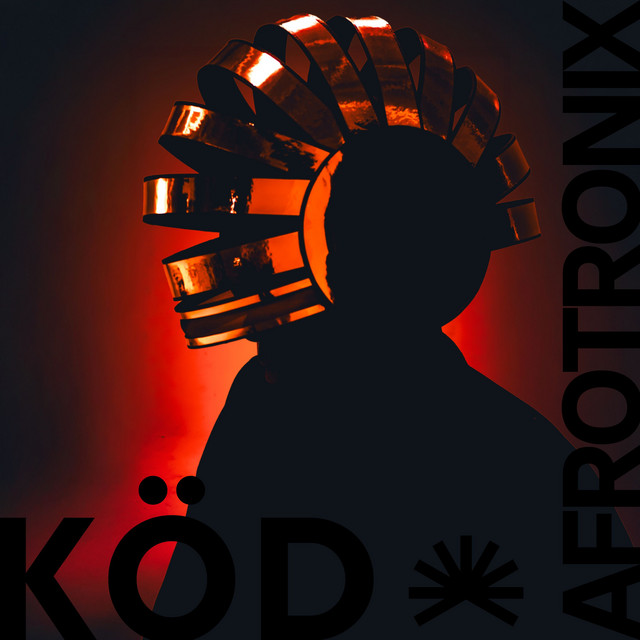
Afrotronix (Caleb Rimtobaye), the Chadian‑born artist whose music fuses ancestral rites and Sara, Gourane and Arabic vocal traditions with cutting‑edge electronic production, today announces KÖD, a new album that reimagines the future of music. Reinventing popular genres, KÖD is proof that the most futuristic sound is also the oldest.
Chad’s first electronic export — Afrotronix is an Afrofuturist icon. Led by Chadian guitarist-producer Caleb Rimtobaye from Montreal, the project fuses Electronic Music, Afro Tech, Amapiano, and Afro House into what he calls “Saharan Electro” — a bold, ancestral pulse for the future. Born in Chad and raised amid the spiritual and musical practices of his people, Afrotronix transformed early civil war traumas into a mission of communal healing and unity. Self‑taught in Dj, voice and guitar, he won the Jeux de la Francophonie in 2001 and relocated to Montreal, where he developed a signature sound — “Saharan Electro Blues” — that pairs Nganja initiation chants and Sara vocal textures with deep house, dubstep and ambient electronics.
With 130+ festivals worldwide (WOMAD, Afropunk Paris, JOVA Beach Party), collaborations with Baaba Maal, Youssou N’dour, Lorenzo Jovanotti, and Stonebwoy, and 18 global awards including Best African DJ (AFRIMA 2018) and Best African Electro Artist (2019), Afrotronix is Chad’s most internationally recognized musical export.
Wearing the DOM — a helmet symbolizing reimagined ancestral wisdom — Afrotronix creates sonic mosaics from electric guitar, live percussion, and cutting-edge visuals. His upcoming album Köd imagines an inclusive world rooted in shared memory, healing, and groove: “a dance of intersecting horizons and futures to be created together.”
In a landscape of sameness, Afrotronix is a genuine discovery — music that dares to dream and dance beyond borders, time and space.
KÖD — Language and Code
KÖD is an interrogation and celebration of what must remain sacred as technology evolves. The album embeds ancestral rhythms into modern algorithms, asking which cultural codes should be stewarded by human hands even as we teach machines our cultural vocabularies. Sparse, spiritual motifs sit alongside propulsive production to create immersive, transcendent soundscapes. Raised by griots, trained by machines, Afrotronix transforms cultural erasure into pan-African electronic liberation. (Cf Le Monde – Electro Libre)
KÖD in Sara means the tam-tam, the talking drum that has carried messages across African landscapes for millennia. Through specific beats and rhythms, different tribes decode different meanings — a sophisticated system of communication that predates written language. The talking drum represents one of humanity’s earliest forms of coding: rhythm as language, sound as data, drum as transmitter.This ancient system represents one of the first examples of human coding: information transmitted through rhythm, requiring both sender and receiver to share the same interpretive key. The talking drum required both technical skill (the drummer) and cultural literacy (the listener) — a perfect parallel to today’s relationship between human creativity and digital technology. Humanity’s first algorithm was written in rhythm. KÖD honors this legacy.
A Pan‑African Collaboration
Featuring collaborators from Chad, Nigeria, Sudan, Ghana, Senegal, Mali, Congo and Canada, KÖD underscores Afrotronix’s role as a cultural facilitator and pan African creative leader. The project centers unity, cultural pride and collective healing — music as ritual and gathering for communities across continents.
Baaba Maal – Senegal – Featuring on The Miracle
Born in Podor, Northern Senegal, Baaba Maal is one of Africa’s most internationally celebrated artists. Rooted in Fulani/Pulaar musical traditions, he’s spent four decades expanding the boundaries of African music, fusing ancestral sounds with rock, electronic, reggae, and world music influences. A Grammy-nominated artist and collaborator with legends like Peter Gabriel, Brian Eno, Mumford & Sons, and Hans Zimmer (Black Panther: Wakanda Forever soundtrack), Baaba’s soaring voice carries messages of unity, education, and social justice. Beyond music, he’s a tireless humanitarian — founding initiatives to support youth, agriculture, and cultural preservation across Africa. From his groundbreaking albums Djam Leelii and Firin’ in Fouta to recent work like Being, Baaba Maal remains a bridge between tradition and innovation, a griot for the global age.
Stonebwoy – Ghana – Featuring on Beyond the Sky
Ghana’s most decorated dancehall/Afrobeats architect with multiple BET and VGMA awards. The voice that turned “Activate” and “Bawasaaba” into continental anthems, proving African rhythms dominate global stages. Stonebwoy fuses reggae-dancehall grit with Afrobeats fire, creating a pan-African sound that moves from Accra to Kingston to the world. He is a living bridge between Caribbean bass and African soul. The song Beyond the Sky with Afrotronix is a never seen before, experimental structure, deeply spiritual vibrations, the roots of the future african reggae.
Eman Alshareef – Soudan – Featuring on Soudani Girl
A source of many Soudanese musical masterpieces, Eman is a Soudanese voice raising to celebrate unconditional love and cultural beauty. Featuring with Afrotronix states the obvious but also ignored humanity of the people of Soudan. With powerful pieces of art celebrating love and humanity, the goal is to bring attention to the Soudan situation.
Nissa Seych – Seychelles – Featuring on Maachi Wene
Born in the Seychelles and raised on a soundtrack of Stevie Wonder, Bob Marley, and Lauryn Hill, Nissa Seych has been turning heartfelt words into captivating songs since childhood. Now based in Montreal, her signature engages an eclectic fusion of Afrobeat, reggae, dancehall, R&B, and hip-hop — all rooted in her Creole heritage and Afro-Caribbean identity. Beyond the beats, Nissa’s mission is empowerment: proving women can thrive as authentic artists. With ties to Kaytranada and Mr Eazi, and years refining her craft, she’s ready to break borders — linguistic, cultural, and musical.
Djely Tapa – Mali – Featuring on Untold Stories
Born in Kayes, Mali, into an illustrious griot lineage — daughter of legendary vocalist Kandia Kouyaté and dancer Djely Bouya Diarra — Djely Tapa carries centuries of djeliya (griot artistry) in her voice and commands the future. She collaborated with major artists before launching her 2019 solo debut Barokan, produced by Afrotronix and winner of the 2020 JUNO Award for Best World Music Album. Now Multi awarded artist, her soaring, incandescent voice channels Mandingue tradition through contemporary experimentation, singing messages of feminine strength, hope, and social justice in Malinké, Bambara, Khassonké, and French. She’s shared stages with Oumou Sangaré, Tiken Jah Fakoly, cementing her role as both guardian of griot heritage and explorer of new sonic territories.
Seydina – Senegal – Featuring on Woma
Born in Thiaroye, tempered by humility, refined by music — Seydina’s voice is a prayer wrapped in gold. His songs carry messages of peace and family across mbalakh rhythms, jazz harmonies, and Afro-electro pulses. From Senegal to Montreal, his art awakens and adapts seamlessly across genres: mbalakh, rap, jazz, folk, and Afro-electro.
Artist Statement
“My work teaches digital systems the languages and rhythms of our ancestors,” says Afrotronix. “KÖD is about preserving what is sacred while using new tools to amplify our voices. It’s a call to remember where we come from as we build what’s next.” It is also proof that the most futuristic sound is also the oldest.
KÖD is built on two foundational elements: the ever-present drum, and traditional vocal techniques reimagined as organic synthesizers. Through the vocoder, I’ve created what I call “the voice of an African robot” — textures and words the world has never encountered. For the first time, a robot speaks Sara and Goulay.
The album’s opening track captures machines in the act of learning — attempting to decode linguistic patterns and melodic structures. I’ve fed these machines my life’s work: years of collecting and archiving Sahelian musical traditions, voices preserved on worn cassettes from my childhood, now digitized and made legible to algorithms. The machines are hungry, reaching, learning. Beneath the layers, their message is clear “Feed me with the African database.”
Anything we give AI, it can reproduce. But there are codes it will never grasp—gestures, sighs, silences laden with culture. KÖD celebrates these sacred spaces that make us irreplaceable. We create the machines, but we keep our mysteries. KÖD is a meditation on what eludes machines. Artificial intelligence can learn our languages, reproduce our melodies, even compose for us. But there is a language it will never understand: that of ancestral gestures, sighs laden with stories, ritual silences that speak the unspeakable. These are our secret codes—passed down skin to skin, gaze to gaze, from generation to generation. KÖD celebrates these human mysteries, these sacred spaces where we remain irreplaceable. We create the algorithms. But we keep our souls. We remain the guardians of the invisible, the masters of our own codes. The lords of our creations.