


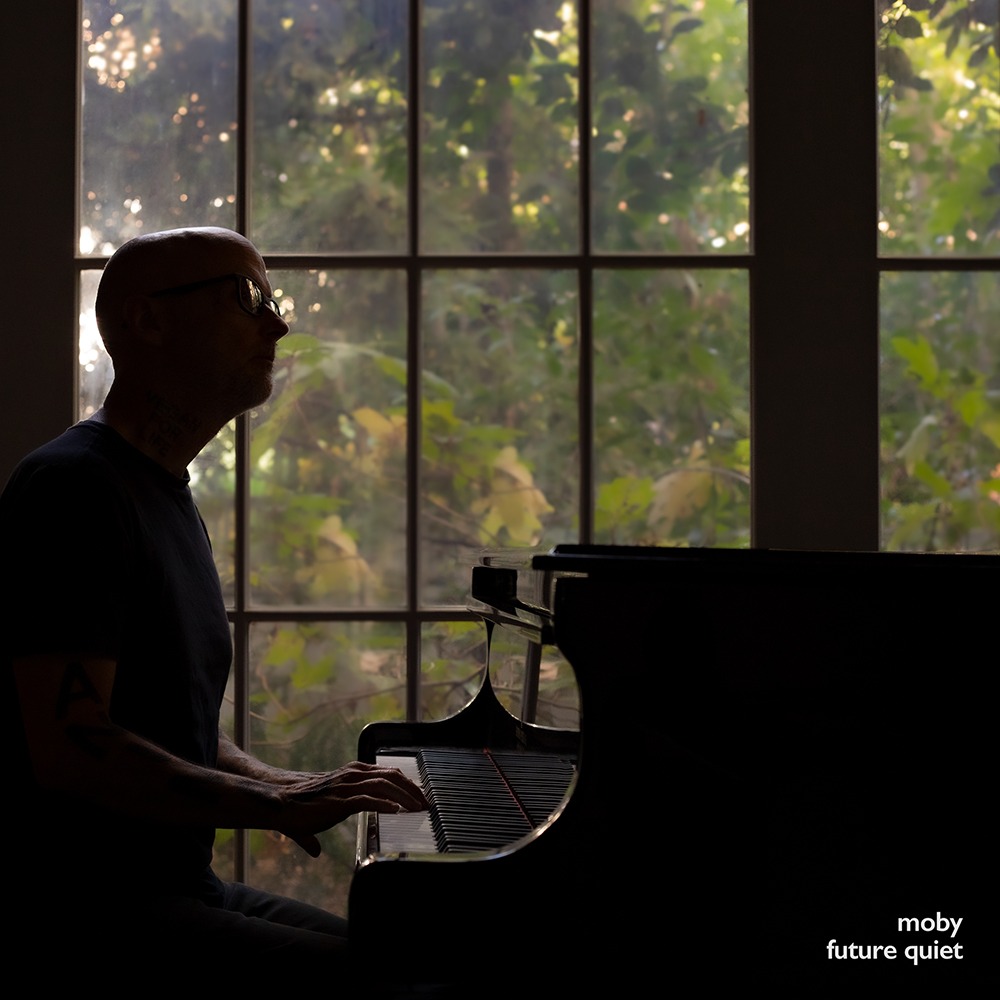
Moby has announced his 23rd studio album ‘Future Quiet,’ set for release on February 20, 2026 via BMG. Alongside the announcement, he shares the album’s opening track, a newly recorded orchestral version of “When It’s Cold I’d Like To Die,” featuring vocals from Jacob Lusk of Gabriels. The release marks a reflective new phase in Moby’s catalog, built around restraint, atmosphere, and emotional space.
Across eleven tracks, ‘Future Quiet’ moves through piano minimalism, ambient compositions, and select vocal collaborations. The album centers on the contrast between constant digital noise and the human need for stillness, shaping a listening experience designed around calm and focus. The record has already drawn a strong response for its clarity and intention, presenting a quieter but deeply considered body of work.
Moby describes the album as a deliberate retreat. He explains that while he still loves loud and maximal music, the increasing intensity of modern life has pushed him toward writing and recording music that feels safe and grounding. He describes ‘Future Quiet’ as a personal refuge, created with the hope that listening can offer the same sense of relief and pause.
The album opens with the reworked “When It’s Cold I’d Like To Die,” originally released on Moby’s 1995 album ‘Everything Is Wrong’ with vocals by Mimi Goese. The song has reached a new audience following its use in seasons one and four of Stranger Things, where it resonated widely despite its sparse structure. Moby notes that the renewed attention has been surprising, especially given that the original recording was never released as a single.
Reflecting on Jacob Lusk’s involvement, Moby recalls hearing his voice for the first time on KCRW and immediately wanting to collaborate. After tracking him down, the two worked together on the new version, which places Lusk’s voice at the center of a sweeping orchestral arrangement. Moby has described the result as transcendent, pointing to the emotional depth Lusk brings to the performance.
With a career spanning more than three decades, Moby continues to evolve while remaining deeply connected to his values around activism, compassion, and mental health awareness. His work across music, writing, film, and visual art reflects an artist still driven by curiosity and purpose. As ‘Future Quiet’ arrives and live plans expand through 2026, the album reinforces his long-standing role as a singular voice shaping the emotional language of modern music.