


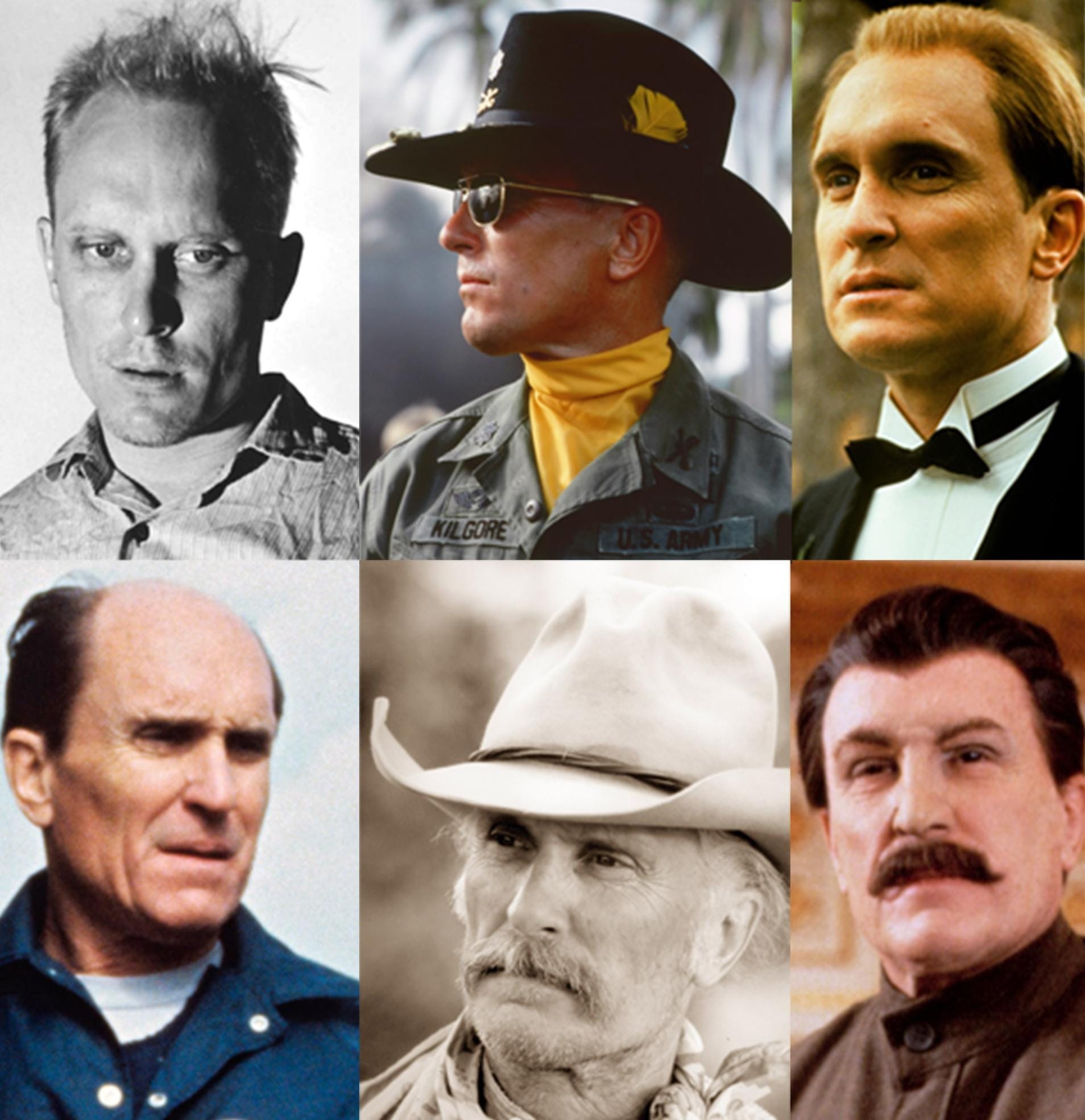
The film world says goodbye to Robert Duvall, the Oscar-winning actor whose seven-decade career shaped modern cinema. From quiet, watchful outsiders to thunderous commanding officers, Duvall brought depth, restraint, and lived-in truth to every frame. He died February 15, 2026, at 95, leaving behind one of the most respected legacies in Hollywood history.
Here are 25 lesser-known facts about the man behind the performances.
- He made his film debut as Boo Radley in To Kill a Mockingbird, barely speaking yet stealing scenes.
- He studied under legendary acting teacher Sanford Meisner at the Neighborhood Playhouse.
- His classmates included Dustin Hoffman and Gene Hackman.
- He once worked as a Manhattan post office clerk while chasing auditions.
- He served in the United States Army from 1953 to 1954.
- He earned his first Oscar nomination for The Godfather as Tom Hagen.
- He turned down The Godfather Part III over a salary dispute.
- His “napalm in the morning” speech in Apocalypse Now is one of cinema’s most quoted monologues.
- He won his Academy Award for Best Actor for Tender Mercies.
- He insisted on singing his own songs in Tender Mercies.
- He called his role in Lonesome Dove his personal favorite.
- He won two Emmy Awards, including one for Broken Trail.
- He founded his own production company, Butcher’s Run Films.
- He wrote, directed, and starred in The Apostle.
- He portrayed Joseph Stalin in the HBO film Stalin.
- He portrayed General Robert E. Lee in Gods and Generals.
- He trained in Argentine tango and maintained a tango studio.
- He practiced Brazilian jiu-jitsu later in life.
- He received the National Medal of Arts in 2005.
- He became one of the oldest Oscar nominees ever for The Judge.
- He appeared in over 60 films across seven decades.
- He supported historic preservation efforts in Virginia.
- He co-founded the Robert Duvall Children’s Fund.
- He remained active in film into his 90s.
- He often described acting as living truthfully between action and cut.
Robert Duvall never chased flash. He built characters from the inside out, often letting silence speak louder than dialogue. Whether in Westerns, crime dramas, war epics, or intimate character studies, he anchored stories with gravity and authenticity. His performances endure because they feel human first, legendary second.