


Some artists play it safe. Others leap without a net. Creative risks can confuse critics, alienate fans, or spark revolutions. But every so often, those risks push music forward in ways no focus group could predict.
Here are 13 artists, listed alphabetically, who gambled on bold ideas and expanded the possibilities of popular music.
Beyonce
When she surprise-dropped ‘Beyonce’ in 2013 with no warning, she rewrote the rules of album releases. The full visual album turned streaming into spectacle. She followed with ‘Lemonade,’ weaving rock, country, blues, and spoken word into a genre-blurring cultural moment.
Bob Dylan
In 1965, he went electric at the Newport Folk Festival and shocked the folk purists. Albums like ‘Highway 61 Revisited’ and ‘Blonde on Blonde’ fused rock instrumentation with poetic, surreal lyricism, redefining what popular songwriting could achieve.
David Bowie
Bowie treated reinvention as an art form. From Ziggy Stardust to the Berlin Trilogy, he shifted styles fearlessly. ‘Low’ embraced ambient minimalism and fractured structures, influencing everyone from post-punk bands to modern electronic producers.
Kendrick Lamar
With ‘To Pimp a Butterfly,’ Lamar merged jazz, funk, and spoken word into a politically charged hip-hop epic. At a time when minimal trap dominated radio, he delivered dense live instrumentation and layered storytelling that elevated rap as high art.
Lady Gaga
After conquering pop with ‘The Fame,’ she pivoted into theatrical maximalism on ‘Born This Way.’ Later, she stunned again by diving into jazz standards with Tony Bennett on ‘Cheek to Cheek,’ proving mainstream pop stars could thrive in classic American songbook territory.
Madonna
Every era brought reinvention. ‘Like a Prayer’ blended pop with gospel and controversy, while ‘Ray of Light’ immersed her in electronic production and spiritual themes. She constantly tested cultural boundaries and redefined pop longevity.
Prince
He battled record labels, changed his name to an unpronounceable symbol, and fused funk, rock, pop, and psychedelia into singular statements like ‘Sign o the Times.’ His refusal to be boxed in made genre labels feel irrelevant.
Radiohead
After the guitar-driven success of ‘OK Computer,’ they pivoted into glitchy electronica with ‘Kid A.’ The album abandoned conventional hooks for atmosphere and abstraction, influencing the direction of 21st-century alternative music.
Taylor Swift
She moved from country to pure pop on ‘1989,’ then pivoted again with the indie-folk textures of ‘Folklore.’ Reinvention became central to her career, with each shift bringing new collaborators, sounds, and audiences.
The Beatles
Mid-60s pop idols transformed into studio innovators. ‘Revolver’ and ‘Sgt. Pepper’s Lonely Hearts Club Band’ introduced tape loops, orchestration, and conceptual ambition that expanded the idea of what an album could be.
The Weeknd
Emerging with shadowy, atmospheric R&B mixtapes, he later embraced glossy 80s synth-pop on ‘After Hours.’ The risk paid off with massive global hits while maintaining a dark, cinematic identity.
U2
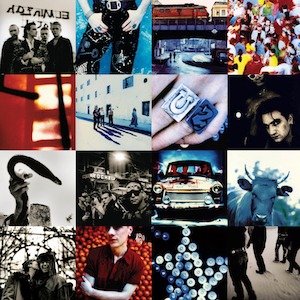
After arena-rock dominance with ‘The Joshua Tree,’ they reinvented themselves with the industrial and electronic textures of ‘Achtung Baby.’ It was a bold recalibration that kept them culturally vital into a new decade.
Whitney Houston
Already a global pop powerhouse, she leaned fully into gospel roots and R&B textures on ‘The Preacher’s Wife’ soundtrack. The project became the best-selling gospel album of all time and reaffirmed her spiritual and vocal foundation.
Creative risks are not accidents. They are choices. And these artists chose evolution over comfort, proving that the biggest leaps often create the loudest echoes.