


An album opener is a contract. It tells you exactly what kind of relationship you are about to have with the next forty-five minutes of your life. Get it right and the listener is locked in before the first chorus. Get it wrong and you are fighting uphill for the rest of the record. The greatest opening tracks in history do not ease you in. They grab you, orient you, and make you feel like you have arrived somewhere specific. Here are some of the most inarguable examples of that contract being honored in full.
“Gimme Shelter” by The Rolling Stones (‘Let It Bleed’) opens with a guitar figure that sounds like the world ending at half speed, and by the time Keith Richards and Merry Clayton are trading vocals, you are not listening to a rock song anymore. You are inside a document of civilization coming apart at the seams. No album in the Stones’ catalog needed a stronger opening statement, and nothing in rock music has ever quite matched it.
“Plainsong” by The Cure (‘Disintegration’) is one of the great slow reveals in rock history. Wind chimes and icy synths draw you in gently, volume creeping up, and then the guitars arrive like a weather system. Two and a half minutes pass before Robert Smith sings a single word, and by then the album’s entire emotional world has already been built around you. One commenter described it as “hope and despair at the same time.” That is exactly right.
“Black Sabbath” by Black Sabbath (‘Black Sabbath’) is three minutes and forty seconds that changed the course of music. A tritone riff, a rainstorm, and a bell toll later, heavy metal existed as a genre. Everything that followed, from doom to thrash to death metal to sludge, traces a direct line back to this track. It did not just open an album. It opened a door that has never been closed.
“Battery” by Metallica (‘Master of Puppets’) opens with a passage of clean, delicate acoustic guitar that lulls you into a false sense of security before detonating into one of the most ferocious riffs the band ever wrote. The structural contrast is breathtaking even now, forty years on, and it sets up an album that remains the high-water mark of thrash metal without any real competition.
“Cherub Rock” by Smashing Pumpkins (‘Siamese Dream’) announces itself with a feedback swell and then launches into a riff so confident and fully formed it sounds like Billy Corgan had been saving it his entire life. The song is a statement of artistic independence delivered at maximum volume, and it remains one of the most exciting first sixty seconds in alternative rock history.
“Disorder” by Joy Division (‘Unknown Pleasures’) is a first album, first track moment that very few bands have ever replicated. Bernard Sumner’s guitar, Stephen Morris’s drums and Ian Curtis’s voice arrive fully formed on a debut record, as if the band had skipped the developmental phase entirely and gone straight to making something that sounded like no one else on earth.
“Everything in Its Right Place” by Radiohead (‘Kid A’) signaled one of the most dramatic pivots in popular music. After ‘The Bends’ and ‘OK Computer’ had made them the most important guitar band in the world, the opening track of ‘Kid A’ contained almost no guitar at all. Thom Yorke’s voice, processed and looped over shifting keyboards, told you immediately that Radiohead had no interest in repeating themselves.
“Funeral for a Friend/Love Lies Bleeding” by Elton John (‘Goodbye Yellow Brick Road’) is eleven minutes of Elton at his most unrestrained and ambitious, an orchestral rock suite that opens one of the greatest double albums ever made. It demonstrated that Elton John in 1973 was operating on a scale that most of his contemporaries could not even conceptualize.
“Gimme Shelter” by The Rolling Stones (‘Let It Bleed’) opens with a guitar figure that sounds like the world ending at half speed, and by the time Keith Richards and Merry Clayton are trading vocals, you are not listening to a rock song anymore. You are inside a document of civilization coming apart at the seams.
“Hell’s Bells” by AC/DC (‘Back in Black’) carries extra weight that no amount of critical analysis can fully capture. Released less than a year after Bon Scott’s death, the tolling bell that opens the track and the album is both a tribute and a declaration that the band intended to survive. It remains one of the most emotionally loaded album openers in rock history.
“London Calling” by The Clash (‘London Calling’) opens with four beats and a bass line and immediately sounds like an emergency broadcast. Joe Strummer’s voice carries genuine urgency, the kind that most punk bands performed but The Clash actually felt, and the song’s apocalyptic imagery has only grown more resonant with time.
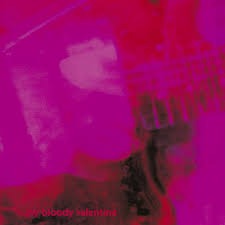
“Only Shallow” by My Bloody Valentine (‘Loveless’) opens with a drum fill that sounds like it was recorded inside a hurricane and then collapses into the most gorgeous wall of noise ever committed to tape. Kevin Shields built an entire sonic universe on that album, and “Only Shallow” drops you into the deep end of it without warning or apology.
“Plainsong” by The Cure aside, few openers match the sheer audacity of “Shine On You Crazy Diamond” by Pink Floyd (‘Wish You Were Here’), a nine-minute instrumental tribute to Syd Barrett that asks the listener to simply surrender to it. Pink Floyd in 1975 had enough confidence to open an album with something that does not resolve for nearly ten minutes, and the gamble paid off completely.
“Smells Like Teen Spirit” by Nirvana (‘Nevermind’) is the most culturally seismic album opener of the 1990s and possibly of any decade since the 1960s. The quiet-loud dynamic, the riff, Kurt Cobain’s voice arriving like a distress signal: within four minutes, the landscape of popular music had shifted in a way nobody in the music industry had fully anticipated.
“Tom Sawyer” by Rush (‘Moving Pictures’) opens with a synthesizer swell that in 1981 sounded like the future arriving ahead of schedule. Neil Peart’s drums, Geddy Lee’s bass and Alex Lifeson’s guitar lock into a groove that is somehow simultaneously technical and completely physical, and the track remains the definitive argument for why Rush belong in any serious conversation about the greatest rock bands of all time.
“Where the Streets Have No Name” by U2 (‘The Joshua Tree’) builds for nearly a minute on organ before the guitar and drums arrive, and when they do the sensation is close to physical. Produced by Brian Eno and Daniel Lanois at the peak of their powers alongside a band operating at the absolute height of their ambition, it is one of the great examples of recorded music being engineered to feel enormous.