


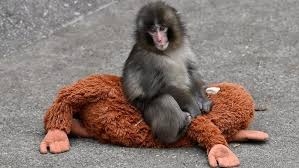
If you have been online this week, you have probably met Punch. Seven months old. Japanese macaque. Abandoned by his mother at Ichikawa City Zoo near Tokyo. Now the most unexpectedly important creature on your feed.
Punch was born last summer and was rejected by his mother, likely due to inexperience and the extreme heat. Zookeepers stepped in, nursing him and giving him something deceptively simple: a stuffed orangutan. Not as a cute prop, but as a behavioral tool. The zoo explained that soft objects help simulate maternal clinging and prevent overdependence on humans. Translation: this was science, not sentiment.
But then the photos hit. Punch dragging the plush toy. Punch hugging it. Punch clutching it when other monkeys swatted at him during his rocky reintroduction to the enclosure. Suddenly, timelines everywhere were flooded with one small primate and one big emotional metaphor.
The hashtag #HangInTherePunch took off. Visitors lined up outside the zoo. Parking lots filled. Entry restrictions followed. In the middle of global political tension, economic anxiety, and algorithmic chaos, millions of people stopped to collectively care about a baby monkey holding a stuffed animal.
And then came the twist. This week, the zoo shared that Punch has begun playing with other young monkeys without relying on the toy. He has been grooming and being groomed. He has received hugs. For macaques, grooming is social currency. It means trust. It means belonging. It means he is integrating.
Why did this hit so hard?
Because Punch became a mirror. We saw vulnerability. We saw isolation. We saw the awkward stage of trying to rejoin the group after being on your own too long. And we saw progress. Slow, imperfect, but real.
There is something deeply human about needing a placeholder while you figure out how to belong again. A stuffed orangutan. A comfort album. A comfort show. A ritual. We all carry something.
Punch’s story says a few things about us in 2026. We are overwhelmed. We are craving softness. We are desperate for narratives that bend toward connection instead of collapse. And we will absolutely rally around a baby monkey if it means believing that integration is possible.
The best part? The toy is still there if he needs it. Growth does not erase comfort. It just adds community.