


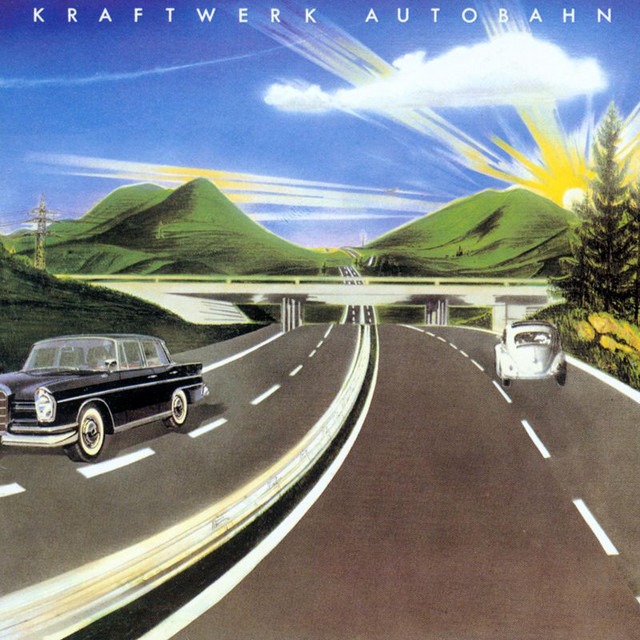
In November 1974, the musical landscape shifted forever as Kraftwerk unveiled Autobahn. Transitioning from their experimental “krautrock” origins to a revolutionary electronic pop sound, the group—now expanded to include Wolfgang Flür and Klaus Röder—created a sonic blueprint for the future. By moving their operations to Conny Plank’s farmhouse studio and embracing the Minimoog synthesizer, Ralf Hütter and Florian Schneider crafted a sound painting of the modern world that eventually captured the imagination of the United States and the United Kingdom alike.
This album stands as a monument to innovation, blending classical precision with the industrial folk music of the Rhine Valley. Here are five remarkable facts about the record that put electronic music on the map:
1. The 22-Minute Journey to the Top
The centerpiece of the album is the sprawling, 22-minute title track, designed to emulate the sensory experience of a long-distance drive. From the gliding sound of tires hitting painted road stripes to the rhythmic pulsing of the motor, the song captures the joy of the German highway. While the original version takes up nearly an entire side of the LP, a three-minute edit became a massive international hit, reaching number 25 on the Billboard Hot 100 and number 11 in the UK.
2. The “Fun Fun Fun” Linguistic Fluke
A famous bit of rock lore surrounds the song’s main refrain, “Fahren fahren fahren” (German for “driving, driving, driving”). English-speaking listeners frequently mistaken the lyric for “Fun fun fun,” leading many to believe it was a tribute to The Beach Boys. While the band members admit that driving on a highway with no speed limit is indeed fun, they clarify that the phrase is purely German, though they enjoy the coincidence of the sounds.
3. A Visual Revolution by Emil Schult
The iconic “look” of Kraftwerk—the carefully staged promotional images and the minimalist aesthetic—began with this album. Associate Emil Schult suggested the new lyrics and the group’s distinct visual branding. His influence helped the band move away from the “Gothic romanticism” of their contemporaries, opting instead for a clean, modern image that David Bowie later cited as a major influence.
4. Custom Tech and Homemade Violins
The innovative sounds on Autobahn required more than just off-the-shelf instruments. Along with the newly purchased Minimoog, the band used customized versions of Farfisa and Vox drum machines. Most notably, member Klaus Röder contributed to the sessions with an electronic violin he built himself—a unique creation that initially piqued Florian Schneider’s interest and helped bridge the gap between classical and electronic music.
5. From Chicago Airwaves to the USSR
Despite a quiet launch in West Germany, the album found its wings thanks to a radio station in Chicago that began playing an imported copy of the single. This grassroots support led to a massive US tour and helped the album spend 22 weeks on the Billboard charts, peaking at number 5.