


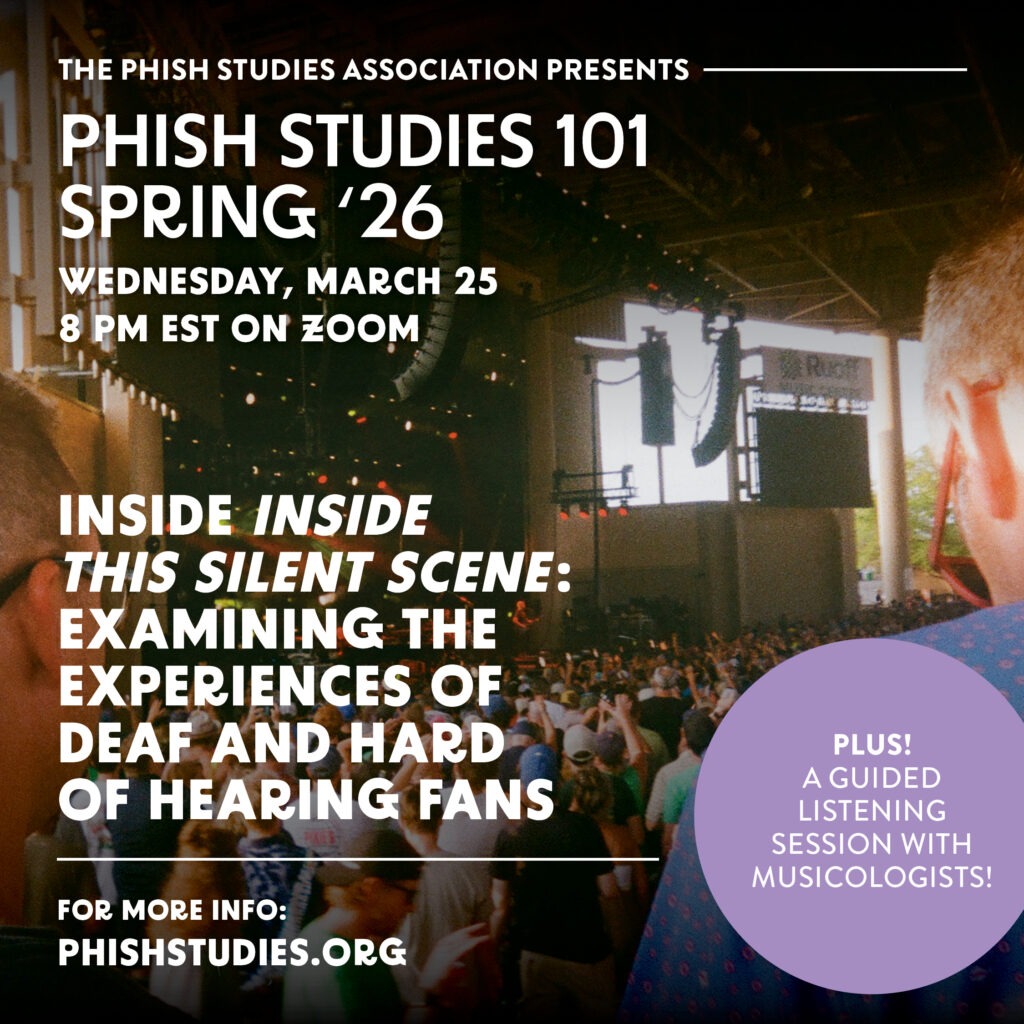
There are college courses about The Beatles, Bob Dylan, and hip-hop culture. Now add another to the syllabus: Phish. Yes, the band whose concerts can stretch songs into half-hour improvisational journeys is now the subject of organized academic study. Welcome to Phish Studies 101, where the jams get analyzed, the fans become scholars, and the music is treated like a living, breathing text.
Run by the Phish Studies Association, the online course series invites fans, researchers, and curious listeners to explore the music and culture surrounding the legendary jam band. The next session takes place March 25, 2026, from 8:00 to 9:30 p.m. EST, and costs $25 – or comes included with a $40 annual membership in the organization.
And this is not just a fan club with a PowerPoint.
The classes feature music scholars who break down Phish’s improvisational techniques, compositional structures, and the mechanics behind those sprawling jams that can turn a three-minute song into a cosmic expedition. In previous sessions, participants dove deep into how the band constructs its improvisations, examining rhythm shifts, harmonic movement, and the collective musical intuition that makes each performance unique.
Think of it as part music theory, part cultural studies, and part guided tour through the weirdest and most joyful corners of jam-band history.
Phish Studies 101 first launched in October 2024 with three online classes and a guided listening session where scholars dissected some of the band’s most famous jams. The response was strong enough that the program now runs twice a year – once in the spring and once in the fall – giving fans regular chances to go full music-nerd on their favorite band.
Membership in the Phish Studies Association comes with more than just access to the classes. Members receive newsletters, announcements about conferences, calls for academic papers, and updates about new publications exploring the band from scholarly perspectives. In other words, if you have ever wanted to write a serious paper about a 28-minute live version of “Tweezer,” this is your crowd.
The idea of studying a jam band in an academic setting might sound unusual, but it fits perfectly into the growing field of popular music scholarship. Universities have long studied jazz improvisation, folk traditions, and rock history. Phish, with its massive live archive, devoted fan community, and constantly evolving performances, offers a rich musical ecosystem to explore.
Besides, anyone who has spent time at a Phish show knows that the music already feels like an ongoing experiment.
Now, there is just a syllabus to go with it.