


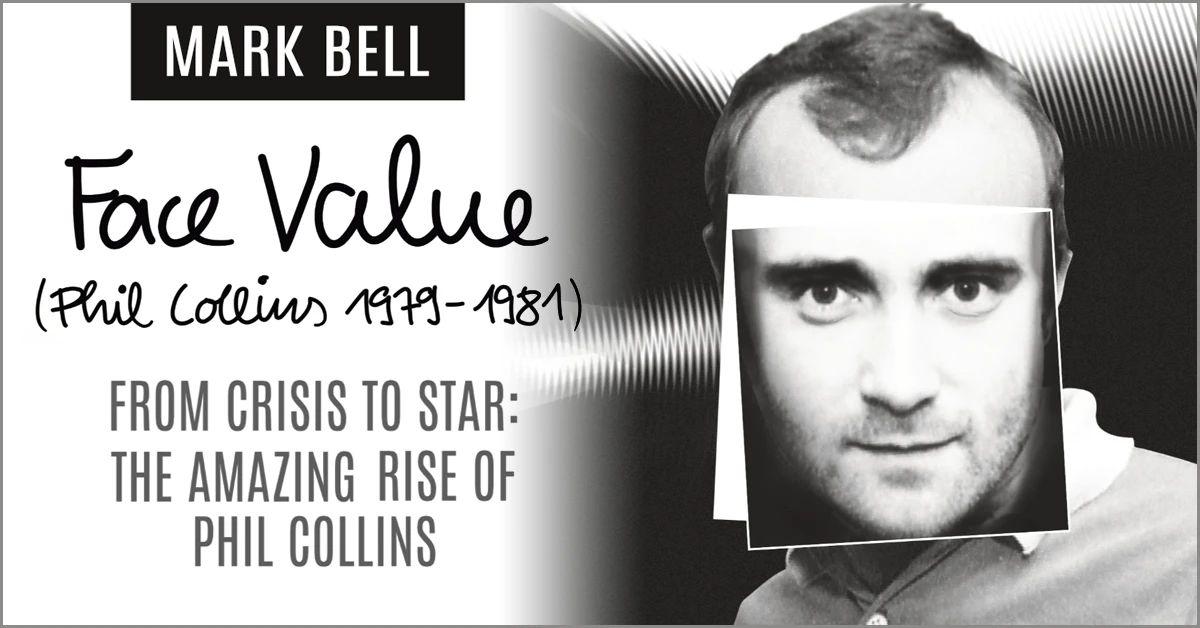
hil Collins is back in focus with the English release of ‘Face Value (Phil Collins 1979–1981) – From Crisis to Star’, a detailed new book by Mark Bell. The release opens up a comprehensive look at one of the most important albums of the 1980s and the personal story behind it.
Originally published in German, the book now reaches a wider audience as part of the Album Age series. Bell approaches the material with both academic depth and a clear, accessible voice, breaking down the cultural and musical weight of ‘Face Value’ without losing momentum.
The story begins in a period of upheaval. After returning from tour with Genesis in 1979, Collins faced a personal crisis that reshaped his life. That moment pushed him away from the band temporarily and into a period of intense creative output.
In isolation, Collins began writing and recording songs at home. Those early sessions laid the groundwork for what would become ‘Face Value’, capturing a raw emotional state that would define the album’s tone.
Bell tracks how those ideas evolved in the studio. Collaborations with musicians like Eric Clapton, Alphonso Johnson and the Earth, Wind & Fire Horns added depth and texture, expanding the sound beyond its initial framework.
A key turning point came with the involvement of producer Hugh Padgham. His engineering approach helped shape the album’s signature sound, including the gated reverb drum effect that would become a defining sonic marker of the decade.
The book also dives into the songs themselves. Bell offers a detailed track-by-track analysis, with particular focus on “In The Air Tonight,” unpacking its structure, atmosphere and lasting cultural impact.
By the time ‘Face Value’ was released, Collins had fully stepped into his role as a solo force. The album’s success shifted the trajectory of his career and influenced the direction of Genesis, while leaving a lasting imprint on the sound of 1980s music.