


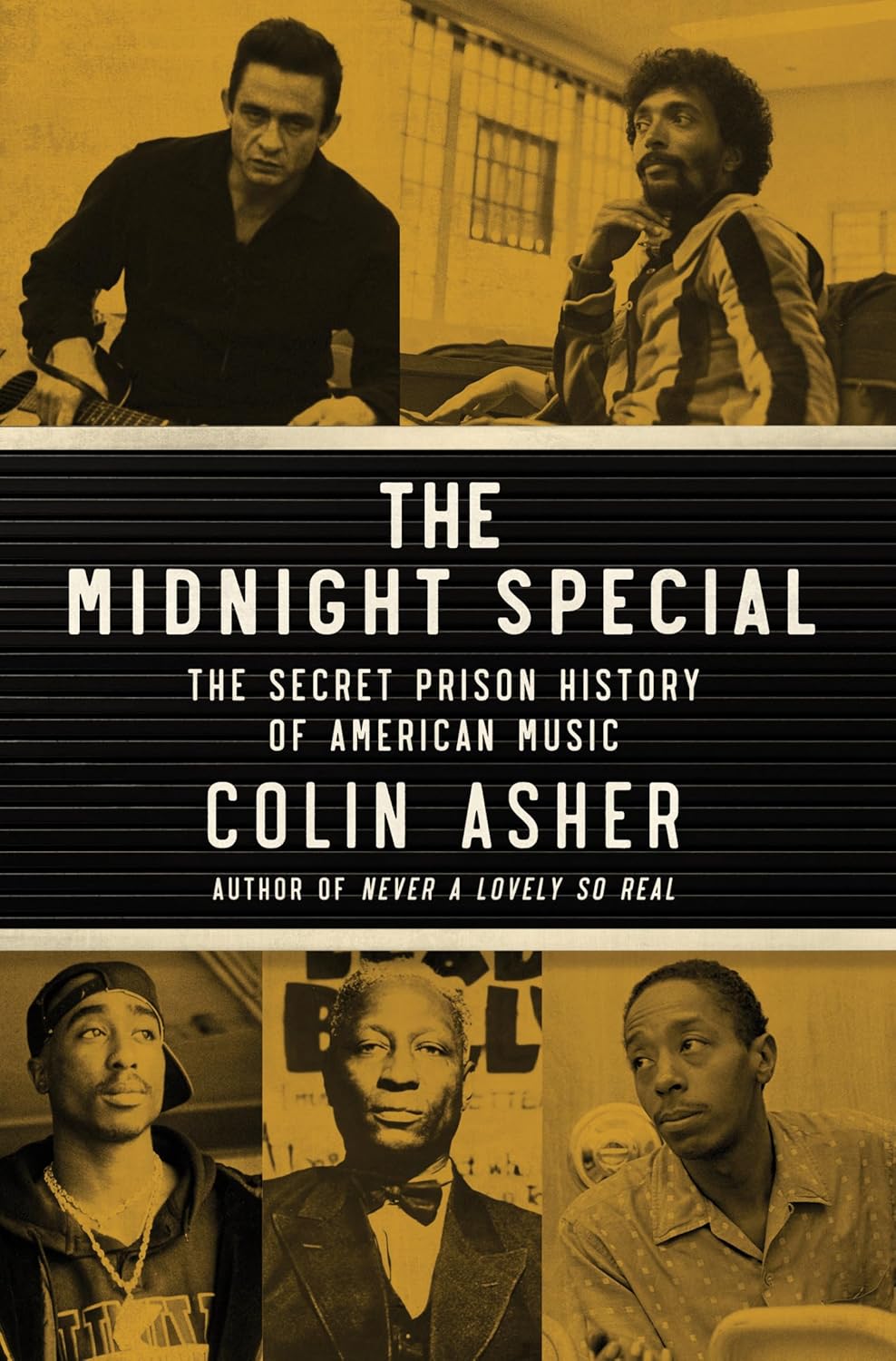
Colin Asher has written one of the most urgent and genuinely original music history books in years. ‘The Midnight Special: The Secret Prison History of American Music’, out June 30th from W. W. Norton, traces the deep and largely untold story of how the criminal justice system shaped American popular music from blues to hip-hop, and the portrait it draws is both revelatory and damning. Asher, the critically acclaimed author of ‘Never a Lovely So Real’, brings the same forensic depth and narrative precision to 336 pages that reframe the entire arc of twentieth century American music culture.
The book opens with Huddie “Lead Belly” Ledbetter, made to perform in prison clothes, and moves forward through the Jim Crow-era Southern prison farms, the heroin-driven mid-century drug wars that criminalized a generation of jazz artists, and into the crushing weight of mass incarceration decades later. The throughline Asher draws is consistent and sobering: the suggestion of criminality has often benefited white artists while active prosecution devastated Black musicians. The divergent trajectories of jazz pianist Elmo Hope and country singer Johnny Cash make that argument with particular force, Hope’s career stifled by violent discriminatory policing while Cash’s leniency produced a masterpiece at San Quentin.
The book closes with Tupac Shakur’s ‘Me Against the World’ and stories of music in prisons today, completing a narrative that is as musically astute as it is sociologically essential. Asher never loses sight of the individual lives behind the argument, and that human grounding is what separates ‘The Midnight Special’ from academic analysis and places it firmly in the tradition of essential American music writing. This is one of the most important music books of 2026, and one that demands to be read widely.