


There’s a reason vinyl never died. And I don’t mean that in the romantic, hipster-candle-and-whiskey sense — I mean it in a purely technical, this-is-what-the-data-and-your-ears-are-telling-you sense. Streaming is convenient. It’s remarkable, actually, that you can pull up almost any record ever made in three seconds on your phone. But convenience and fidelity are not the same thing, and for certain albums, the gap between what you’re hearing on Spotify and what the artist actually put on tape is wide enough to drive a truck through.
These are the twelve records where that gap matters most. Some of them were recorded with analogue warmth so thick you can almost feel it. Some were mixed with a stereo image so carefully constructed that a needle in a groove is the only thing that fully honours it. And some are just cool — the kind of cool that a 12-inch sleeve and a side break and the ritual of actually getting up to flip the record was invented for.
If you own a turntable and you don’t own these, you’re leaving something on the table.
‘Back to Black’ — Amy Winehouse
Mark Ronson and Salaam Remi recorded this with an almost militantly analogue philosophy, and it shows. The warmth of the brass, the snap of the drums — digital compression flattens exactly what vinyl preserves. This is one of those records where the format and the feeling are inseparable.
‘The Rise and Fall of Ziggy Stardust’ — David Bowie
Ken Scott’s production is a masterclass in spatial sound — instruments placed in the stereo field with surgical intentionality. On vinyl, Bowie actually occupies a room. On streaming, he’s just in your ears. The difference is not subtle.
‘Rumours’ — Fleetwood Mac
One of the most painstakingly recorded albums in rock history, with sessions that stretched across multiple studios and countless takes chasing a sound that was never quite finished. The fidelity reward for playing this on vinyl is immediate and almost unfair — the kick drum alone will rearrange your furniture.
‘To Pimp a Butterfly’ — Kendrick Lamar
This is a dense, layered, deliberately maximalist record that was mixed to reward close listening. The live instrumentation — recorded with actual jazz musicians in actual rooms — breathes differently on vinyl. It’s also one of the most important records of the last thirty years, and important records deserve the format that takes them seriously.
‘Led Zeppelin IV’ — Led Zeppelin
Jimmy Page was one of the most studio-literate guitarists of his generation and he engineered significant portions of this record himself. The dynamic range on “When the Levee Breaks” alone — recorded in a stairwell at Headley Grange — is something that streaming literally cannot reproduce at full resolution. Vinyl can. Barely, but it can.
‘Kind of Blue’ — Miles Davis
Recorded in two sessions in 1959 at Columbia’s 30th Street Studio, this is one of the best-captured live ensemble recordings in the history of the format. The room is in the recording. On vinyl, you hear it. On a phone speaker, you’re just getting the notes.
‘The Dark Side of the Moon’ — Pink Floyd
You knew this one was coming. Alan Parsons engineered this record specifically for the stereo capabilities of the vinyl format, and it shows in ways that are almost cruel to experience on anything else. The heartbeat that opens the album, the cash registers on “Money,” the seamless segues between sides — this is a record that was designed as an object, not a playlist.
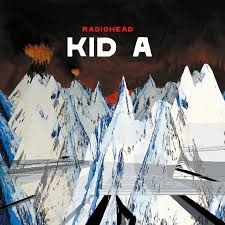
‘Kid A’ — Radiohead
Counterintuitive, maybe, given that this is an electronic record built largely on synthesizers and drum machines. But Nigel Godrich mixed it with a warmth and depth that digital playback tends to sanitize. On vinyl, the textures that Thom Yorke and Jonny Greenwood were chasing actually land the way they were intended.
‘Aja’ — Steely Dan
Becker and Fagen were borderline pathological about studio quality and spent more time and money on this record than almost anyone thought was reasonable. It paid off. ‘Aja’ is one of the most technically accomplished recordings ever made, and audiophiles have been using it to test turntable setups for decades for exactly that reason.
‘Carrie & Lowell’ — Sufjan Stevens
This is a quiet record — devastatingly quiet — and quiet records expose everything a format can and can’t do. The delicacy of the finger-picking, the intimacy of the vocals, the space between the notes — vinyl handles silence differently than digital, and on this album, the silence is doing half the work.
‘Abbey Road’ — The Beatles
Geoff Emerick’s engineering at EMI Studios was genuinely revolutionary, and the late-period Beatles had access to the best analogue equipment in the world at the peak of their studio ambition. The medley on Side B is one of the greatest pieces of sequenced music ever committed to a record, and it was conceived for a record — specifically a vinyl record with two sides and a needle that has to travel from the outside in.
‘Sleep Well Beast’ — The National
Aaron Dessner recorded much of this in his home studio with a combination of vintage analogue gear and modern production tools, and the hybrid warmth comes through on vinyl in a way that streaming slightly blunts. Matt Berninger’s baritone was made for a format with this much low-end presence. Put this on at midnight and report back.