


Cinema and music have always shared the same grammar. Tension, release, character, atmosphere, narrative arc. The best film scores don’t just accompany images, they generate them. And occasionally, a record arrives that does this without a single frame of footage attached. These 11 albums think in scenes. They have acts. They have protagonists. A good director would know exactly what to do with any one of them.
‘The Dark Side of the Moon’ — Pink Floyd (1973)
The Wizard of Oz sync has been documented and debated for decades, and the fact that it holds up at all is the point. This is an album structured around anxiety, mortality, and the passage of time, precisely the architecture of a great dystopian sci-fi film. Stanley Kubrick would have understood it immediately.
‘The Rise and Fall of Ziggy Stardust’ — David Bowie (1972)
The concept is already written. An alien messiah descends to Earth as a rock star, gets consumed by the very audience that worships him, and disintegrates. The character arc is complete, the themes are rich, and the music is extraordinary. This film should have existed 40 years ago.
‘Dummy’ — Portishead (1994)
Every track on this record establishes location, mood, and emotional stakes within the first 30 seconds. That’s a screenwriting skill. The trip-hop production and Beth Gibbons’ voice build a 90s European noir world so completely that the screenplay practically writes itself. Carol Reed would have loved it.
‘To Pimp a Butterfly’ — Kendrick Lamar (2015)
This album has a three-act structure, a recurring narrator, thematic motifs that develop across the runtime, and a final scene where Kendrick interviews Tupac from beyond the grave. The spoken word passages function as voiceover. The whole record is a film that happens to be music.
‘Hounds of Love’ — Kate Bush (1985)
Side two, “The Ninth Wave,” follows a consciousness drifting between life and drowning. It’s nine minutes of the most precisely constructed surrealist filmmaking never committed to celluloid. Agnès Varda could have made something extraordinary with this material. Someone still could.
‘Random Access Memories’ — Daft Punk (2013)
This record understands production the way a cinematographer understands light. Every texture, every transition, every guest appearance is a deliberate compositional choice. The Giorgio Moroder monologue alone functions as a film prologue. Put this behind a futuristic romance and you’d have something close to perfect.
‘Blood on the Tracks’ — Bob Dylan (1975)
Dylan once said this album was inspired by Chekhov, and you can hear it. The characters are specific, the situations are vivid, and the emotional register shifts from track to track the way a great script moves between scenes. John Cassavetes could have done something devastating with this record.
‘If I Can’t Have Love, I Want Power’ — Halsey (2021)
Halsey released a 45-minute feature film alongside this album, which confirms the instinct. The industrial production and gothic atmosphere build a fully immersive dark fantasy world. Trent Reznor and Atticus Ross produced it, two people who already know exactly how to score a film.
‘Robbie Robertson’ — Robbie Robertson (1987)
Daniel Lanois produced this record, and his fingerprints are all over it, that particular quality of sound that feels like a place rather than a performance. Southern Gothic, atmospheric, and slightly out of time. This album is the score to a neo-noir film that nobody ever made, and that’s a genuine loss.
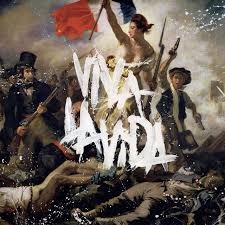
‘Viva la Vida’ — Coldplay (2008)
Brian Eno’s production gives this record an orchestral sweep that most film composers spend entire careers chasing. The title track sounds like the fall of an empire from the inside. As a historical drama or fantasy epic, this album would be doing half the director’s work for them.
‘The Black Parade’ — My Chemical Romance (2006)
A dying patient moves through death and whatever follows. The narrative is structured, the emotional arc is complete, and the music moves between operatic bombast and genuine tenderness with real dramatic control. This is a fully realized musical drama. The stage adaptation is overdue, let alone the film.