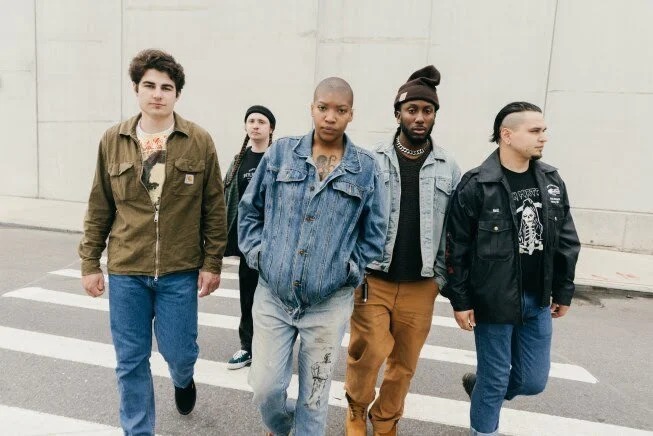
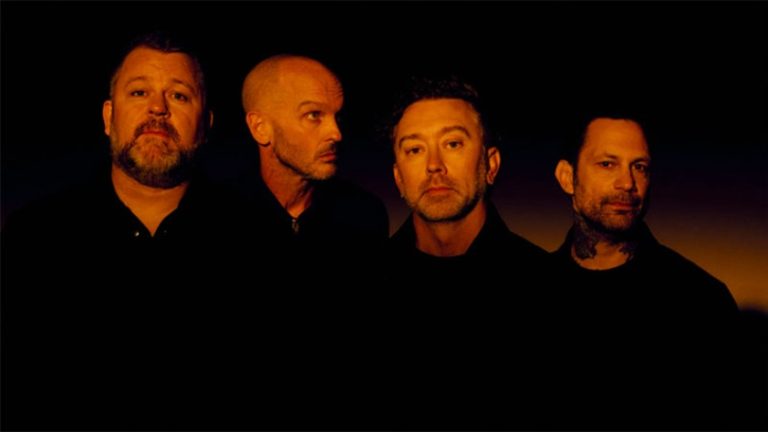
Upchuck are back with “Last Breath,” a scorching new single written and recorded during the ‘I’m Nice Now’ sessions at Sonic Ranch Studios in Tornillo, Texas with producer Ty Segall. The track arrives as the Atlanta five-piece head into a packed summer of festival and club dates across the US, Europe, and UK. Listen here.
‘I’m Nice Now’, released last autumn via Domino, drew praise from across the board. The Guardian called the band “politically charged, gloriously abrasive and coiled like a spring.” Kerrang gave it 4 stars, writing that “Upchuck don’t just play songs: they spit venom, grind teeth and slam their fists against the rotting walls of America.” Mojo noted their “Mudhoney-esque fuzz with the muscular heft of early Black Flag.” Hi-Fi Choice went to 5 stars. The critical consensus is as close to unanimous as punk rock gets.
The summer run includes Dog Days Festival in Savannah, Outbreak Festival in Manchester, a date with Lambrini Girls in Heidelberg, and King Gizzard and the Lizard Wizard’s Field of Vision II at Meadow Creek in Buena Vista, Colorado. Club dates in London, Bristol, and Leeds round out the UK stretch.
‘I’m Nice Now’ is available on limited-edition silver vinyl, standard black vinyl, CD, and digitally, each physical format including a foldout poster.
Upcoming Tour Dates:
June 5 – Dog Days Festival, Savannah, GA
June 25 – Patrick-Henry Village with Lambrini Girls, Heidelberg, Germany
June 27 – Outbreak Festival, Manchester, UK
June 28 – Oslo, London, UK
June 29 – Thekla, Bristol, UK
June 30 – Brudenell, Leeds, UK
July 2 – Les Eurockéennes, Belfort, France
July 3 – Bogen F, Zurich, Switzerland
August 14 – Field of Vision II at Meadow Creek, Buena Vista, CO
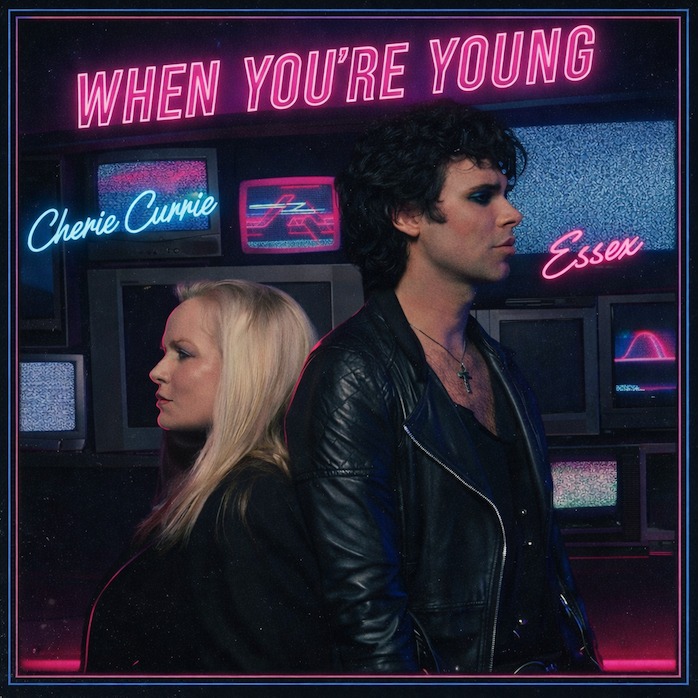
Cherie Currie and a Chicago newcomer named Essex have teamed up on “When You’re Young,” a cover of the early 1980s UK new wave track originally recorded by Victims of Pleasure, and the combination works beautifully. Produced by Die Krupps mainman Jurgen Engler, the track lands at the intersection of classic new wave and contemporary rock with real authority, and it serves as both a welcome return for Currie and a genuine introduction to an artist worth paying attention to.
Essex draws from Billy Idol, Marc Bolan, David Bowie, and James Brown, and his presence on the track reflects all of that, swagger and edge balanced with genuine melodic instinct. Currie is equally direct about what she found in him. “Billy Idol would be proud with this man’s presence,” she says. “After 50 years in this crazy biz it’s a breath of fresh air to find such a grateful and gracious man. He gives me hope for this nutty music business.” Essex keeps it simple in return: “It was an unbelievable honour to work with somebody that has inspired me since I was a kid. Working with her was insanely easy.”
The single arrives fresh from Currie’s contribution to last year’s Yacht Metal collection, a cover of Walter Egan’s “Magnet and Steel” that drew considerable attention. Essex, meanwhile, is working on an upcoming single and a full-length debut album later in the year, described as dark-edged guitars and synths, commanding melodies, and sharp, aggressive bite channeling the raw electricity of the MTV-era 1980s with modern grit.
American Football’s fourth studio album ‘LP4’ is out now via Polyvinyl Record Co., and lead single “Bad Moons” is the kind of opening move that makes clear exactly where this record lives. Eight minutes long, produced by Sonny DiPerri, and built from 2 separate demos fused into a single piece, it earns every second of its runtime.
The track opens with interwoven guitar melodies, a repeating harp sample, atmospheric effects, and soft confessional vocals from Mike Kinsella before its second half builds into a frenetic, driving jam and closes on a sobering coda. Kinsella describes the song as beginning from the perspective of a child, or two children stacked in a trench coat secretly living the life of a grown man, accumulating missteps and guilt along the way. “By the end, these missteps are almost spilling out of the boys,” he says. “A cathartic confession, hopefully at least somewhat relatable to anyone listening who’s ever lived a life.”
The video, directed by Alex Acy and Remi Belleville and anchored in rural Canada, traces the turbulent transition from boyhood to manhood in slow-motion montage. “Part of growing up is realizing you can only become more empathetic with others once you become empathetic with yourself,” Acy says. “Boys often have a harder time grasping this, which leads to a lot of dumb and regrettable actions.”
‘LP4’ sees the band overhauling their writing and recording processes to create their most sonically ambitious album to date, layered, dissonant, occasionally confrontational, and always deeply felt. The album reflects on disorientation, compromise, grief, and the hard-won perspective of middle age, and “Bad Moons” maps that emotional territory with real precision.
The world tour runs through August, with dates across the US, Europe, UK, Japan, and Canada. Several dates are already sold out, a second London show has been added, and upgraded venues in Philadelphia and Toronto reflect the demand this band continues to generate.
2026 Tour Dates:
May 24 – The Observatory North Park, San Diego, CA (Sold Out) with Mei Semones
June 19 – Alcatraz, Milan, Italy with Marconi Union
June 20 – Im Wizeman, Stuttgart, Germany with Marconi Union
June 21 – Die Kantine, Cologne, Germany with Marconi Union
June 23 – La Madeleine, Brussels, Belgium with Marconi Union
June 24 – Paradiso, Amsterdam, Netherlands with Marconi Union
June 26 – O2 Academy, Leeds, UK with Marconi Union
June 27 – O2 Kentish Forum, London, UK with Marconi Union
June 28 – O2 Kentish Forum, London, UK with Marconi Union (Second Date)
July 8 – Royale, Boston, MA with IAN SWEET
July 9 – Brooklyn Paramount, New York, NY with IAN SWEET
July 10 – Franklin Music Hall, Philadelphia, PA with IAN SWEET (New Venue)
July 11 – 9:30 Club, Washington, DC with IAN SWEET
July 14 – The National, Richmond, VA with IAN SWEET
July 15 – Orange Peel, Asheville, NC with IAN SWEET (Sold Out)
July 16 – Variety Playhouse, Atlanta, GA with IAN SWEET
July 26 – Fuji Rock Festival, Niigata, Japan
August 7 – House of Blues, Cleveland, OH with Afternoon Bike Ride
August 8 – History, Toronto, ON with Afternoon Bike Ride (New Venue)
August 9 – Roxian Theatre, Pittsburgh, PA with Afternoon Bike Ride
August 10 – Newport Music Hall, Columbus, OH with Afternoon Bike Ride
August 12 – Marathon Music Works, Nashville, TN with Afternoon Bike Ride
August 13 – Deluxe at Old National Centre, Indianapolis, IN with Afternoon Bike Ride
August 14 – The Salt Shed, Chicago, IL with Afternoon Bike Ride
August 15 – Turner Hall Ballroom, Milwaukee, WI with Afternoon Bike Ride
August 16 – First Avenue, Minneapolis, MN with Afternoon Bike Ride
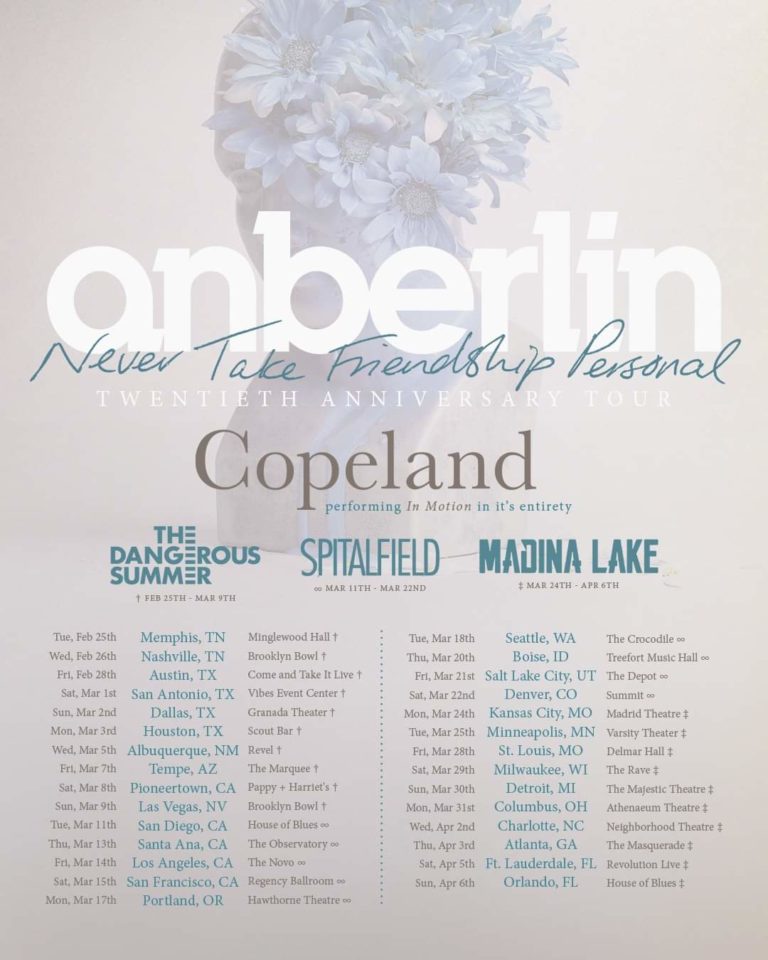
Anberlin are deep into their 20th anniversary celebration of ‘Never Take Friendship Personal’, and the remaining dates of their expanded US run are all still ahead. The alternative band have a string of midwest and east coast shows running through June 10, each night with support from Emery and Watashi Wa.
The tour arrives alongside ‘Nevertake’, a reimagined version of the landmark 2005 album featuring Matty Mullins on vocals. “‘Never Take Friendship Personal’ was the soundtrack to my life when I was 17,” Mullins says. “To now have the opportunity to step into the role of vocalist for the band that inspired me is beyond surreal. Re-recording this album with my own voice has been a full-circle moment and an absolute dream come true.” That context gives these remaining shows added meaning for longtime fans and new listeners alike.
Wage War are heading somewhere heavier and more rooted than anything they’ve done before. The Florida metalcore band have announced ‘It Calls Me By Name’, a 5-track EP due April 17 via Fearless Records, and lead single “Song Of The Swamp” arrives with a music video that sets the tone immediately.
“‘Song Of The Swamp’ is rooted in where we’re from,” the band says. “Driven by Florida and the raw aggression of nature, it’s a heavy track built on tension and hostility.” That description is accurate. The track is dense and aggressive, and it pulls from a very specific sense of place in a way that gives it real personality.
The EP as a whole doubles down on that identity. “It Calls Me By Name is about being drawn to your roots,” the band explains. “Five tracks shaped by Florida, the swamp, and the relentless aggression of nature. Built heavy, but still driven by the hooks that have defined us. It’s our signature sound amplified and pushed further into metal than we’ve ever taken it.” That combination of melodic instinct and genuine heaviness has always been Wage War’s strength, and this EP sounds like the most focused version of it yet.
Ava Max is making a statement. “Kill It Queen,” her new single out now everywhere, is the first track from a new chapter built around full creative control, a new team, and a sound that pushes her further than anything she’s released before. The big pop hooks are still there, unmistakably hers, but vocally and sonically this is Ava Max operating with a confidence and ambition that goes beyond anything on ‘Don’t Click Play.’
“I’m telling my story my way,” she says. “I’m doing things differently and it feels good. I feel empowered, reinvigorated, and I think you can hear it in this single. ‘Kill It Queen’ is for anyone who wants to feel unstoppable.” That energy comes through in the track, and the sharper avant-garde aesthetic surrounding the release signals that this reinvention runs deeper than a single song.
The foundation she’s building on is already formidable. Over 22 billion streams, multi-platinum plaques, and a string of smash hits including “Kings & Queens,” “My Head & My Heart,” “The Motto” with Tiësto, and “Whatever” with Kygo have established her as one of pop’s most consistent forces. “Kill It Queen” arrives as the version of herself she’s clearly been working toward.
Rise Against have shared a new live performance video for “Damage Is Done,” a standout track from their latest album ‘Ricochet’, and it arrives as part of something larger than a standard music video release. The clip is the second visual produced through The A.R.T. Project (All Rise Together), a fan-driven creative initiative the Chicago-based punk rock band launched to celebrate community, collaboration, and expression around the record.
The concept behind the project is straightforward and genuinely generous. Late last year, Rise Against invited dozens of dedicated fans to create original posters inspired by ‘Ricochet’s lyrics, themes, and emotional urgency, and those pieces became the visual backdrop for the live performance videos. The fans themselves appear alongside the band throughout the footage, making the whole thing a document of the community that has built around this band over more than 25 years.
“Damage Is Done is about how hurt is not something that can be reversed, so we can either grow from it or let it unravel us,” says frontman Tim McIlrath. That kind of direct, emotionally honest framing is exactly what Rise Against have always done, and ‘Ricochet’ continues that tradition with the same urgency and melodic balance the band has maintained across their entire catalog.
The A.R.T. Project reflects a long-held belief at the core of Rise Against, that music is a collective experience, and that the people who show up for it are part of what makes it matter.
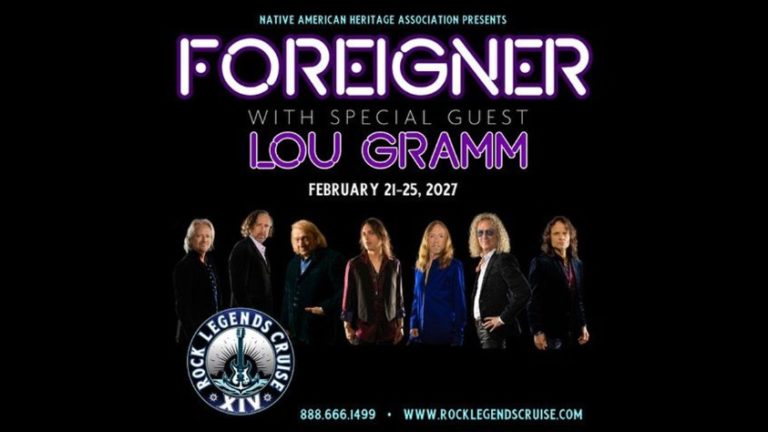
Foreigner are marking 50 years in a big way. The rock band behind “I Want To Know What Love Is,” “Hot Blooded,” “Cold As Ice,” “Urgent,” and “Juke Box Hero” have announced they will headline Rock Legends Cruise XIV in February 2027, with original lead singer Lou Gramm joining them for a special performance of songs he recorded during the band’s earliest years. It’s a reunion moment built around the 50th anniversary of the March 8, 1977 release of the band’s iconic self-titled debut album.
Rock Legends Cruise XIV sails February 21-25, 2027, departing from Port Miami aboard Independence of the Seas. The five-day floating festival includes two full days at sea packed with live performances, a midweek stop in Costa Maya, and exclusive artist interactions throughout. A full lineup will be announced at a later date.
Before the cruise even arrives, Foreigner have a formidable 2026 schedule already in motion. An orchestral tour commences with a March residency at the Venetian Hotel in Las Vegas and culminates with an appearance alongside the San Diego Symphony. In April, the band tours Florida with Lou Gramm as special guest, presenting Foreigner 4 in its entirety alongside many of their biggest Top 10 hits under the Foreigner 4 Deluxe banner.
June brings a 26-date European tour including sold-out shows across Germany, the UK, Switzerland, and Scandinavia. Then on July 23, Foreigner launches a co-headline amphitheatre tour with Lynyrd Skynyrd across the United States, one of the summer’s most compelling classic rock pairings.
At the heart of Foreigner’s legacy is founder Mick Jones, a Songwriters Hall of Fame inductee whose songwriting and musical leadership have guided the band across five decades. Their debut delivered “Feels Like The First Time,” “Cold As Ice,” and “Long, Long Way From Home.” What followed was an unstoppable run of rock classics, capped by the global number one ballad “I Want To Know What Love Is” from their fifth studio album ‘Agent Provocateur.’
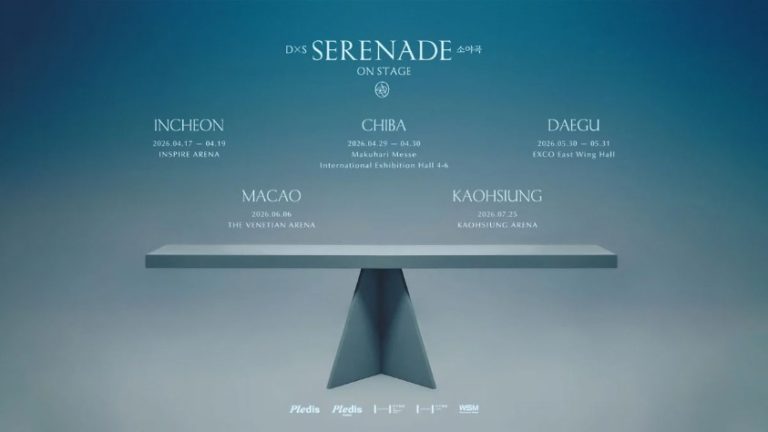
Seventeen’s vocal sub-unit DxS, comprising DK (Lee Seokmin) and Seungkwan (Boo Seungkwan), is in the middle of their first-ever solo tour, and two dates remain for fans who haven’t yet had the chance to catch them live. The Serenade on Stage Tour 2026 still has stops in Macau on June 6 and Kaohsiung, Taiwan on July 25, and both represent a rare opportunity to see the duo in a more intimate, vocal-focused setting than Seventeen’s full group shows.
The tour supports DxS’s debut mini-album ‘Serenade’, a project built around the duo’s vocal harmony and emotional storytelling. Standout tracks include the mid-tempo ballad “Blue,” the harmony-layered “Echoes,” and the upbeat pop-driven “Moonlight,” and the album has drawn praise for the strength of both voices and the consistent theme of yearning and connection throughout.
DK and Seungkwan are two of the most distinctive voices in K-pop, and the sub-unit format gives both room to explore a more focused, vocally driven performance style that differs significantly from Seventeen’s high-energy group concerts. Adding urgency to the remaining dates, DK is expected to enlist for mandatory military service in South Korea later in 2026, making these final shows of the Serenade tour a genuinely meaningful moment for fans to witness the duo together on stage.
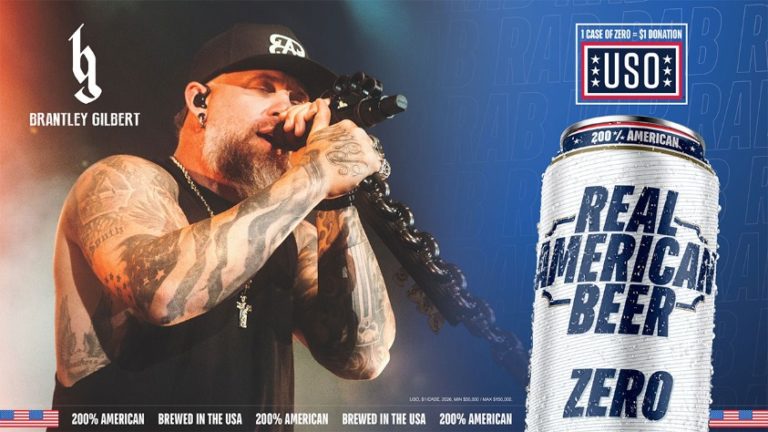
Brantley Gilbert isn’t lending his name to Real American Beer Zero. He’s an equity partner who helped shape the product from the ground up, and that distinction matters. Fourteen years sober, Gilbert wasn’t interested in a non-alcoholic beer that approached itself as a compromise or a wellness product. He wanted something that showed up the same way he does, full participation, no sacrifice in flavor or experience.
Real American Beer Zero is 29 calories, 3.9 grams of carbs, and less than 0.5% ABV, served in a 16 oz can and available in singles, four-packs, and six-packs. It follows the same brand identity as RAB Light, anchored in the “200% American” and “Hits Different” positioning, and it’s built for the same moments Gilbert’s fans already know, days outdoors, nights with friends, standing in a crowd at a country show.
“This is for people who want to show up, be part of the moment, and enjoy the same experiences with friends and family while staying true to their lifestyle,” Gilbert says. “Real American Beer Zero allows everyone to be included, while keeping the taste and culture people love about beer.” For someone with 7 No. 1 hits and over 8.3 billion career streams, that community connection is the whole point.
The launch is anchored by a national partnership with the USO, with RAB donating $1 per case sold of RAB Zero to the organization in support of active-duty service members and their families. RAB Zero will be available nationwide, on tour with Gilbert, through the brand’s website, and via select retail partners, with TikTok and Amazon channels opening within the coming weeks.