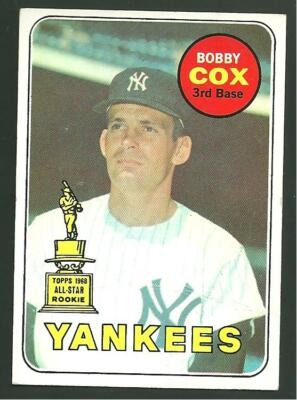
Bobby Cox died on May 9, 2026, in Marietta, Georgia. He was 84. The cause was complications from a stroke he suffered in April 2019 and subsequent heart issues. Baseball lost one of its most consequential managers, and Atlanta lost the man who gave the city its most sustained period of sporting excellence.
Cox managed 4,508 major league games across 29 seasons, finishing with a career record of 2,504 wins and 2,001 losses. Only Connie Mack, John McGraw, and Tony La Russa won more regular season games. He was ejected 158 times, an all-time record, and led his teams to 16 playoff appearances, another record. He won the Manager of the Year Award four times, once with the Toronto Blue Jays in 1985 and three times with the Braves in 1991, 2004, and 2005. He was inducted unanimously into the Baseball Hall of Fame in 2014.
None of those numbers capture what Cox actually meant to the teams he managed or the city he called home for most of his adult life.
He took over the Braves as field manager in June 1990, inheriting a last-place team, and by 1991 had engineered one of baseball’s most stunning reversals, going worst to first and reaching the World Series. That was the beginning of 14 consecutive division titles from 1991 through 2005, excluding the strike-shortened 1994 season. No professional sports franchise in any major North American league had ever accomplished anything like it. Cox won the only World Series of his managerial career in 1995, defeating the Cleveland Indians. The Braves made five World Series appearances under his management.
Before returning to Atlanta as manager, Cox had spent four seasons guiding the Toronto Blue Jays from 1982 to 1985, leading the franchise to its first winning record in 1983 and its first American League East title in 1985. He also served as the Braves’ general manager from 1986 through 1990, during which time he drafted Chipper Jones with the first overall pick in 1990 and assembled the core of the pitching staff, Tom Glavine, John Smoltz, and Steve Avery, that would anchor the dynasty. He handed the GM role to John Schuerholz after the 1990 season and returned to the dugout, where he stayed for two more decades.
Cox’s reputation among his players was singular. Catcher Brian McCann said it plainly: “He is the Atlanta Braves. He’s the best.” His approach to managing was fatherly in its consistency, always in spikes and stirrups, always protecting his players, often getting himself ejected to spare them the penalty. In 158 ejected games, his teams won at a rate of .385, a number that reflects how many of those removals were deliberate sacrifices rather than losses of composure.
His ability to recognize and develop talent extended beyond the obvious. It was Cox who moved power-hitting catcher Dale Murphy to center field in 1980, a repositioning that unlocked one of the great careers of the decade. Murphy went on to win two National League MVP Awards and five Gold Gloves. Cito Gaston came to Toronto as a coach because of Cox, and later became manager of the Blue Jays himself, winning back-to-back World Series titles. The fingerprints of Cox’s baseball judgment are spread across decades of the sport.
The Braves retired his number six jersey in 2011. He attended games when his health allowed, received standing ovations every time he appeared on the field, and remained deeply connected to the organization until the end. His death comes days after that of former Braves owner Ted Turner, May 6, 2026, a loss that Atlanta fans on social media described as the worst week in the franchise’s history.
The Braves’ statement said it cleanly: “His Braves managerial legacy will never be matched.” That is simply a fact.