


Glasgow Green belonged to Biffy Clyro. The Scottish rock trio, Simon Neil alongside twins James and Ben Johnston, headlined TRNSMT Festival on home soil and turned it into a full-blown homecoming celebration. The set moved between jagged, complex riffs and stadium-sized choruses, with a massive crowd roaring back every word. Neil and company affirmed their place among the UK’s most formidable live acts, opening with the explosive one-two of “The Captain” and “That Golden Rule” before charging through a career-spanning run of fan favorites. They flexed serious range too, from the raw power of “Wolves of Winter” to a tender “Re-Arrange” and Neil’s stripped-back acoustic take on “Machines.” The production matched the ambition, with bagpipes and confetti erupting during “Stingin’ Belle” and fireworks lighting up the closing anthem “Many of Horror.” This was a band at the absolute peak of its powers.
R.E.M. Icon Michael Stipe Teams With Andrew Watt For New Song “I Played The Fool”

Michael Stipe just brought new music to late night. The R.E.M. frontman joined producer and musician Andrew Watt on Jimmy Kimmel Live to perform their new song “I Played the Fool,” backed by a few friends on stage. The collaboration pairs one of alternative rock’s most distinctive voices with Watt, the Grammy-winning hitmaker who’s worked with everyone from the Rolling Stones to Ozzy Osbourne, and the result lands with the kind of melodic pull that’s defined Stipe’s best work.
Irish New-Wave Favorite Christian Cohle Unveils “Living With Lucy” And Third Album ‘Queen Of Ashes’

A love that refuses to fade sits at the heart of Christian Cohle’s new single “Living With Lucy,” out now. The Irish alternative new-wave artist pairs a wistful ache with a euphoric, summery pulse, and uses the moment to announce his third album, ‘Queen of Ashes’, arriving October 16th. A launch show follows at Whelan’s in Dublin on November 13th.
Cohle has earned a reputation as one of Ireland’s best kept secrets, and the new track shows why. “Living With Lucy” rides a warm, groove-led current that recalls Future Islands and the sun-drenched expanse of The War on Drugs, propelled by physical, frontman-led vocals. Alex Reeves of Elbow handles live drums, while soaring analogue Yamaha DX7 pads, upright piano, and bass guitar lock together to push the arrangement forward.
There’s a hidden depth working underneath all that brightness. In the spirit of Outkast’s “Hey Ya!”, the song wraps an uplifting energy around a quieter emotional core that surfaces more with every listen. A melodic chorus carries it, framed by light, jangling acoustic guitars and lyrics that ask whether love survives the passing of years and decades.
The imagery roots the song firmly in place. Flooded roads, grey skies, Storm Éowyn, and a field of whitethorns give “Living With Lucy” a distinctly Irish atmosphere, where intimacy, memory, and time start to blur together. Critics have noticed the depth, with The Irish Times calling Cohle’s work both brave and human, and Hot Press describing it as beautifully stark.
The music video, directed by Tristan Heanue, arrives June 11th. With ‘Queen of Ashes’ on the horizon, “Living With Lucy” opens Cohle’s most raw and assured era yet.
Album Launch Show:
November 13th – Whelan’s, Dublin
Soundgarden Guitar Hero Kim Thayil Tells The Band’s Full Story In ‘A Screaming Life’

The man who built one of grunge’s heaviest sounds is finally telling his side. Kim Thayil, co-founder and lead guitarist of Soundgarden, releases his memoir ‘A Screaming Life: Into the Superunknown with Soundgarden and Beyond’ on June 9, 2026, co-written with veteran music journalist Adem Tepedelen and published by William Morrow.
Thayil traces the whole arc, from Soundgarden’s scrappy origins in Seattle’s beer-soaked punk clubs to their place as Rock & Roll Hall of Fame inductees in 2025. He pulls back the curtain on the band he founded alongside Chris Cornell, Hiro Yamamoto, Ben Shepherd, and Matt Cameron, charting the triumphs and the creative friction that came with inventing a sound nobody had heard before.
The book digs into identity too. Thayil’s Indian heritage and Yamamoto’s Japanese background shaped Soundgarden’s character, their music, and their experience navigating the industry, dimensions rarely explored in grunge’s well-worn history. His account of grieving Cornell, who died in 2017, has already drawn praise from early reviewers for its honesty.
The writing earns its acclaim. Booklist calls it a clear-eyed account that resists easy nostalgia, while Publishers Weekly describes an entertaining and intriguing history balanced by frank talk about the conflicts that led to the band’s 1997 breakup. For Soundgarden fans and anyone who lived through ’90s alternative rock, this one goes deep.
Province Of Canada And ‘Heated Rivalry’ Team Up On Limited-Edition Made-In-Canada Fleece

That cream fleece jacket from Season One, Episode Two of ‘Heated Rivalry’ now exists in real life, and you can pre-order one right now. Toronto-based Province of Canada has teamed up with the series for a limited-edition collaboration, recreating the on-screen costume piece designed by Hanna Puley with help from the dedicated “Release the Fleece” community. Pre-orders are live, with the jacket expected to ship in October, priced at $356 CAD.
The build deserves attention. The sherpa exterior is knit in Italy from 71% recycled polyester and 29% non-mulesed New Zealand virgin wool, lined with 100% cotton fleece, finished with YKK zippers, an embroidered Canada chenille patch on the back, and maple leaf twill patches on the sleeves. Made in Canada with thoughtfully curated materials from around the world, it’s built as a true collectible for fans of the show.
There’s a cause attached too. Ten percent of net profits go to You Can Play, with the NHL and NHLPA matching contributions up to a combined total of $50,000 CAD. Quantities are limited, one per customer, first come first served, and final sale, so fans who want one shouldn’t wait around. Order it here.
Sound Sculptor Reimagines Radiohead’s ‘OK Computer’ As ‘OK Nintendo 64’

Picture Thom Yorke’s existential dread filtered through the cheerful bloops of a Mario Kart loading screen. That’s the premise behind ‘OK Nintendo 64’, a full reimagining of Radiohead’s ‘OK Computer’ built entirely from N64 soundfonts, created by on4word and now live on YouTube. Every track on the seminal 1997 record gets rebuilt using the instrument banks of classic Nintendo 64 games, so “Airbag” runs on Super Mario 64, “Paranoid Android” rides the Mario Kart 64 engine, and “Exit Music (For a Film)” gets the Banjo-Kazooie treatment. The mashup works far better than it has any right to, turning melancholy art-rock into something playful and strangely moving. The full project is available free, or pay what you want, at on4word’s Bandcamp, with bonus material and uncompressed audio included.
MusiquePlus, Quebec’s Pop Culture Icon, Storms Back To Life On TikTok

HEADLINE
MusiquePlus, Quebec’s Pop Culture Icon, Storms Back To Life On TikTok
TAGS: MusiquePlus, TikTok, Attraction, Motion Entertainment, WPP Media, Remstar Media, Maxime Rémillard, Alec Boudreau, Richard Speer, Daniel Mekinda,
BLOG POST
Forty years after it first beamed music into Quebec living rooms, MusiquePlus has a new home. The legendary channel returns exclusively on TikTok on June 11, 2026, at @MusiquePlus, reborn for a generation that finds its favorite songs by scrolling.
Quebec built this brand. Launched in 1986, MusiquePlus became the flagship that introduced countless local talents to the province and beyond. Now it’s back with entirely fresh content, a fresh roster of VJs, and a creator-driven approach built for the platform where music discovery happens fastest.
The revival comes from a powerhouse collaboration between TikTok, Attraction, Motion Entertainment (a division of WPP Media), and Remstar Media. Each partner brings muscle. Together they’re aiming MusiquePlus straight at a new audience of French-speaking music lovers and the global communities who follow them.
The timing makes sense. Half of Canada’s Francophone community on TikTok actively seeks content that reflects and celebrates their identity, and MusiquePlus speaks that language fluently. This is a space designed to spotlight emerging and established acts alike, amplifying the creative voices that make Quebec sound like nowhere else.
“MusiquePlus is part of our collective memory, and this project was the perfect opportunity to revive it and give a powerful voice to local talent and culture,” says Maxime Rémillard, President of Remstar Media.
Alec Boudreau of TikTok Canada points to the platform’s pull. “Culture lives on TikTok. We’re so proud of the ways that Quebec’s distinct culture and music is discovered by local and global communities on TikTok,” he notes, adding that the team is thrilled to help Canadians and global audiences discover the artistry of Quebec music, culture, and entertainment.
Attraction is handling production, in partnership with Motion Entertainment. President Richard Speer frames the project as a cultural mission. “At Attraction, we believe in brands with soul and a story,” he says, describing a union of heritage and innovation that creates a new space for local artists and creators to be heard and seen.
The enthusiasm runs deep on the team itself. “Many of us, me included, were big fans of MusiquePlus and we are thrilled to be a part of its new life on TikTok,” says Daniel Mekinda, Head of Motion Entertainment in Canada.
More news is coming. The full lineup of VJs, the new faces who’ll champion Quebec’s rising creative voices, gets revealed in the weeks ahead of the June 11 launch.
Why Rock’s Octogenarian Hitmakers Own The Summer

History gives us a map for almost everything, except this. Ringo Starr turns 86 in July and he’s onstage, anchoring a generation of rockers who’ve walked the calendar somewhere no popular musicians have walked before.
Look back and the precedent thins out fast. Jazz and blues handed us the early models. B.B. King kept his road life running into his late 80s, playing hundreds of nights a year as the self-described Ambassador of the Blues, a man who started touring in 1955 and barely stopped. Tony Bennett sang into his 90s, took a Number 1 album at 88, and headlined jazz festivals when most of his peers were long gone. They proved a voice could carry across seven decades.
What’s happening in 2026 stretches even those examples. King and Bennett were singular figures, exceptions standing nearly alone. This summer hands us a whole roster. Mike Love of the Beach Boys is 85. Bob Dylan turns 85. Paul Simon is 84. Randy Bachman of The Guess Who is 82. Jon Anderson and Eric Clapton are 81, joined by Micky Dolenz and Rod Stewart. John Fogerty turns 80.
There’s a familiar scene that plays out every few years. A legendary performer, well past the age when most people have retired, announces a “farewell tour.” Tickets sell out. The shows are emotional. And then, eighteen months later, a new run of dates appears. The farewell, it turns out, was not goodbye.
We tend to explain this cynically — they need the money, or their handlers won’t let them quit. Sometimes that’s true. But the more interesting answer is psychological. For many artists who have spent 50 or 60 years on stage, stopping isn’t a logistical decision. It’s an existential one. Here’s a look at what’s actually going on beneath the rescheduled farewell.
For most people, identity is distributed across many roles: parent, friend, professional, neighbor. For a performer who became famous young, an enormous share of their sense of self can be fused to a single activity. Psychologists call this identity foreclosure — when a person commits hard to one identity early in life and never develops alternatives. A teenager who becomes a touring musician at nineteen may never have built the scaffolding for a self that exists off-stage.
This makes retirement feel less like ending a job and more like erasing a person. The question “Who am I if I’m not performing?” isn’t rhetorical for these artists. They genuinely may not have an answer, because the experiment of being someone else was never run. Touring isn’t what they do. It’s the load-bearing wall of who they are.
There is no ordinary experience that replicates what happens when twenty thousand people sing your words back to you. The combination of mass attention, rhythmic crowd response, and the physiological rush of live performance produces a neurochemical cocktail — dopamine, adrenaline, oxytocin from social bonding — that the brain learns to expect and crave.
This isn’t addiction in the clinical sense, but it shares a structure with it. The feedback loop is immediate, intense, and reliable in a way that almost nothing in private life can match. A retired performer doesn’t just lose a paycheck or a routine. They lose access to one of the most powerful reward experiences a human nervous system can have. Daily life afterward can feel muted, gray, under-stimulated by comparison. Many describe the off-season or the gap between tours as a low-grade depression. The stage isn’t a habit they can’t break. It’s a high they can’t find anywhere else.
For older artists specifically, touring takes on a second layer of meaning. To keep moving is, in a quiet way, to refuse to be finished. Continuing to perform becomes evidence — to the audience but mostly to oneself — that one is still vital, still relevant, still here.
There’s a concept in psychology called terror management: the idea that humans construct meaning systems partly to buffer the anxiety of knowing we will die. For an artist, the work itself is that buffer. A song outlives its singer; a performance is a small act of defiance against time. Stopping can feel uncomfortably like an admission — that the body is failing, that the relevance is fading, that the end is near. As long as the next tour is booked, the story isn’t over. The calendar full of future dates is, in a sense, a promise to the self that there is still a future.
Performers are often, paradoxically, people who are most comfortable in front of crowds and least comfortable alone. The stage offers a kind of intimacy that is intense but bounded — connection without the vulnerability of a one-on-one relationship. It’s love at scale, with a clear exit at the end of the night.
Retirement removes the structure and replaces it with the thing many performers spent their whole lives avoiding: stillness, solitude, and the unmediated company of their own thoughts. The roar of the crowd is also, for some, a way of not having to sit in a quiet room with themselves. Touring keeps the silence at bay.
It would be too simple to frame all of this as ego or avoidance. There’s a healthier strand running through it too. Work that feels meaningful is one of the strongest predictors of wellbeing in later life, and being needed is a powerful antidote to the irrelevance that often accompanies aging.
For an artist, a tour is a reason to stay disciplined — to keep the voice in shape, the body moving, the mind sharp. It provides structure, social connection with a touring family, and the sense that one still has something to give. Some older performers keep going not because they’re running from death but because the work is genuinely the best part of being alive for them. We don’t tell a beloved teacher or surgeon they should have quit years ago simply because they reached a certain age. The instinct to keep contributing is, in many cases, the sign of a life well-aligned with its purpose.
The cynical read — they can’t let go, they’re chasing a fading high, they’re afraid of dying — is real for some artists. But so is the generous read: that they’ve found something that gives their life shape and meaning, and they intend to do it until they physically cannot.
Maybe the most honest answer is that both are usually true at once. The same tour can be an avoidance of mortality and a celebration of being alive. The crowd can be both a fix and a genuine source of joy. Human motivation is rarely clean.
What’s clear is that “why don’t they just stop?” is the wrong question. For a person whose identity, nervous system, and sense of meaning have all been organized around the stage for half a century, the better question is: stop and become what? Until there’s an answer to that, the farewell tour will keep saying hello.
How Beyoncé Continues to Raise the Bar

Most artists, more than two decades into a career this decorated, would be content to coast on legacy. Beyoncé does the opposite. With each new project she seems determined to dismantle whatever box the industry tries to put her in, and her latest era proves it. In February 2025, ‘Cowboy Carter’ won Album of the Year at the Grammys, Beyoncé’s first victory in the show’s top category, capping a night where she came in as the most-nominated artist with 11 nominations. The win was monumental for reasons far beyond the trophy itself. In claiming it, the Houston-born superstar, already both the most awarded and nominated artist in Grammy history, became the first Black woman to win the top prize in the 21st century.
What makes the achievement so telling is the album behind it. ‘Cowboy Carter’ was her history-making eighth studio album, created in response to her experience being rejected from the country genre as a Black woman from the South. Rather than retreat, she made a country record on her own terms, and the institution that had long kept the genre’s gates closed to artists like her had to acknowledge it. She became the first Black woman in Grammy history to win Best Country Album, and used her platform to make the point explicit, saying, “I think genre is a code word to keep us in our place as artists. I just want to encourage people to do what they’re passionate about.”
This is the pattern that defines her. As Rolling Stone observed, she did it with the industry-changing ‘Beyoncé’ in 2013, the culture-shifting ‘Lemonade’ in 2016, and the homage-paying ‘Renaissance’ in 2022, and it took the amalgamation of these qualities on ‘Cowboy Carter’ for the Recording Academy to recognize her mastery of the album format. Each era is a complete artistic statement, a reinvention rather than a repetition, and each one moves the conversation forward for the artists who follow. She is, by reputation, a perfectionist who treats the album as a form to be conquered anew every time.
Crucially, she pairs that artistry with cultural memory. When she accepted Album of the Year, she didn’t simply celebrate herself. She dedicated the win to Linda Martell, the country legend who appeared on the album, saying, “I hope we just keep pushing forward opening doors.” It’s a small moment that captures the larger one: an artist at the absolute summit using her position to widen the path behind her.
And she refuses to let the milestone be the finish line. Less than 24 hours after the win, Beyoncé announced the Cowboy Carter stadium tour, a victory lap beginning in April 2025 at SoFi Stadium in Los Angeles before heading to Chicago, New Jersey, London, Paris, Houston, Washington D.C., and Atlanta. That tour would go on to become one of the highest-grossing of the decade. More than twenty years in, Beyoncé keeps raising the bar for one simple reason: she keeps refusing to accept where anyone else has set it.
John Blanche, Visionary Games Workshop Artist, Dies at 78
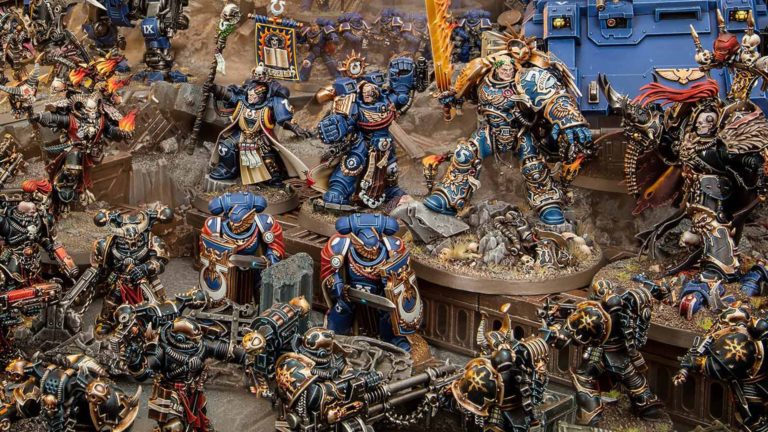
John Blanche, the British illustrator and miniature painter whose dark, gothic imagination shaped the visual identity of Warhammer and Warhammer 40,000 for decades, has died in 2026 at the age of 78. As the longtime art director of Games Workshop, he was one of the defining creative forces behind some of the most recognisable worlds in fantasy and science fiction gaming.
Born in 1948 into a working-class family in post-war England, Blanche grew up on a council estate during the 1950s, a period he remembered as “grey and flat” and starved of visual richness. He found his own colour where he could, drawing inspiration from cinema, collecting toy soldiers, and sketching historic warriors on the backs of old rolls of wallpaper. That instinct for the heroic and the fantastical would never leave him, even as the world around him tried to talk him out of it.
It tried more than once. At art college, where he earned a place on the strength of his paintings of battle scenes and prehistoric conflicts, Blanche was told he “had a romantic spirit, but it would never earn me a living.” He was warned he would never get a job painting angels, dragons, goblins, and trolls. He drifted into graphics, discovered illustration, hippydom, and The Lord of the Rings, and quietly set about proving that advice wrong. After college he worked as an assistant to a taxidermist in a Georgian manor house, building models and painting fantastic scenes in his spare time.
His break came after he relocated to London and approached the artist and publisher Roger Dean, who offered him freelance illustration work. Through the late 1970s and early 1980s Blanche produced book covers and interior art, including five illustrations for David Day’s A Tolkien Bestiary. In 1977 he began his long association with Games Workshop, supplying cover art for the fourth issue of White Dwarf and producing the cover for the first British edition of Dungeons & Dragons. He went on to paint the box art for the first edition of Warhammer Fantasy Battle in 1983.
After Games Workshop moved to Nottingham in 1986, Blanche was made the company’s art director, a role in which his influence became immeasurable. He directed the in-house art department, commissioned outside illustrators, and shaped designs for Citadel Miniatures, overseeing the art and painting columns in White Dwarf for years. Working alongside artists such as Ian Miller and Adrian Smith, he gave the company’s core products their distinctive look, a dark, gothic, occasionally bizarre, punkish quality that became inseparable from the Warhammer worlds themselves. His standing as a craftsman was recognised in 1987 when he won the Master Painter award at Games Day for his own Chaos Minotaur miniature, complete with a Mona Lisa banner conversion.
Blanche’s reach extended beyond the gaming table. He provided cover art for Nottingham thrash metal band Sabbat’s 1988 album History of a Time to Come, and illustrated fantasy gamebooks including the Fighting Fantasy series and Steve Jackson’s Sorcery! quartet. Several books were devoted to his work, among them Ratspike, created with Ian Miller, and The Prince and the Woodcutter.
His technique was as distinctive as his vision. He drew on turn-of-the-century illustrators like Arthur Rackham and Kay Nielsen, alongside Rembrandt, Bosch, Dürer, and the Pre-Raphaelites, and described his art as tapping an archetypal core of inherited imagery, the same hunting scenes, war paint, and trophies that he saw echoed in punk haircuts and films like Blade Runner and Aliens. He worked small, most of his jewel-like paintings smaller than A4, building each element separately before layering inks, acrylics, and glazes to create an inner glow. He often folded famous images into his own work, the Mona Lisa among them, calling it not plagiarism but a deliberate policy to place the world’s best-known image into a new reality. Occasionally he used his art to comment directly, as with Amazonia Gothique, painted out of frustration with the exploitative fantasy art he saw creeping onto magazine covers; it was later voted best cover of the year.
Following a period of poor health, Blanche turned in later years to sketchbooks exploring the Warhammer universes, describing himself contentedly as “living in the worlds he has helped to create.” He officially retired from Games Workshop on 31 May 2023, but his creative drive continued. He licensed his name to a range of paints inspired by his style and launched Kickstarter campaigns for a line of models called Mörderin and a game, John Blanche’s En Guarde.
To generations of hobbyists, painters, and players, Blanche was the man who taught the grim darkness of the far future how to look. He took the angels, dragons, goblins, and trolls he was once told would never pay and built from them entire universes, leaving behind a body of work that will continue to shape the imaginations of artists and gamers for years to come.