Home Blog

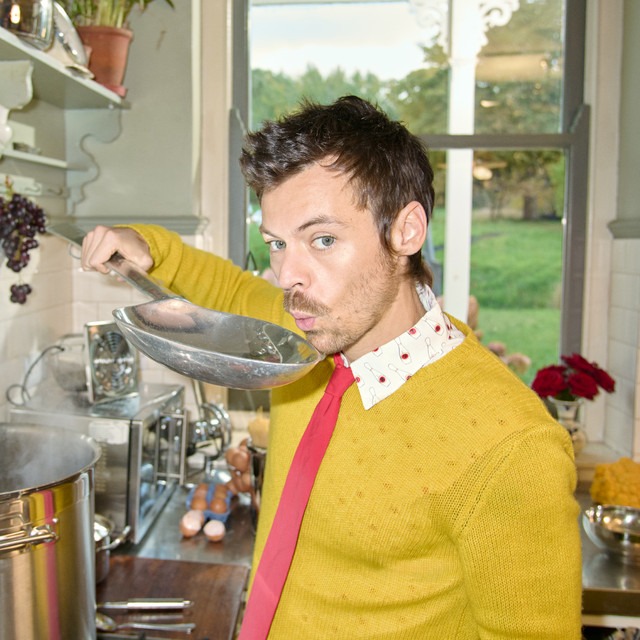
How Harry Styles Became a Modern Rock Star

The easiest version of this story is also the least accurate one. Harry Styles did not become a rock star by accident or by instinct alone. He became one by making a series of deliberate, counterintuitive decisions at every point where the obvious choice would have been to play it safe. That is not how most boy band alumni operate. It is exactly why he is the only one who pulled it off at this scale.

Styles became a member of One Direction in 2010, when the group came together to compete on the British music competition television show The X Factor. What followed was five albums, global hysteria, and the kind of fame that tends to define rather than launch a career. Though all the members of the band — Liam Payne, Zayn Malik, Harry Styles, Louis Tomlinson, and Niall Horan — released solo music, it is Harry Styles whose individual flair has made the biggest impact on the world of popular music and fashion. The gap between them and him, measured in critical respect and commercial longevity, is significant. The question is how it opened up.

The Debut That Set the Terms

Styles introduced his solo sound in 2017 with his self-titled debut, an album that leaned into classic-rock textures and a more focused singer-songwriter presence than many expected. It helped establish the template for his post-hiatus career: cohesive albums, distinctive styling, and a willingness to move outside trend cycles. The album debuted at number one in the UK and the US and was one of the world’s top-ten best-selling albums of the year, while its lead single “Sign of the Times” topped the UK Singles Chart. Nobody expected a former boy band member to open his solo account with something that sounded like it belonged on a classic rock station, and that surprise was itself part of the statement. He was not going to be who anyone assumed he would be.

Fine Line and the Breakthrough

His second solo album, ‘Fine Line’, was released in 2019, and it broke US sales records for a British male singer. The song “Watermelon Sugar” won the Grammy Award for best pop solo performance and the BRIT Award for British single of the year. The throughline of his career becomes clearer when you look at the songs he co-wrote even for One Direction. Even the earliest tracks he had a hand in include key elements of his later songs — a penchant for lyrical repetition creating a folksy call-and-response feeling, vulnerable ballads that are melodically minimalistic. His solo success also stems from his versatility: alongside folksy ballads, he has an ear for rock songs built to fill a stadium.

Harry’s House and the Grammy Moment

‘Harry’s House’ in 2022 was a critical and commercial hit. The track “As It Was” topped the Billboard Hot 100 for 15 weeks. It won three Grammys, including album of the year and best pop vocal album. “As It Was” becoming the defining pop song of 2022 was the moment that confirmed something most people already suspected: this was not a phase. Tracks like “As It Was” have racked up over four billion streams on Spotify alone, making it one of the most listened-to songs in history. That kind of number belongs to the conversation about the greatest pop songs of the streaming era, full stop.

What Actually Makes Him a Rock Star

The Grammy statistics and the streaming numbers explain the commercial success. They do not fully explain the phenomenon. What makes Harry Styles a rock star in the truest sense is not what he plays but how he carries himself — the vintage clothes, the gender-fluid fashion that never looks like a statement but always looks completely intentional, the concert atmosphere where the room feels like he has personally invited everyone in it. His concerts are parties — confetti, lights, covers of Prince and Bowie. He chats with fans, gives hugs, makes it personal. Rock stars, at their best, make you feel like the music is for you specifically. Styles has always understood that.

He has completely sold out Love On Tour stretches in stadiums. As a solo artist, Styles has had two UK number one singles with “As It Was” and “Sign of the Times,” giving him the most commercially successful solo career of any member of One Direction. In January 2026 he announced his fourth studio album, titled ‘Kiss All the Time. Disco, Occasionally,’ which fits neatly into a catalogue that has demonstrated remarkable staying power across formats and years. He went from ‘The X Factor’ to album of the year at the Grammys in roughly a decade, without ever quite becoming what anyone predicted. That is the rock star move.

Ronald LaPread, Commodores Bassist Who Played on ‘Brick House’ and ‘Three Times a Lady,’ Dies at 75

0

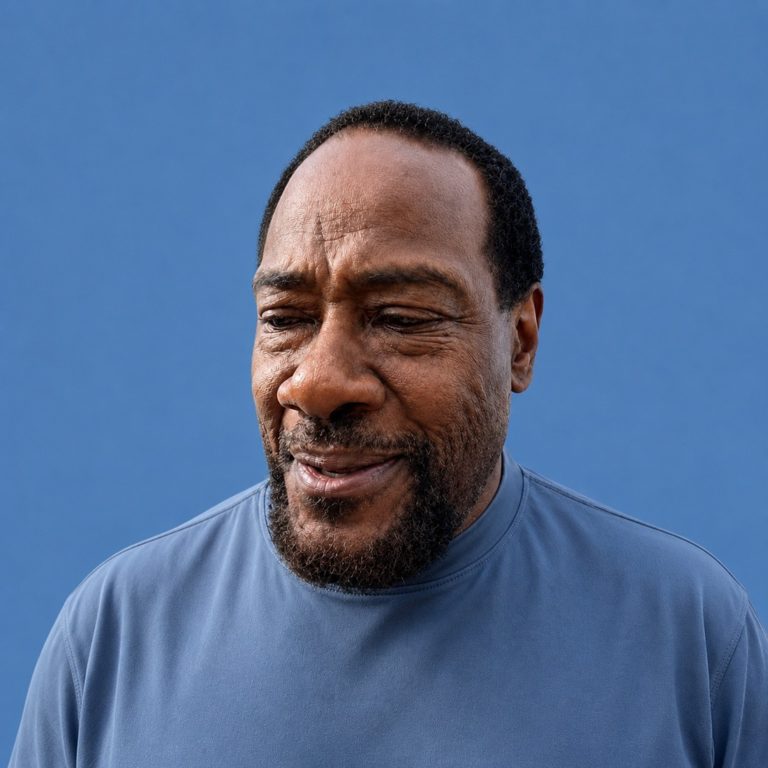
Ronald LaPread, the bass guitarist who played on some of the most beloved funk and soul records of the 1970s and 1980s as a founding member of the Commodores, and who spent the last four decades of his life building a quiet second chapter in New Zealand, died in Auckland in May 2026. He was 75. The news was confirmed by his daughter, music producer Soraya LaPread, on social media.

Born September 4, 1950 in Alabama, LaPread joined the Commodores in 1970 and spent sixteen years as the rhythmic anchor of one of Motown’s most successful acts. He played on eleven of the group’s albums and his bass lines are woven into some of the most recognisable recordings of the era — “Brick House,” “Easy,” “Three Times a Lady,” “Sail On,” “Still,” and “Nightshift,” the Grammy-winning tribute to Marvin Gaye and Jackie Wilson that became the group’s final major hit. The Commodores have sold over 70 million albums worldwide, and LaPread’s fingerprints are on a significant portion of that catalogue.

The group’s story began, improbably enough, when a collection of freshmen at Tuskegee Institute in Alabama fell into playing together in 1968, won the college’s talent contest, and started working their way up from fraternity parties to opening for the Jackson 5. By the time they signed with Motown in 1972 they were already a tightly rehearsed, musically versatile unit, and LaPread’s bass playing was central to the groove that made them impossible to ignore. The peak years came in the late 1970s alongside Lionel Richie, when the Commodores could move between bone-shaking funk and tearjerking ballads with a fluency that very few acts have ever managed.

LaPread left the group in 1986, and the reason why is one of the more remarkable personal stories in the history of American soul music. He fell in love with a New Zealand woman named Farideh on a flight from Sydney to Auckland, moved to the other side of the world, and stayed for the rest of his life. He became a familiar and genuinely beloved figure in Aotearoa’s music community, describing New Zealand’s music scene in a 2025 interview as diverse, collaborative, and possessed of a relaxed culture that suited him completely. He attended the 2026 Aotearoa Music Awards just days before his death.

He never entirely lost touch with his past. In 2011 Lionel Richie invited LaPread and fellow former Commodore Thomas McClary on stage during a sold-out concert at Auckland’s Vector Arena, and he would continue to make appearances alongside the Commodores and Richie whenever they toured New Zealand in subsequent years. Richie once joked affectionately that LaPread was always “practising” for a reunion whenever the band came to town. He reunited with them and Richie at Spark Arena just last year.

He is survived by his wife Farideh, his two sons, and his daughter Soraya.

He played on records that are still on the radio fifty years after they were made, fell in love on an aeroplane, moved to New Zealand, and spent forty years making it home. That is a life lived with real intention.

Steve Barrow, the Man Who Helped Preserve the History of Reggae, Dies at 80

0

Steve Barrow, the British historiographer, compiler, and liner note writer whose decades of dedicated work helped preserve the history of Jamaican music for future generations, died in May 2026. He was 80.

Born September 29, 1945, Barrow came to reggae the way the best music obsessives usually do — through the physical act of being around records. Working at Honest Jon’s record shop in London, he met Peter Dalton, a collaboration that would eventually produce ‘The Rough Guide to Reggae’, one of the most essential reference works the genre has ever had. But long before that book existed, Barrow was already doing the work. Between 1979 and 1980 he was hired freelance by Island Records to compile a series of vinyl releases — ‘Intensified’, ‘More Intensified’, ‘Catch the Beat’, and ‘The Blue Beat Years’ — and from the 1970s through to 1992 he compiled albums and wrote liner notes for Trojan Records in London. This was the quiet, unglamorous, enormously important work of making sure people knew what they were listening to and where it came from.

In 1993 he co-founded the Blood and Fire record label with Simply Red’s Mick Hucknall, specialising in reissuing older roots reggae and spiritual dubwise Jamaican music — some of the most beautiful and historically significant recordings the island ever produced, brought back into circulation with the care and context they deserved. That same spirit of preservation and scholarship led directly to the Jamaican Reggae Archive Project, funded and owned by Chris Blackwell with Barrow serving as de facto chronologist, historiographer, and curator. Between 1994 and 1995, alongside Don Letts and Rick Elwood, he conducted a series of interviews with Jamaican artists for the archive, building a body of primary source material that remains invaluable. Reggae author David Katz credited Barrow’s personal recommendation to Island Records with his own involvement in compiling the 1997 Lee “Scratch” Perry CD set ‘Arkology’, one of the most important Perry collections ever assembled.

In 2004 he co-founded the reggae reissue label Hot Pot Music, and in 2012 Soul Jazz published two books he compiled alongside Stuart Baker — ‘Reggae Soundsystem: Original Reggae Album Cover Art’ and ‘Reggae 45 Soundsystem: The Label Art of Reggae Singles’ — the kind of beautifully produced volumes that bring the visual culture of the music to the same level of attention its sound has always received.

His bibliography includes ‘The Rough Guide to Reggae’, ‘The Rough Guide Reggae: 100 Essential CDs’, and ‘King Jammy’s’, co-written with Beth Lesser. Three books. Dozens of compilations. Hundreds of liner notes. A record label. An archive. A body of work that ensures the music he loved is understood and not just heard.

Reggae has always deserved a historian of this quality. It was very lucky to have one.

Dennis Hull, the Silver Jet and Chicago Blackhawks Star, Dies at 81

0

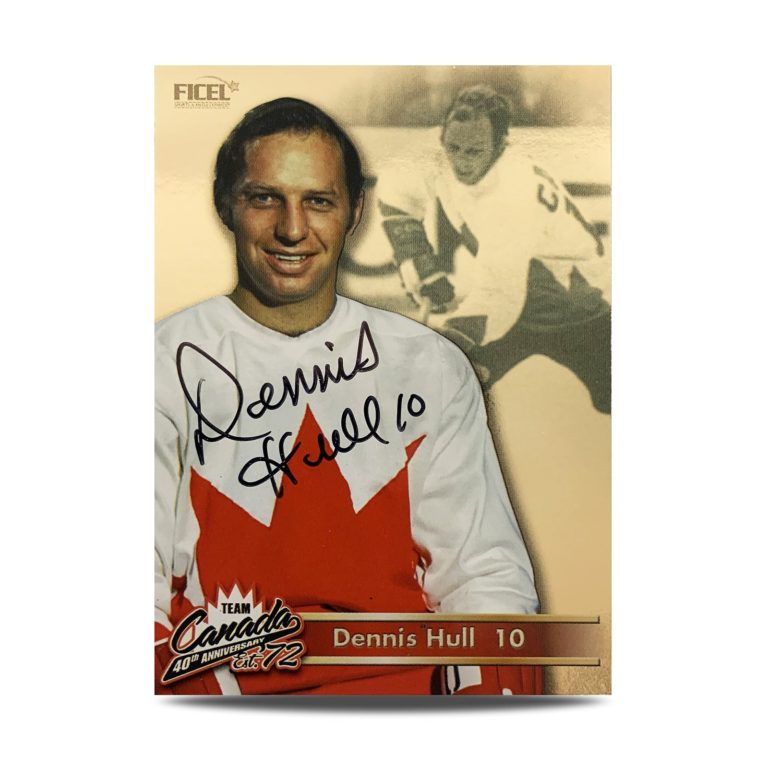
Dennis Hull, the left winger who spent fourteen seasons in the NHL, scored over 300 goals, represented Canada in the legendary 1972 Summit Series, and spent the rest of his life making people laugh about all of it, died on May 30, 2026. He was 81.

Born November 19, 1944 in Point Anne, Ontario, Dennis came from perhaps the most talented hockey family in the history of the sport. His older brother Bobby Hull was one of the greatest players who ever lived. His nephew Brett Hull would go on to score 741 NHL goals. In that context, being known as “the Silver Jet” — a deliberate nod to Bobby’s nickname “the Golden Jet” — might have felt like a consolation prize. Dennis wore it like the punchline it was always meant to be, and spent decades getting laughs out of the family dynamic that might have crushed a less secure man.

The hockey, though, was genuinely excellent. He played 959 NHL games, scored 303 goals and 351 assists for 654 career points, was named to the NHL Second All-Star Team in 1973, and appeared in five NHL All-Star Games. His best seasons came as part of the MPH line alongside centre Pit Martin and right wing Jim Pappin, one of the more productive forward units in the league during the early 1970s. In the 1972-73 season he posted 39 goals and 51 assists for 90 points, then led Chicago in playoff scoring with 9 goals and 15 assists as the Blackhawks reached the Stanley Cup Finals. That is not a footnote career. That is a very good hockey player who happened to share a last name with an all-time great.

The 1972 Summit Series gave him one of the best stories of his life. When Bobby was excluded from the series because he had jumped to the WHA, Dennis initially planned to boycott in solidarity. Bobby talked him out of it. Dennis stepped into the lineup, took over on the line with Jean Ratelle and Rod Gilbert, contributed two goals and two assists in four games, and came home with a winner’s story and a friendship with Soviet goaltending legend Vladislav Tretiak that lasted the rest of his life. He told Tretiak, with characteristic warmth and cheek, that he had become famous for letting in Paul Henderson’s series-winning goal — and that if he had stopped it, he would probably be driving a cab in Moscow today. Tretiak apparently found this funny. Everyone who heard Dennis Hull tell a story usually did.

After retiring from hockey he became a broadcaster, went back to school at Brock University to earn a degree in History and Physical Education, taught at Ridley College, served as athletic director at the Illinois Institute of Technology in Chicago, ran a cattle farm raising Polled Hereford with his brother Gary in Northumberland County, Ontario, and built a second career as a public speaker and comedian. He wrote a memoir called ‘The Third Best Hull’, the title of which tells you everything you need to know about how he processed his place in his family’s story.

He played fourteen seasons, scored 303 NHL goals, helped Canada win the Summit Series, and never once stopped being funny about all of it. That is a good life.

Foster Sylvers, R&B Singer and Member of The Sylvers, Dies at 64

0

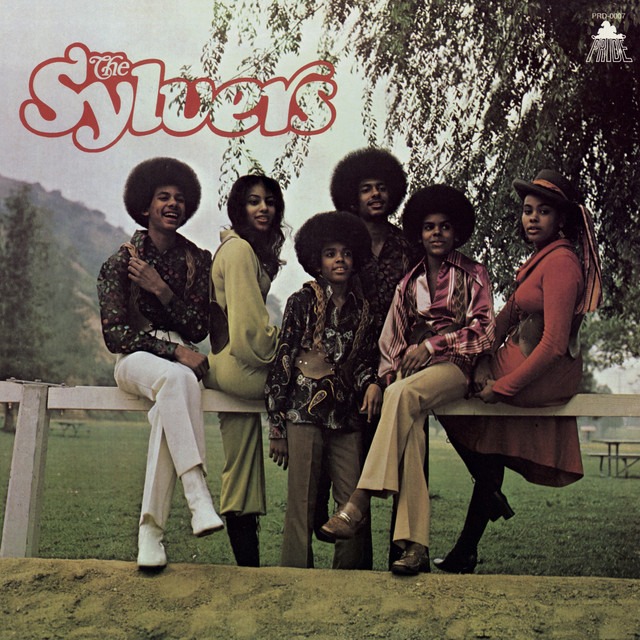
Foster Sylvers, the Memphis-born singer and songwriter who scored one of the most memorable R&B singles of the early 1970s as a child performer and went on to become a member of the acclaimed family act The Sylvers, died on May 30, 2026 from prostate cancer. He was 64.

Born Foster Emerson Sylvers on February 25, 1962 in Memphis, Tennessee, he released his debut album in June 1973 at the age of eleven. The first single from that record, “Misdemeanor,” written by his brother Leon Sylvers III, became an immediate hit, reaching number seven on the Billboard R&B chart and number 22 on the Hot 100 that summer. It was a remarkable entry into the music business for a child barely in his teens, and it announced a family whose musical gifts were exceptional across the board. The single’s success brought Foster to national television, with appearances on American Bandstand and Soul Train following in short order.

His second album arrived in 1974, and by 1975 he had joined his brothers and sisters in The Sylvers, arriving just in time for the group’s commercial peak. He sang co-lead with his brother Edmund on “Boogie Fever,” the irresistible 1976 disco smash that hit number one on both the Billboard Hot 100 and the Hot Soul Singles chart. It remains one of the defining feel-good records of its era, the kind of song that still gets a room moving fifty years later without anyone needing to be told why.

Beyond his work as a performer, Foster carved out a meaningful career as a studio collaborator, following in the footsteps of his brother Leon’s prolific production work. He contributed to recordings by Dynasty and co-wrote and performed on Evelyn “Champagne” King’s “Shake Down,” which reached number 12 on the R&B chart in spring 1984. He continued recording into the late 1980s and 1990s under the name Foster Sylvers and Hy-Tech, releasing albums on EMI America and A&M Records.

In 1994, he was convicted of a sex offense and served time in prison. He remained on the California Sex Offender Registry. That record is part of his story and cannot be set aside.

Foster Sylvers came from one of the most gifted musical families in American R&B history. What he did with that gift, and what he did that fell far outside it, are both part of the record.

What Is the Difference Between a Manager and an Agent?

If you have spent any time navigating the music industry, you have heard both terms thrown around, sometimes interchangeably, usually by people who are not entirely sure which one they mean. A manager and an agent are not the same thing. They do different jobs, they get paid differently, and understanding the distinction is one of the most important things an artist can do before signing anything with either of them.

The Manager: The Big Picture Person

A manager is the person who oversees your entire career. They are the strategist, the advisor, the sounding board, the person you call at midnight when you are not sure whether to take a deal or walk away from one. A good manager thinks about where you are going over the next five years, not just what show you are playing next month. They help shape your image, guide your creative decisions, connect you with the right producers and collaborators, negotiate on your behalf in situations that do not require a licensed agent, and generally serve as the central hub through which your entire professional life runs. They are not licensed in most jurisdictions, which means almost anyone can call themselves a manager, which is part of why finding a good one is so difficult and so important.

Managers typically earn between fifteen and twenty percent of an artist’s gross income across the board. That includes recording income, touring income, merchandise, endorsements, publishing, and anything else the artist earns. That percentage is why a great manager is genuinely motivated to grow your career in every direction, and also why a bad or indifferent manager can do real damage simply by not doing enough. Their income rises and falls with yours. When you win, they win. When you stagnate, they stagnate. The incentive structure is built into the relationship.

The Agent: The Booking Specialist

A booking agent has a more specific and in many jurisdictions legally defined role. Their job is to secure live performance opportunities for you. They pitch you to promoters, negotiate show fees, book tours, and work to place you on festival lineups. In the United States, talent agents are required to be licensed by the state, and in many states they are the only people legally permitted to solicit employment on an artist’s behalf. This is not a technicality. It is a meaningful legal distinction that has ended a number of management arrangements when managers overstepped into booking territory.

Agents typically earn ten percent of the gross income from the bookings they secure. Unlike a manager, an agent’s commission is generally limited to the specific income stream they work on, meaning they take their cut from show fees but not from your record sales or your merchandise. They tend to work with multiple artists simultaneously and operate within a network of relationships with promoters, venues, and festival bookers built up over years. The value of a good agent is not just that they can make calls. It is that their calls get answered.

Where the Relationship Gets Complicated

In practice the lines can blur, particularly early in an artist’s career when neither a manager nor an agent may yet be in the picture. A manager might help facilitate bookings informally until a proper agent relationship is in place. An agent might offer career advice that technically falls outside their lane. This is where it becomes important to have clear written agreements with both parties spelling out exactly what each of them does, what they earn, and how long the relationship lasts.

The other area of friction is commission on long-term deals. If a manager negotiates a record deal or a major publishing agreement during their time with an artist, questions arise about whether they continue to earn commission on that income after the management relationship ends. These are called post-term commission clauses, and they are among the most negotiated and most contested provisions in any management contract. Get a music lawyer to look at any agreement before you sign it. This is not optional advice.

Which One Do You Need First?

For most emerging artists, the manager comes first. An agent generally wants to see that you have a team in place, that your shows are selling, and that someone is steering the ship before they invest their time and their relationships in booking you. A manager helps you get to the point where an agent wants to work with you. Think of it as sequential rather than simultaneous, at least in the early stages. Build the foundation, then bring in the specialist.

The simplest way to remember the distinction is this: your manager thinks about your whole career and your agent thinks about your live calendar. You need both eventually. Understanding what each of them does, what they cost, and what they are and are not allowed to do on your behalf is the baseline knowledge every artist needs before any of those conversations begin.

The Ultimate Music Fan’s Weekend in Belfast

0

Belfast is hosting Fleadh Cheoil na hÉireann for the very first time this August, from August 2 to 9, 2026, and if you are a music fan anywhere on the planet and you are not already thinking about making the trip, this is your sign. Ireland’s only UNESCO City of Music is about to host the world’s largest traditional Irish music festival, and the whole city is going to be electric for an entire week. Here is how to make the most of your weekend in one of the most musically rich cities on earth.

Go to the Fleadh Cheoil Sessions at the Cathedral Quarter Pubs

The Session Trail is one of the great pleasures of Fleadh week. Look for the Official Session signs in legendary pubs across the Cathedral Quarter and the Half Bap area, including the Duke of York and The Deer’s Head. The Cathedral Quarter on a Saturday afternoon is packed with good craic, free-flowing beer, and a remarkable number of cover artists, but Kelly’s Cellars is where you come for the real thing — the kind of traditional session that has been happening in this city long before anyone thought to put a name on it. You do not need a ticket for any of this. You need a stool and a pint and the good sense to arrive early.

Catch the Free Concerts at Belfast City Hall

Belfast City Hall will house the Main Gig Rig, offering free outdoor concerts daily throughout Fleadh week. This is not a sideshow. This is the heart of the festival, right in the centre of the city, open to everyone, with world-class traditional musicians taking the stage every single day. Bring a jacket, find a spot, and settle in. You will not be going anywhere for a while.

Visit the Oh Yeah Music Centre

The Oh Yeah Music Centre is a must-visit for any music lover in Belfast. With live performances, workshops, and exhibitions on the history of local music, it is a great way to dive into Belfast’s rich musical heritage. They often host up-and-coming bands, so you can catch fresh talent alongside the history. Oh Yeah also runs walking tours covering topics ranging from Belfast’s punk lineage to hometown heroes like Van Morrison, visiting iconic music venues across the city. Book a tour and do it properly.

Take the Belfast Traditional Music Trail

The Belfast Traditional Music Trail is led by not one but two professional musicians and features personal performances in intimate venues around the city. This is not a guided walk past a few plaques. This is a living, breathing musical experience that puts you inside the tradition rather than outside looking in. During Fleadh week, when the whole city is already buzzing with sessions and impromptu performances, doing this trail is the best possible way to understand what you are hearing everywhere around you.

Walk the Punk History of Belfast

Oh Yeah runs a walking tour that explores the story of punk music on Belfast’s streets, led by a passionate guide who saw the city’s best-known punk bands live in the late 1970s, including The Outcasts, Rudi, Stiff Little Fingers, and Ruefrex. The Troubles produced one of the most raw and vital punk scenes in history, and this tour tells that story from the inside. If your musical interests run wider than traditional Irish music — and a music fan’s always should — this is the afternoon activity that puts the whole city in context.

Attend the Senior Céilí Band Finals

The competition venues are spread across the city centre and the Queen’s Quarter. Tickets for the Senior CĂ©ilĂ­ Band finals are the most coveted of the entire week — book these the moment they are released. The All-Ireland competitions are the competitive soul of the Fleadh, and the CĂ©ilĂ­ Band finals are where the whole week builds to. The musicianship on display is extraordinary, the atmosphere is unlike anything else in the Irish music calendar, and if you only book one ticketed event for the whole weekend, make it this one.

Belfast in August 2026 is going to be one for the ages. The event has been so highly anticipated that Comhaltas has already confirmed Belfast will host again in 2027, a rare back-to-back hosting that proves the city’s world-class standing. Get there for the first one. You will want to say you were there.

Fleadh Cheoil na hÉireann takes place in Belfast, August 2–9, 2026. For more information visit fleadhcheoil.ievisitbelfast.com, and discovernorthernireland.com.

Video: BeyoncĂ©’s 2003 46664 Concert Performance in Cape Town Showed the World Exactly Who She Was Becoming

0

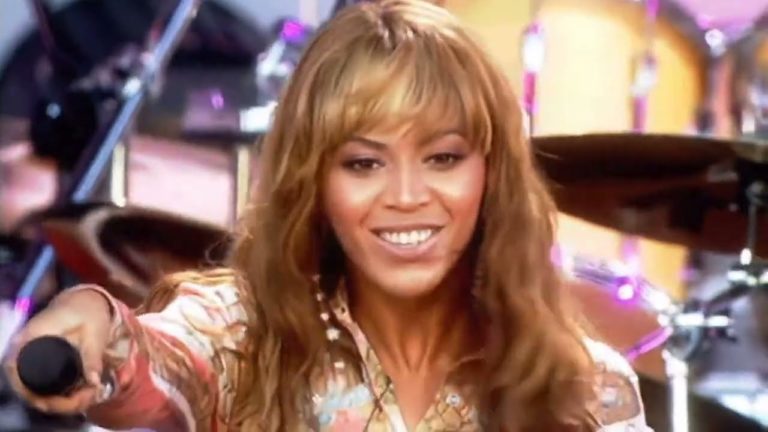
On November 29, 2003, fresh off the release of her multi-platinum debut solo album ‘Dangerously in Love’, BeyoncĂ© took the stage at Green Point Stadium in Cape Town for the 46664 Concert, Nelson Mandela’s massive charity event raising global awareness of the HIV/AIDS epidemic in Africa, sharing a five-hour bill with Queen, Eurythmics, and Bono before joining Bono, The Edge, and Dave Stewart for a special collaborative performance, delivering a set that combined commanding vocals with the kind of stage presence that made it clear, in front of a worldwide broadcast audience, that this was an artist whose reach was already extending well beyond the music.

Video: Santana’s 2004 North Sea Jazz Festival Set in The Hague Is a Masterclass in Latin Rock Fusion

0

In July 2004 at the Statenhall in The Hague, Carlos Santana and his powerhouse ensemble, anchored by percussionists Raul Rekow and Karl Perazzo, a full horn section, and dual vocalists, delivered a performance that moved through “Maria Maria,” “Smooth,” “Evil Ways,” and “Jingo” before diving deep into a rendition of John Coltrane’s “A Love Supreme” that underscored exactly how far Santana’s musical roots run, with Carlos himself in top form throughout, his signature guitar tone carrying the Latin rhythm, blues-infused rock, and spiritual jazz threads that have made him one of the most singular live performers in the history of the instrument.

Video: Linkin Park’s 2010 MTV EMA Performance at Madrid’s Puerta de Alcalá Was a Monument to Their Live Power

0

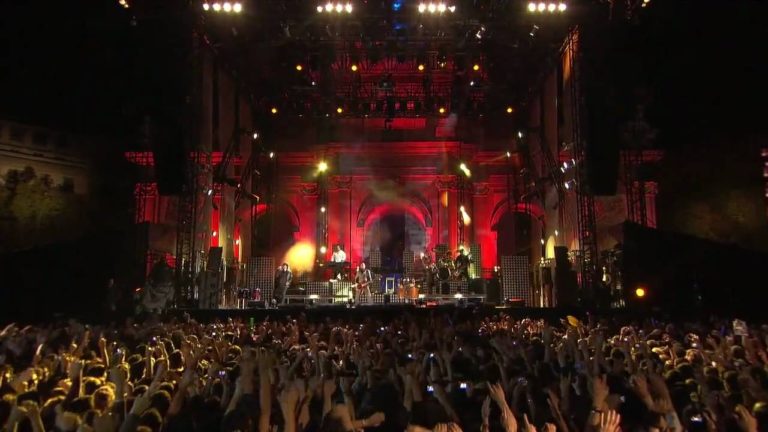
On November 7, 2010, Linkin Park took the MTV World Stage at the Europe Music Awards with Madrid’s historic Puerta de Alcalá as their backdrop, delivering a set that moved from the atmospheric complexity of ‘A Thousand Suns’ cuts like “The Catalyst” and “Waiting For The End” into the full-crowd eruption of “Numb,” “In The End,” and “What I’ve Done,” with Chester Bennington’s soaring vocals and Mike Shinoda’s sharp delivery cutting through the Madrid night in front of thousands of fans who made one of Europe’s most iconic landmarks feel like the only right stage for a band operating at exactly this scale.