Home Blog

How to Survive a Rainy Festival Without Missing the Music

0

Let’s be honest. It’s probably going to rain.

Maybe not the whole weekend. Maybe just for a couple of hours on Saturday afternoon right when your favourite act walks onstage. But at some point, at some festival, the sky is going to do what it wants and you are going to have to decide what to do about it.

Here’s some friendly advice from someone who has stood in a lot of fields in a lot of weather: stay for the music. It’s almost always worth it. And with a little preparation, rain goes from a problem to just part of the story.

Pack Like You Already Know

The easiest thing you can do is pack for the worst case instead of the forecast. Throw in a poncho rather than an umbrella because umbrellas block the view of whoever is standing behind you and nobody loves that person. Grab some waterproof boots or wellies if you have them. Toss a couple of dry pairs of socks in your bag because dry socks at a festival on day two feel genuinely wonderful. A small dry bag or even some ziplock bags for your phone and wallet will save you a headache later. None of this is expensive and all of it makes a real difference.

Know Where the Cover Is Before You Need It

Before the music starts on day one, take a little walk around the site. Find the covered stages, the food vendors with overhangs, the spots where you can duck in for ten minutes and warm up without losing too much ground. When it starts pouring and everyone starts moving at once, it helps a lot to already know where you’re going.

Let Yourself Enjoy It

This one might sound a little strange but some of the most legendary festival moments have happened in the rain. Woodstock was mud. Glastonbury has built an entire identity around it. Something genuinely interesting happens when a crowd stops worrying about getting wet and just gives in to the music together. The energy in those moments can be pretty special. Artists notice it too. Playing to a soaking crowd that refused to leave tends to bring out something extra in a performance.

Stay Warm and Stay Fed

Being wet and cold is what actually ruins the experience so bring a light fleece or base layer to go under your poncho. Temperatures drop at night even in summer and a cold wet body makes even great music feel less great. Also remember to eat and drink water even when it’s raining because people tend to skip both when the weather turns and it catches up with them by evening. A hot drink or a warm bowl of something from a vendor in the rain is honestly one of the underrated pleasures of festival life.

Give Your Phone a Break

Keep it dry, absolutely, but also consider that rainy festivals are a pretty good excuse to put it away and just be present. Some moments are better felt than filmed and a field full of people singing in the rain is usually one of them.

The best festival stories almost never start with perfect weather. They start with a little chaos, a decision to stay anyway, and a set that nobody who was there will ever forget. Pack the poncho, find your spot, and enjoy every minute of it.

How to Create a Music Marketing Plan

You made the music. Now what?

Most artists stop there. They finish the song, upload it, post once on Instagram, and then wait. And wait. And wonder why nobody’s listening.

Here’s the thing: the music is only half the job. The other half is making sure people actually find it. And for that, you need a plan.

Don’t panic. A music marketing plan doesn’t have to be complicated. It just has to exist.

What Is a Music Marketing Plan?

It’s a simple document — even one page works — that answers five questions:

  1. What am I releasing?
  2. When am I releasing it?
  3. Who is it for?
  4. How am I going to reach those people?
  5. What does success look like to me?

That’s it. Answer those five things honestly and you already have more than most artists ever put together.

Step 1: Get Specific About What You’re Releasing

“New music” is not a plan. “A single called ‘Heartbreak Hotel’ dropping October 10th on all platforms” is a plan. The more specific you are, the easier everything else becomes. Know your release. Name it. Date it. Own it.

Step 2: Build Your Timeline and Work Backwards

Most artists give themselves two weeks to promote a release. That’s not enough. The ones getting real traction start two to three months out. Here’s a simple timeline to follow:

  • 8 weeks out: Reach out to music blogs, playlist curators, and media contacts
  • 6 weeks out: Start teasing on social media — behind the scenes, snippets, the story
  • 4 weeks out: Drop your first piece of content tied to the release
  • 2 weeks out: Ramp everything up — posting, pitching, sharing
  • Release week: All hands on deck across every platform
  • 2 weeks after: Keep going. This is where most artists stop. Don’t.

Step 3: Know Exactly Who You’re Talking To

This is the step everyone skips and it’s the most important one. Who is your listener? Not “everyone.” Everyone is no one. Think about three artists who sound like you and imagine their fanbase. That’s your audience. Talk directly to those people in everything you post, pitch, and share.

Step 4: Choose Your Platforms and Commit

You do not need to be everywhere. You need to be somewhere consistently. Pick two or three platforms where your audience actually lives and show up there regularly. Instagram and TikTok work well for most artists right now. YouTube is long game but worth it. Twitter/X is great for music industry conversation. Pick your spots and be present.

Step 5: Know What Success Looks Like

Before you release anything, decide what winning looks like for this particular release. Is it 1,000 streams? A review in a blog you respect? Ten new email subscribers? One playlist placement? Define it in advance so you can actually measure it and learn from it, whatever happens.

One Last Thing

The artists who build real careers are not always the most talented ones in the room. They are the most consistent ones. A simple plan you actually follow beats a perfect plan that lives in your head forever.

Make the plan. Work the plan. Repeat.

Molly Johnson Unites Generations on New ‘Long Time Running’ EP Featuring Haviah Mighty

0

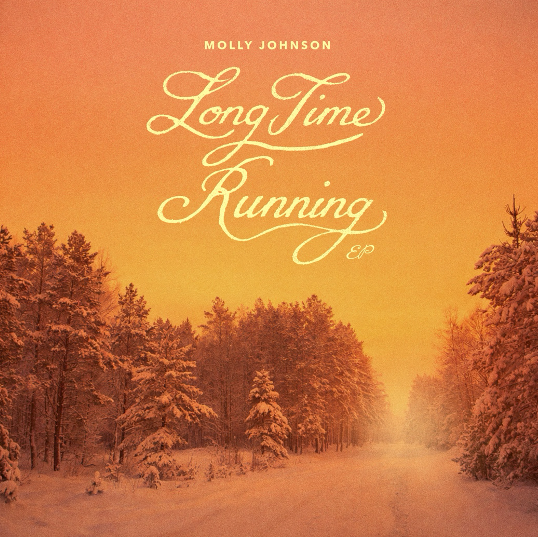
Recognized as one of Canada’s greatest voices, Molly Johnson releases her new three-song EP Long Time Running, a powerful and deeply collaborative project that brings her together with a new generation of artists. Included on the EP is “Talk To Me,” a striking new collaboration with acclaimed rapper Haviah Mighty, produced by rising talent Jonathan “CUBE” Renaud, alongside a reimagined take on The Tragically Hip’s “Long Time Running” with Jim Cuddy and the original composition “Slipped Away,” written by Molly Johnson and Davide Di Renzo.

“Talk To Me” marks a bold new direction for Johnson, pairing her signature vocal style with the sharp lyricism of JUNO Award-winning rapper Haviah Mighty. Structured as a call and response, the track becomes a compelling exchange between two distinct voices, reflecting a meaningful dialogue between generations.

“Such joy to work with Haviah Mighty, a brilliant, collaborative woman. The idea that we need to really listen to younger voices is what ‘Talk To Me’ is all about,” says Molly Johnson.

The Long Time Running EP is available now via Universal Music Canada. Listen HERE.

The EP features Johnson’s stirring interpretation of The Tragically Hip’s “Long Time Running,” recorded with Jim Cuddy of Blue Rodeo, produced by Davide Di Renzo. First released in 1991, the song remains a defining piece of the Canadian musical canon, and here is reimagined with a sense of intimacy and reverence that honours its enduring legacy.

Across the project, Johnson is joined by her long-time collaborators, including Davide Di Renzo, Mike Downes and Robi Botos, whose enduring musical partnership remains central to her sound.

Also included is “Slipped Away,” an original composition written by Johnson and Di Renzo that reflects on love, memory, and the lingering question of what might have been. Anchored by her unmistakable vocal, the track further showcases her strength as both a storyteller and songwriter.

More new music from Molly Johnson will be announced in the coming months.

Photo credit: Chris Nicholls

ABOUT MOLLY JOHNSON:
Recognized as one of Canada’s greatest voices, jazz vocalist Molly Johnson is a mother, singer-songwriter, artist, and philanthropist. Throughout her life-spanning career, she has captivated audiences in Canada and Europe with her original pieces and interpretations of jazz standards. Unsurprisingly, Molly is a laureate of multiple notable awards, including two JUNO Awards, the Governor General’s Award, the Order of Canada, and the Chevalier Ordre des Arts et des Lettres. Outside her musical endeavors, Molly is also an avid supporter and patron of the arts. She launched the Kumbaya Festival in 1993 benefitting AIDS hospices and Canadians living with AIDS, contributing directly to the birth of Toronto’s Casey House. Kumbaya remains the largest music fundraiser in Canadian history. As the founding artistic director of Toronto’s Kensington Market Jazz Festival, Molly has introduced hundreds of performers and, in her own words, built a “local jazz festival that reflects the cultural depth” of the immediate music community.

Asthma Kids Release Abbey Road-Mixed “The People United and Strong,” The Punk Rallying Cry To Tax Billionaires

0

Asthma Kids are angry. They have always been angry. But on their ferocious new single “The People United and Strong,” that anger has been alchemised into something even more dangerous: hope. This is not a soft pivot. This is a band that has looked at billionaires hoarding the planet’s resources, looked at the boot on the neck of the working class, looked at a world on fire, and decided that the most radical thing they can do right now is demand that we stand together. “The union united and strong / the people united and strong / all the genders united and strong / the poor united and strong.” Go ahead and try to get that out of your head.

The song was born in the studio on the day Trevor Hutchinson became a grandfather. His twenty-year-old daughter gave birth while the band were mid-session, and that eruption of new life cracked something open in the writing. “We had a musical structure and I was working on lyrics that matched the anger of our recent releases,” Hutchinson says. “But that life news got me to frame our message in a positive light that promotes unity.” Make no mistake, the fury is still there and fully intact. “I’m still beyond angry,” he adds. “It’s time for us to tax billionaires out of existence and end the psychopathic distribution of wealth. But that is going to take unity, harmony and love.” A grandchild entered the world. A punk anthem came out with him.

The lyrics do not flinch. “The rich are getting richer, the poor are getting poorer / Now I know what I’m fighting for” sits alongside “I believe in welfare, but I prefer taxes / Or any other measure that evens out the classes.” This is not protest music that hedges. Asthma Kids, composed of Trevor Hutchinson and JP Gill, have never heard a genre they won’t gleefully subvert, repurpose, and rebuild from the wreckage, and “The People United and Strong” is a punk earworm that refuses to stay inside any lines at all. They are famously genre-agnostic, stating plainly that they leave labels for soup cans. Adjacent to punk, freak folk, country, and power pop, they are ultimately something else altogether: seemingly nice neighbours living next door to musical convention, until they burn down every house on the street.

The production matches the ambition. Hutchinson produced the track himself at Jack Cade Studios in Lindsay, Ontario. Adam Haggart mixed it at the Reverie Recording Studio in Peterborough. Then it went to Abbey Road in London, where mastering engineer Alex Wharton put the finishing edge on it. A punk song about taxing billionaires out of existence, mastered at the most storied studio on the planet. That is exactly the kind of move Asthma Kids make.

The single arrives on the heels of their 2025 EP ‘The Meek Are Getting Ready,’ named one of the best EPs of 2025 by PunkNews.org and distributed via Dammit Distro across the EU and UK, and 2 Bar Town Records across North America. The track has already been added to both WARM and Earshot. A summer tour launches in Toronto in late August and pushes westward from there. Asthma Kids are not waiting for permission to be heard, and they are not asking nicely. The people are united. The people are strong. The song says so.

Montreal Singer-Songwriter Silka Weil Releases Bold New Single “Make Me Lose Control” Ahead Of Forthcoming EP ‘Midnight Blue’

0

Silka Weil, one of Montréal’s most compelling emerging voices in folk-rock and alt-pop, today releases “Make Me Lose Control,” a charged and urgent new single that announces the arrival of her second EP, ‘Midnight Blue,’ due July 3, 2026. Seductive, confrontational, and alive with tension, the track is the fullest expression yet of the sonic territory Weil has been carving out since her celebrated 2023 debut – and the most immediate proof that her ambitions have only grown.

The song was born from a simple and deeply practical impulse: Weil wanted something fun and electrifying to play live. What emerged was something richer – a moody, propulsive love song that she describes as “done my own way.” “I sometimes enjoy being confrontational in my writing and performance,” she explains, “so for the most part it’s a little more direct than subtle.” That directness is everywhere in the lyrics: “Tear through your heart and soul / You’re everything I want and more / Reduced down to our flesh and bone / You’re gonna make me lose control.” It’s a love song with its teeth in.

What makes “Make Me Lose Control” particularly striking is the dynamic range Weil and producer Jean-Sébastien Brault-Labbé have built into it. The verses and chorus hit hard and rock-heavy, while the bridge opens into something softer and more intimate – a contrast Weil describes as “a real pleasure to work with.” The track also carries the energy of a song written in motion: Weil finished the third verse on the spot in the studio – and also sings backup – with the freedom of that process is audible in every moment. A last-minute decision to swap electronic drums for real drums after the bridge gave the recording a final surge of physicality that pushes the track into another gear entirely.

Recorded, produced, mixed, and mastered at Studio de la Ruelle, “Make Me Lose Control” marks another chapter in Weil’s ongoing collaboration with Brault-Labbé, who also produced her EP ‘Midnight Blue’ and whose broader credits include Gabrielle Papillon, Samuele, Matt Stern, Erika Lamon, Vamoise, Le Husky, and the Blue Seeds. The single arrives with a lyric video designed by Weil herself, whose hands-on approach to her visual identity is as considered as her approach to the music. The result is a track that already has a strong live response from her audience and is set to reach a significantly wider one.

Weil earned Musi-Flo’s Artist of the Year for 2023 and appeared on the July 2025 cover of radiodowntown.ca, with radio play and interviews across Canada and internationally – including a live interview with Mexico-based media organisation Ella Suena. Her music has been compared to PJ Harvey and Lana Del Rey for its ability to hold boldness and intimacy in the same breath, and “Make Me Lose Control” does exactly that – a song that leans into desire, plays cat and mouse with vulnerability, and arrives at something genuinely thrilling. “I would stay up all night / I would walk over fire / To stand in your light,” she sings in the bridge – and you believe every word.

Cowessess First Nation Artist (Uncle) Trent Agecoutay Releases Moving New Single “The Foundation”

0

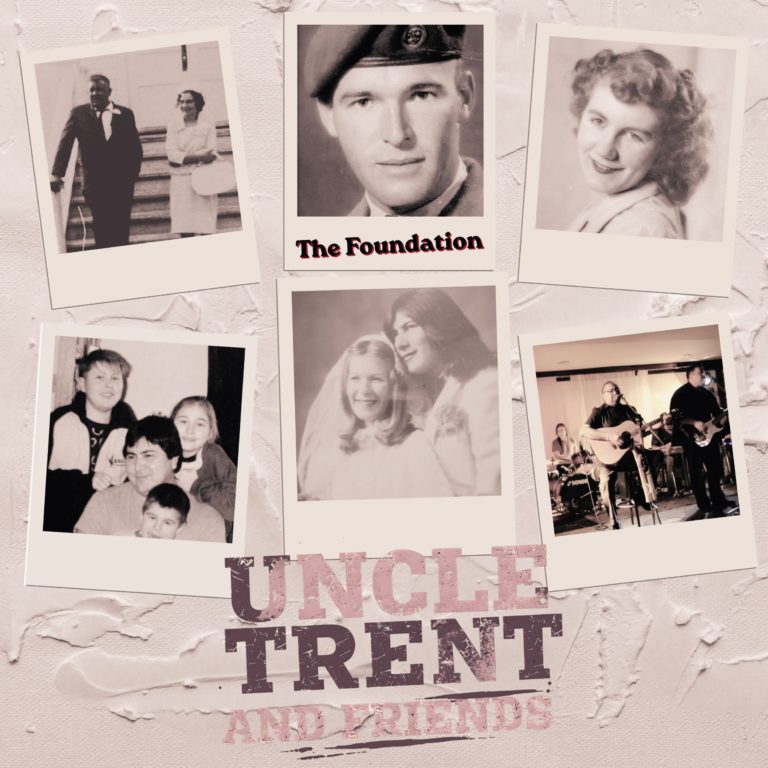
Cowessess First Nation singer-songwriter (Uncle) Trent Agecoutay releases his deeply personal new single “The Foundation,” out now. Written with his late father Jim Agecoutay in the days following the funeral of their Kokum Agnes, it is the first song Trent ever co-wrote with his dad – making it one of the most intimate and significant recordings of his career. “The Foundation” serves as the lead single from Uncle Trent and Friends – Legacy Deluxe edition, the acclaimed project Trent created alongside his brother Bryce to honour their father’s musical gifts after his passing.

The song carries the full emotional weight of its origins. Born in grief and shaped by gratitude, it opens with a scene of devastating tenderness: “Kokum started her journey on a rainy day in May / I’ve never felt so helpless, don’t like to feel that way / A wave of lonely, it tore me up inside / I kissed her on the cheek, I held her one last time.” From that place of loss, the song builds toward something enduring – a chorus that names the thing that holds us when everything else gives way: “The Foundation of who I am, it runs strong and deep / Generations surround me while my soul weeps / They light the path when darkness follows me / The Foundation of who I am – it’s my family.”

“Family is the Foundation of who we are as musicians, and men,” Trent reflects. “The gift of music our father gave us, along with the strong influence of our Aunts, Uncles, Cousins and Grandparents, truly shaped us into the men we are today. The song will connect to any listener – people with a strong bond with family, and those longing for that family connection.” It is a song built for both.

The legacy that gives this project its name stretches back to a kitchen table in Western Canada, where a young Trent and Bryce would slip into the next room to listen as their father Jim composed songs – always with a pot of coffee, a lit cigarette, and an old tape recorder close at hand. All the songs on Legacy were written or co-written by Jim Agecoutay, and the album, funded by the Alberta Foundation for the Arts and Calgary Arts Development, stands as a testament to everything he left behind.

Legacy has already made a significant mark since its April 2025 release – earning a number-one single on the Indigenous Music Countdown with “Burn a Smudge,” placing “You’re the Reason” in full rotation on Sirius XM Indigiverse for much of 2025, and charting in the top ten of the Earshot National Folk, Roots and Blues chart. “The Foundation” opens the album’s next chapter with the song that perhaps best captures its entire purpose.

Since joining his father’s band in 1993 and performing in Alberta honky-tonks across Western Canada, Trent has grown into a respected artist and community voice. His previous albums – I Don’t Regret a Thing, Now…And Then, and A Place to Call Home – established a sound that is deeply personal yet broadly resonant, earning him a Native American Music Award nomination for Best Blues Recording. Alongside Curt and Chelsie Young, he co-created Do You Hear Me Now…Amplifying Indigenous Voices, and his podcast The Deadly Uncle Podcast continues to provide a culturally grounded space for Indigenous men and boys to connect and heal.

Martin Larose And Anais Vanessa Release New Single “Breathe In Breathe Out” From New Album ‘The Solivagant Tales’

0

Martin Larose and Anaïs Vanessa today release “Breathe In Breathe Out,” the luminous and searching new single from their forthcoming collaborative album ‘The Solivagant Tales,’ both out now. Where their partnership has already demonstrated its capacity for politically charged progressive rock, this new track turns the lens inward – a visceral, emotionally precise meditation on anxiety, the need for stillness, and the courage it takes to find space in an overwhelming world.

The song arrives as both a musical statement and an act of permission. “Inhale the fear, exhale the pain / The only door that still remains / Is deep inside a quiet space / Where I can breathe and find my place,” Vanessa sings in the opening lines, establishing at once the track’s emotional terrain and its central invitation: to turn toward discomfort rather than away from it. Her lyrics have always carried what admirers describe as a therapeutic quality, and “Breathe In Breathe Out” distils that gift into something urgent and immediate – the kind of song that feels like it was written specifically for the moment you needed it most.

Vanessa’s writing on the track is unflinching in its honesty. “The race goes on I can’t keep pace / They call it life I call it chase,” she reflects, before arriving at the song’s galvanising core: “Breathe in the ache / Breathe out the sin / The only way out / Is deeper in.” It is a lyrical turn of genuine force – reframing the instinct to escape as an invitation to descend, to trust the interior landscape rather than flee it. The daughter of a chansonnier who grew up filling notebooks with poems before she ever called herself a songwriter, Vanessa brings that lifelong intimacy with language to every line.

For Larose, the track presented a compositional challenge that suited his instincts perfectly: building a soundscape capacious enough to hold Vanessa’s emotional range while retaining the progressive architecture and guitar-driven depth that have defined his eight-album catalogue. Trained at the Chicoutimi Conservatory and recognised by Guitar World in the early 1990s, Larose has long been drawn to music that rewards patient listening. The multi-layered production of “Breathe In Breathe Out,” recorded and mixed at his state-of-the-art Le Studio Septentrio in Saguenay, is no exception – it breathes with the song, expanding and contracting alongside Vanessa’s vocal, as though the music itself is practising what the lyrics preach.

The single is the second to be drawn from ‘The Solivagant Tales’ – a title Larose chose to reflect his long-held sense of occupying an unusual position in the Canadian and Québec music landscape: prolific, distinctive, and deliberately his own. The album, co-written almost entirely by Larose and Vanessa, represents the full flowering of a creative relationship that began more than two decades ago, when Vanessa was his student. “At 15, she delivered a rendition of The Cranberries’ ‘Zombie’ in front of a packed audience,” Larose has recalled, “and I was completely floored.” That early astonishment has matured into one of the most compelling partnerships in contemporary Québec rock.

Vanessa’s own path to this moment has been as unconventional as it is inspiring. She spent years as a backing vocalist and performer across various projects, worked as a counsellor at a drug addiction treatment centre, and at 31 made the bold decision to enrol at the École nationale de la chanson – presenting her original compositions that same year on the stage of the Festival de la Chanson de Saint-Ambroise. Her short bio puts it well: “the road may be winding – but don’t worry… she’s used to crossing the lines.” “Breathe In Breathe Out” is, in many ways, the most nakedly personal expression of that resilience to date.

‘The Solivagant Tales’ features the duo’s cover of The Cranberries’ “Zombie” – a song both artists feel carries renewed and urgent relevance – as well as a bonus track, Bob Dylan’s “Down in the Flood,” which Larose describes as concluding the album “in a fun yet darker mood.” Together, these choices signal a project alive to history, to the weight of the present moment, and to the enduring power of a song to say what ordinary language cannot.

Landmark Mental Health Study Reveals Crisis in Canadian Music Industry as Nova Scotia Singer-Songwriter Jon Mullane Speaks from Experience and the Stage

0

When “Soundcheck: Mental Health in the Canadian Music Industry” – the first national study of its kind – revealed this month that 94% of music professionals consider mental health issues “prevalent” in their industry, and that 53% have felt that life was not worth living, Jon Mullane was not surprised. He has lived on both sides of that data for most of his adult life. 

He arrives at this moment with considerable momentum behind him. His recently released EP The Road – co-written in Nashville with Grammy-nominated hitmakers Michael Dulaney and Michael Jay – has already produced a number-one single on the Yangaroo/DMDS chart with “Moon on Fire,” while “Remember in November” won Best of Canada Music Video at the 2026 California Music Video Awards. Across five albums, multiple Top 40 Billboard singles, placements with NBC’s Olympic Games coverage, and stages from the House of Blues in Hollywood to the Molson Canadian Centre, Mullane has built the kind of career that lends weight to everything he says about what it costs to sustain one. 

Mullane is available to media as a credible and compelling expert voice on the study’s findings. He brings to the conversation something rare: the lived experience of a working Canadian artist, the academic grounding of a university degree in psychology, and a decade of active partnership with mental health organisations including the Canadian Mental Health Association and The Campaign to Change Direction in the US. He is not an observer of this crisis – he is someone who has navigated it, written about it, and has been a strong advocate around bringing it into the open. 

That work began in earnest with his single “Born Beautiful,” whose uplifting music video (which has an anti-suicide, self-empowering theme) earned four awards across the US in 2016–17, including wins at the Hollywood Music in Media Awards and the Music California Video Awards, while receiving commercial radio airplay and generating international attention. The song was not simply a hit – it was the foundation of partnerships with mental health organisations that Mullane has maintained and deepened ever since. For him, the Soundcheck findings are not statistics. They are the backdrop against which he has been making music for years. 

His own story gives that perspective its texture. Mullane lost both parents while still very young, overcame a potentially career-ending case of tinnitus, earned a psychology degree, and briefly considered law school before being drawn back to music by those who recognised what he was capable of. That combination of personal loss, academic training, and hard-won professional resilience gives him a vantage point on the Soundcheck study that few in the industry can match – as both subject and analyst. 

The Soundcheck study calls for systemic change – for labels, agents, and industry bodies to take seriously what the numbers are now impossible to ignore. Jon Mullane is the kind of artist who can help translate those numbers into a conversation that reaches beyond the industry and into the public.  

Toronto Indie Rockers PHANTASIA Release “King of All My Dreams” From Brand-New Album ‘I’ve Been Here Before’

0

There is a particular kind of song that a band carries with them for years, one that survives set-list cuts and line-up changes and the ordinary pressures of making music, and keeps insisting on being heard. For Phantasia, the Toronto indie rock trio of Ethan Flynn (vocals/guitar), Mario Prifti (bass), and Michael Colangelo (drums), that song is “King Of All My Dreams.” Written by Flynn nearly nine years ago, it is the debut single from their brand-new album ‘I’ve Been Here Before,’ out now on all major platforms, and the opening statement of a band that has spent the better part of two years earning every note.

The song carries the weight of its subject with a kind of clear-eyed grace. It is about waiting for someone who may never come back. “There’s a kind of stubborn hope in it,” Flynn says, “even though it might not be healthy.” That tension lives in the lyric itself: “I just don’t know what to do / when my dreams, they all come true / but I’m nothing without you.” The arrangement makes space for that recognition through verses built on an unsettled 7/8 time signature that opens, at the chorus, into an emotionally direct 4/4. The music and the lyric resolve together into something both honest and hard to shake.

To understand what makes the recording sound the way it does, you have to understand how Phantasia prepared for it. Before a single note was committed to tape, the band spent a full year performing, auditioning over 40 songs in front of live audiences, rewriting and retitling tracks through dozens of shows around Toronto and the GTA, letting the chemistry between three musicians develop in the one place it actually counts: on a stage, in real time, in front of people. By the time they walked into RHC Music with engineer Jon Savard, they were not a band trying to find their sound. They already had it.

That preparation made possible the way the album was recorded: instrumentally, live off the floor, across just two days, with no click tracks, no metronome, and no locked tempo. Three musicians in a room, listening to each other and reacting, the interplay between Flynn, Prifti, and Colangelo captured exactly as it sounds when the band is firing. “It lets the song breathe in a more human way,” Flynn explains. The result is a recording that carries the energy of a live performance without sacrificing clarity. Guitar, bass, drums, and vocals, nothing more, mixed and mastered by Taraz Yazdani with the same commitment to directness that shaped every other decision the band made.

Phantasia came together in March 2024 when Prifti reached out to Flynn with the idea of turning his solo work into something collaborative. Colangelo came on board, and the three of them simply never stopped, writing, performing, refining, and eventually funding the album entirely themselves, with no label and no outside budget. “After lord knows how many gigs, rehearsals, and a chunk of studio time, I’m proud of what we’ve done,” Prifti says. “This is the first ever album that I was part of writing, conceptualising, and releasing. First of many more, I should hope, but it may always be the most memorable.” ‘I’ve Been Here Before’ is the sound of a band that has done the work. “King Of All My Dreams” is where it begins.

Post-Punk Collective Bad Mothers Union Unleash Hypnotic New Single ‘Cut in Half’ and Debut Album ‘Sore Losers’

0

Bad Mothers Union’s debut album ‘Sore Losers’ is out now, and new single ‘Cut in Half’ makes an immediate case for why this Irish collective has been turning heads since the start of 2026.

Where previous single ‘God’s Intercom’ drew attention from Hot Press, IMRO, First Music Contact, and a string of other industry tastemakers, ‘Cut in Half’ pushes deeper into the band’s experimental post-punk instincts. Extended well beyond the standard single runtime, the track opens with a shimmering invitation before pulling the listener into something considerably darker. Two basslines snake around each other, oscillations rise and fall, and a semi-audible sample extolling the virtues of a solid Irish breakfast surfaces occasionally to deepen the unease. It’s reminiscent of BDRMM’s more recent output and post-Pistols PIL at their most disorienting, and it’s completely riveting.

The recording process is as compelling as the result. Michael Lanigan instructed drummer Aaron Harbourne to play a simple beat ad infinitum, letting the band swirl around it. Three guitars intertwine and melt together until discerning who plays what becomes nearly impossible. String scrapes create tension throughout. And when Shay English, ill during the session and unaware the tape was rolling, smashed his bass off the floor in frustration, that accidental noise became a new layer in the track. Bad Mothers Union don’t just allow happy accidents; they absorb them.

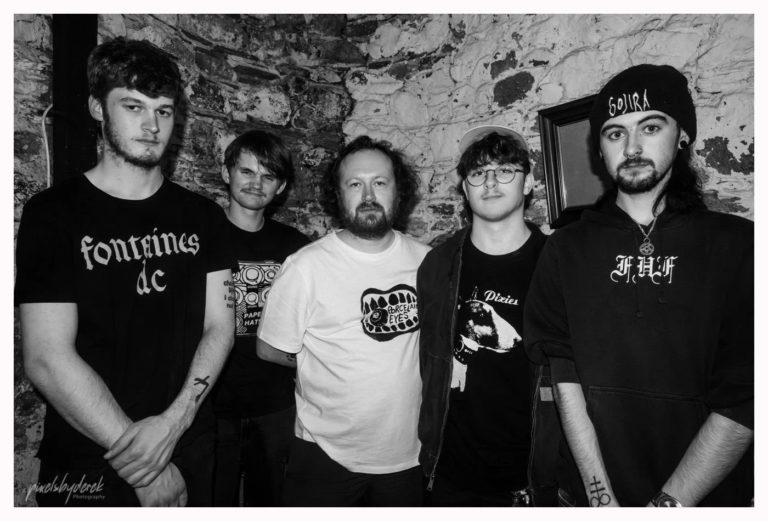
The collective operates without standard membership structures, thriving on collaboration and the distinct voice each player brings. Drawing from Sonic Youth, The Osees, Mogwai, Primal Scream, Shellac, and a healthy dose of David Lynch’s surrealism, their live shows combine somber atmospheric lows with cascading, almost soaring highs. ‘Sore Losers’ captures that same unpredictable energy on record.