


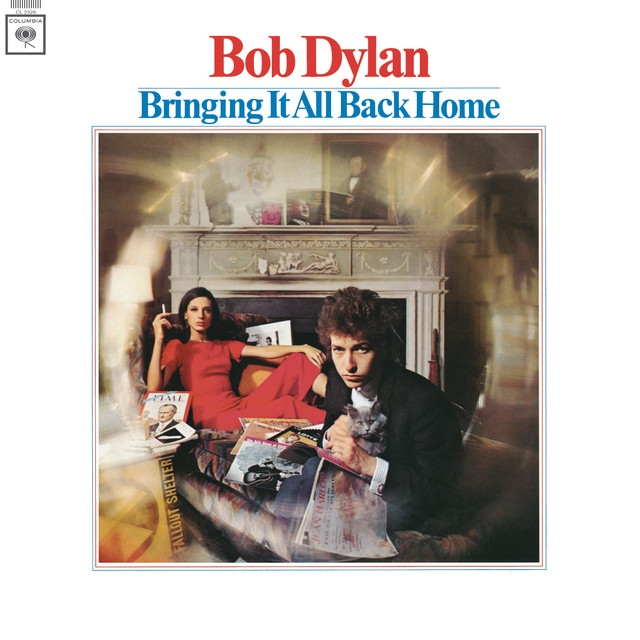
Few albums in rock history have shaken up the musical landscape quite like Bob Dylan’s Bringing It All Back Home. Released in 1965, this album marked Dylan’s electrified transition from folk prophet to rock and roll icon. The moment that first needle drop introduced “Subterranean Homesick Blues” to the world, nothing was ever the same. While fans know this album as the one that sparked controversy, divided audiences, and ultimately helped shape folk rock, there are still plenty of surprises hidden within its grooves. Here are five unknown facts about Bringing It All Back Home that might just make you hear it in a whole new way.
1. The Album Cover Is a Surreal Collage of Dylan’s Influences
The striking cover of Bringing It All Back Home isn’t just a random snapshot—it’s a carefully constructed statement. Photographed by Daniel Kramer, the image shows Dylan lounging with Sally Grossman (wife of his manager, Albert Grossman) in a room filled with significant artifacts. Among them? Records by Robert Johnson, Ravi Shankar, The Impressions, and Lotte Lenya, all of whom were crucial influences on Dylan’s evolving sound. A copy of Time magazine featuring President Lyndon B. Johnson sits nearby, hinting at Dylan’s ever-growing disillusionment with politics. And yes, that’s a fallout shelter sign in the background—a subtle nod to Cold War anxieties woven throughout the album’s lyrics.
2. Dylan’s Rock Transformation Was Inspired by The Beatles
In August 1964, Bob Dylan met The Beatles for the first time at New York’s Delmonico Hotel. Legend has it that Dylan introduced them to marijuana, but the encounter was just as pivotal for Dylan himself. Hearing John Lennon, Paul McCartney, George Harrison, and Ringo Starr talk about the power of electric music left a lasting impression. When Dylan returned to the studio months later, he brought a new vision—one that fused his lyrical depth with the electricity of rock. The result? Bringing It All Back Home—a record that would, in turn, inspire The Beatles’ transition from pop stars to psychedelic innovators on Rubber Soul and beyond.
3. “Subterranean Homesick Blues” Was Dylan’s First Music Video—Accidentally
Before MTV, before concept videos, before music visual storytelling became an industry standard, Dylan created what’s now considered one of the first-ever music videos. The promo film for “Subterranean Homesick Blues” features Dylan standing in an alley, flipping through cue cards with key lyrics as Allen Ginsberg lurks in the background. Directed by D.A. Pennebaker, the scene was originally intended as an opening sequence for Dont Look Back, but it became so iconic that it took on a life of its own. Artists from INXS to Weird Al Yankovic have since paid homage to Dylan’s casual-yet-revolutionary visual statement.
4. The Second Half of the Album Is a Farewell to Folk
Side A of Bringing It All Back Home rocks and rolls, but Side B is pure, haunting folk, featuring some of Dylan’s most poetic songwriting. Songs like “Mr. Tambourine Man,” “It’s All Over Now, Baby Blue,” and “Gates of Eden” signal a profound shift—not just in Dylan’s music, but in folk itself. The decision to keep these tracks acoustic while electrifying the rest of the record was deliberate, a final nod to his past before fully stepping into the future. By the time Dylan played “It’s All Over Now, Baby Blue” at the 1965 Newport Folk Festival after being booed for going electric, the message was clear: he was moving on, with or without the folk purists.
5. The Album’s Musicians Included Future Rock Icons
The studio musicians on Bringing It All Back Home weren’t just hired hands—they were future legends in their own right. Guitarist Bruce Langhorne, who played on many of the acoustic tracks, was so influential that Dylan later wrote “Mr. Tambourine Man” with him in mind. Meanwhile, members of the Hawks, later known as The Band, were already in Dylan’s orbit. Al Gorgoni, Kenny Rankin, and Paul Griffin, all of whom played on this album, would go on to be sought-after session musicians in the golden era of rock. A new era in American music was about to begin.
When Dylan unleashed Bringing It All Back Home in 1965, some cried betrayal while others embraced revolution. Today, it’s universally recognized as one of the most important albums in rock history. It laid the groundwork for Highway 61 Revisited and Blonde on Blonde, inspired countless artists, and redefined what a singer-songwriter could be. With its surreal lyrics, electric energy, and cultural defiance, Bringing It All Back Home still sounds just as bold, just as urgent, and just as alive as ever.