


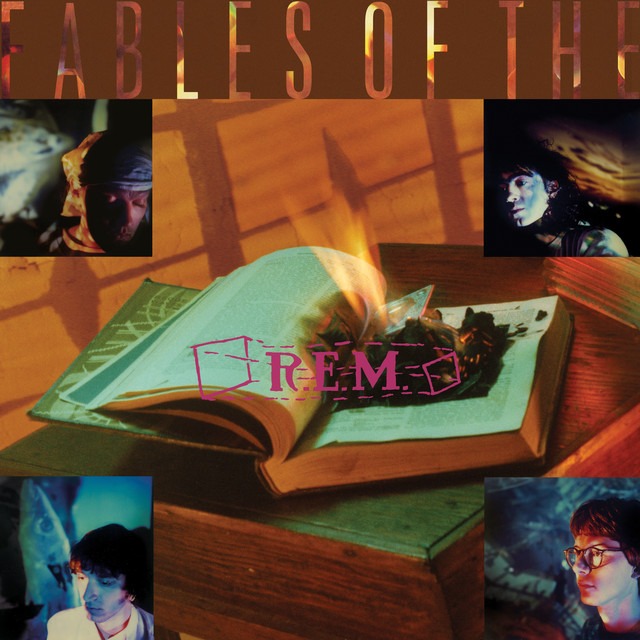
By 1985, R.E.M. had already helped define American indie rock—and then they veered left. Fables of the Reconstruction (or is it Reconstruction of the Fables?) saw the band leave their Athens, Georgia roots behind—physically, at least—recording in a rainy London studio with legendary folk producer Joe Boyd. What emerged was a dense, haunting, and surreal album that wrapped Southern Gothic storytelling in jangly guitars and ghostly murk. It was weird. It was brilliant. It was R.E.M. at their most evocative. Here are five things you might not know about this eerie masterpiece of oddball Americana.
1. The Title Reads Both Ways—And So Does the Cover
Is it Fables of the Reconstruction or Reconstruction of the Fables? Yes. The album’s packaging deliberately lists both titles, with each side of the record acting as a “front.” This mirrored the album’s lyrical obsession with duality: myth vs. memory, home vs. exile, truth vs. tale. In R.E.M.’s world, fables get twisted—and reconstructed.
2. The Band Wanted Van Dyke Parks, But Got Joe Boyd
Michael Stipe had his heart set on working with Van Dyke Parks, known for Jump! and his deep ties to American folklore. Instead, the band landed Joe Boyd—producer for Nick Drake and Fairport Convention. Boyd’s meticulous approach clashed with R.E.M.’s usual spontaneity, and the cold London weather didn’t help. Still, the resulting friction added depth and mood.
3. “Life and How to Live It” Was Based on a Real Eccentric’s Book
One of the album’s most energetic songs was inspired by Brivs Mekis, an Athens man who literally wrote the book on living—titled Life: How to Live. He built a house divided into two sides, living in one while writing about the other. After his death, hundreds of unsold copies were found. R.E.M. turned his peculiar life into art.
4. “Green Grow the Rushes” Was Written as a Pact With Natalie Merchant
Stipe and 10,000 Maniacs’ Natalie Merchant made a pact: both would write songs about the genocide of Native Americans. Merchant penned “Among the Americans”; Stipe delivered “Green Grow the Rushes.” Wrapped in Byrds-like harmonies, the song blends poetic protest with haunting beauty—a cornerstone of R.E.M.’s gift for subtle activism.
5. “Driver 8” Still Echoes—With Trains, Harmonica, and Homage
“Driver 8” might’ve missed the Hot 100, but it remains one of R.E.M.’s most iconic tracks. Its imagery of trains and Southern landscapes captures the record’s wandering spirit. Peter Buck later admitted he unintentionally recycled the chords for “Imitation of Life,” proving that even decades later, Fables keeps riding the rails through R.E.M.’s career.
From train whistles to shadowy dreamscapes, Fables of the Reconstruction is the sound of a band haunted by their roots and boldly exploring them at the same time. It’s eerie, poetic, and unshakably Southern—even when recorded in a gray London studio. Like a back porch story told at dusk, this album lingers long after the needle lifts.