


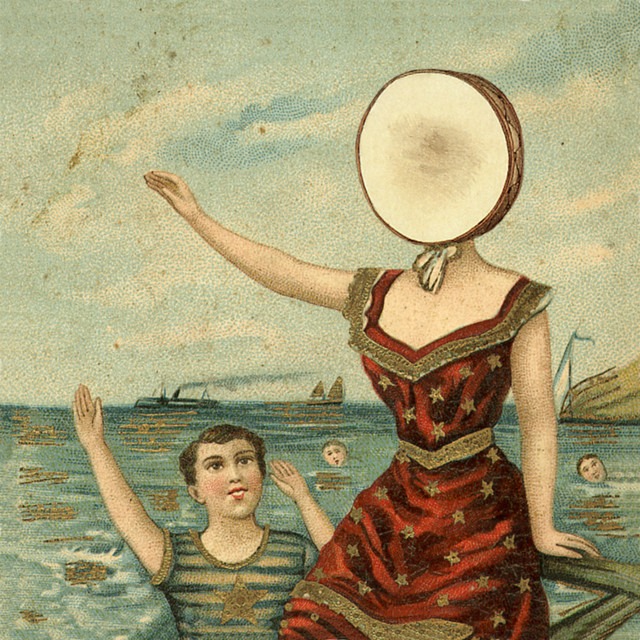
It came out quietly on February 10, 1998—just a little lo-fi album from a band with a long name and even longer dreams. But In the Aeroplane Over the Sea by Neutral Milk Hotel took its own strange, spiraling path to legend. Full of singing saws, surreal lyrics, and a sound that could melt cassette tape, it feels like a ghost story told from inside a dream—and it still inspires reverence in indie circles everywhere.
1. Anne Frank inspired dreams that felt real
After reading The Diary of a Young Girl, Jeff Mangum became deeply emotionally affected and began having recurring dreams. He imagined traveling back in time to rescue Anne Frank, and those vivid visions sparked songs like “Holland, 1945” and “Ghost.” Rather than tell her story directly, Mangum wove her memory into a swirling, symbolic universe of loss, longing, and love.
2. The drums were recorded in the kitchen
Pet Sounds Studio—aka a Denver house—turned every room into a sonic playground. Jeremy Barnes’ drums were tracked in the kitchen because it had the best natural reverb. Microphones were taped to walls and tucked into cabinets. The result is a raw, booming resonance that sounds like it’s echoing through a half-remembered memory.
3. The album cover started as a thrift-store postcard
The famous drum-faced woman floating at sea came from a vintage postcard Jeff Mangum picked up in a thrift store. Graphic designer Chris Bilheimer (who also worked with R.E.M.) modified it with surreal flair. He added dirt smudges, adjusted colors, and turned it into something out of a sepia-toned fever dream.
4. The singing saw wasn’t just background texture
Julian Koster didn’t play the saw as a novelty—he used it to express emotion the same way others might use vocals or strings. The eerie, wailing tones on tracks like “In the Aeroplane Over the Sea” and “Two-Headed Boy Pt. Two” came from real-time takes, recorded with care to preserve their ghostly shimmer.
5. The horn parts were written like sad symphonies
Producer Robert Schneider wrote the initial horn arrangements with a piano, favoring melancholy melodies. Then Scott Spillane added chaotic, celebratory layers, like circus marches on the verge of collapse. The combination gave the album its emotional whiplash—triumphant and mournful all at once.
In the Aeroplane Over the Sea has no secrets—it just whispers them in riddles and distortion. It’s an album that feels handcrafted and haunted, like something you might find in a box of forgotten letters. Every time you spin it, it opens a new trapdoor into someplace beautiful and bizarre. Turn it up. Let the saw sing. And don’t forget to breathe.