


Some albums light the way forward. Some hold the lantern to the past. Workingman’s Dead does both—while humming a melody that feels carved out of wood and river stone. Born in 1970 under pressure and starlight, it blends back-porch harmonies with cosmic cowboy storytelling. Put on your headphones and open your third ear. Here are 5 facts about Workingman’s Dead that shine like firelight on a mountain trail.
1. Jerry’s Steel Guitar Sparked a New Sound
While on tour in Boulder, Garcia found a pedal steel guitar that sang to him like an old friend. Its voice fit perfectly with the new songs taking shape—warm, rootsy, wide open. Tracks like “Dire Wolf” and “High Time” shimmer with its golden twang, as if the hills themselves joined the jam.
2. Crosby, Stills & Nash Gave Them a Harmony Awakening
Stephen Stills lived at Mickey Hart’s ranch for three months and brought some harmonic magic with him. Crosby and Nash joined in, opening Garcia and Weir’s eyes to the power of voices woven together. That revelation led to the layered beauty of “Uncle John’s Band” and beyond.
3. “Dire Wolf” Howled Its Way Out of Sherlock Holmes
After watching The Hound of the Baskervilles, Robert Hunter imagined the dire wolf as a mystical poker companion in a place called Fennario. Garcia wrote the melody the same day, and suddenly the folklore of Appalachia merged with a dreamlike American myth. “Don’t murder me” became a chant of cosmic survival.
4. Nine Days of Studio Alchemy
With legal trouble brewing and their manager’s trust evaporating, the Dead turned inward and upward. They recorded Workingman’s Dead in just nine days—fast, focused, full of life. Garcia called it “an upper,” and it became a healing ritual disguised as a folk-rock masterpiece.
5. The Album Cover Carries a Thousand Stories
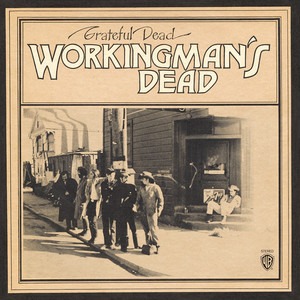
The photo was taken at 1199 Evans Avenue in San Francisco, but it could have been anywhere between 1870 and 1970. The sepia tones, the workingman’s stance, the mystical fog—they all mirror the songs inside. Mickey Hart said it best: it was time to trade the spacesuit for overalls and dig into the Earth.
Workingman’s Dead doesn’t float above—it walks beside you, telling stories, offering songs like sacred bread. It’s an album that invites you to gather ‘round, feel the harmony, and remember that even in the strangest of times, the music will always find its way home.
Meet you at the next chorus.