


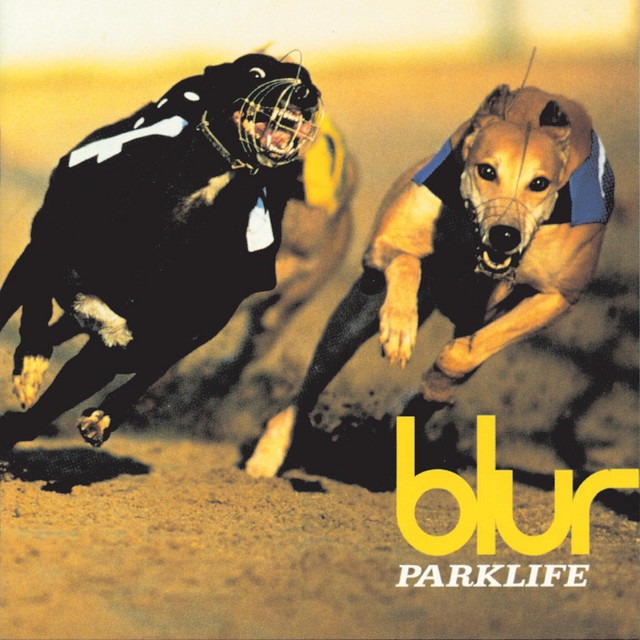
By 1994, Blur had tossed their suede jackets over the Britpop fence and marched full-speed into Parklife—an album pulsing with lager-laced poetry, sideways glances, and anthems for a new kind of Englishness. It’s a record that rolls its Rs, winks from behind oversized specs, and proudly walks the pavement between punk mischief and pop theatre.
It’s more than greyhounds and horn sections. Here are 5 facts about Parklife that pull back the curtain on this Britpop classic.
1. Parklife Nearly Had a Very Different Name and Look
Before the greyhounds, the track jackets, and the cockney charm, the album was nearly called London. The proposed cover? A fruit-and-veg cart. Damon Albarn was quick to bin the idea, opting instead for something more graphic, more working-day surreal. The final artwork—two dogs mid-race—captured the tempo and twitch of 90s Britain with perfect timing. Check out the cool Pet Shop Boys remix, too.
2. “Girls & Boys” Came Straight Outta Magaluf
Damon wrote the tune after a package holiday in Spain where the dance floors pulsed with gender-fluid hookups and sunburnt Brits. “Disco drums, nasty guitars and Duran Duran bass,” is how Alex James described it. Dave Rowntree didn’t even drum on it—he programmed it instead, then called it his favourite Blur song. Four notes. One universal groove.
3. “To the End” Was a French Cinema Moment on a Britpop Album
With its swooning strings and Laetitia Sadier’s haunting French vocals, “To the End” stepped out of Camden and into a smoky Parisian café. Unlike the rest of the album, it was produced by synth-pop legend Stephen Hague. Its cinematic swell offered a heart-on-sleeve contrast to the album’s more boisterous moments—proof that Blur could do poetry as well as pub banter.
4. Phil Daniels’ Involvement Was a Happy Accident
Daniels was originally brought in to read a poem for another track. That idea was scrapped, but Albarn offered him lead vocals on “Parklife” instead. Daniels agreed, cut the track in about 40 minutes, and opted for royalties over a fee. His spoken-word swagger added the perfect dose of character—and a bit of East End spice—to the band’s observational romp.
5. Blur Predicted Their Britpop Legacy Before It Happened
Way back in 1990—before Leisure, before Modern Life Is Rubbish—Albarn told a group of journalists that Blur’s third album would cement them as the quintessential English band of the ’90s. Fast-forward four years, and Parklife landed like a pint on the bar at last call: foamy, bold, and dead on arrival.
With Parklife, Damon Albarn turned the everyday into an art form, Graham Coxon played like a punk with a degree in jazz, and Phil Daniels made dog racing sound like Shakespeare. It’s a Mod album for modern minds. Put it on, grab a pint, and strut like you’ve got nowhere to be and everything to say.