


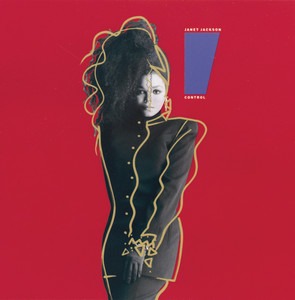
Released in 1986, Control marked a radical shift in Janet Jackson’s career and in the sound of contemporary pop and R&B. With Jimmy Jam and Terry Lewis at the helm, the album redefined what artistic independence could sound like, blending synthesizers, funk grooves, and confrontational lyrics into a confident, polished body of work. Beyond its commercial and critical success, Control is full of surprising decisions, defiant choices, and creative breakthroughs that shaped the music industry for years to come.
Here are five lesser-known facts that reveal the full scope of what went into Control.
1. The entire album was recorded far from Los Angeles—on purpose.
Jimmy Jam and Terry Lewis insisted that Control be made at their Minneapolis studio, not in Los Angeles, where Janet’s father Joseph could oversee the process. Their condition: no bodyguards, no family interference, and full creative control. This geographic separation allowed Jackson to shed the constraints of her past and focus entirely on developing her own voice—musically and personally.
2. Janet co-wrote and co-produced many of the tracks, despite being new to the process.
Though she had not taken creative control on her previous albums, Jackson was deeply involved in shaping Control. Jam and Lewis started by listening—spending their first week together simply talking with her. As she opened up, the songs evolved to reflect her real-life experiences, from personal loss to street harassment, with Janet stepping up to help compose arrangements and lyrics.
3. “Nasty” was inspired by a real incident that happened during recording.
While staying at a Minneapolis hotel, Jackson was confronted by a group of men who harassed her outside. Instead of seeking help, she stood her ground—an experience that directly fueled the attitude and lyrics of “Nasty.” The signature triplet swing rhythm was crafted by Jam on an Ensoniq Mirage, and the aggressive tone of the track became a defining influence on the emerging new jack swing sound.
4. “What Have You Done for Me Lately” was a last-minute addition.
Originally meant for Jam and Lewis’s own project, this song was added late in the recording process after A&M executive John McClain asked for one more uptempo track. The lyrics were rewritten to reflect Janet’s recent annulment from James DeBarge. It became the lead single and the perfect distillation of the album’s central theme: taking ownership of one’s voice, life, and choices.
5. The album cover was a visual declaration of independence.
Janet’s sharp, futuristic look—styled by illustrator Tony Viramontes—helped establish her as a fashion icon. With big hair, an all-black ensemble, and angular lines, the imagery was bold, modern, and entirely her own. For the first time, Janet wasn’t being styled as someone’s little sister—Control was her aesthetic, her message, her power.
Control reshaped not only Janet Jackson’s career but the landscape of pop and R&B itself. Its impact can still be felt in the way artists blend personal storytelling with electronic production and bold visual style. These hidden details highlight how Control was more than a musical statement—it was a blueprint for self-definition and artistic reinvention.