


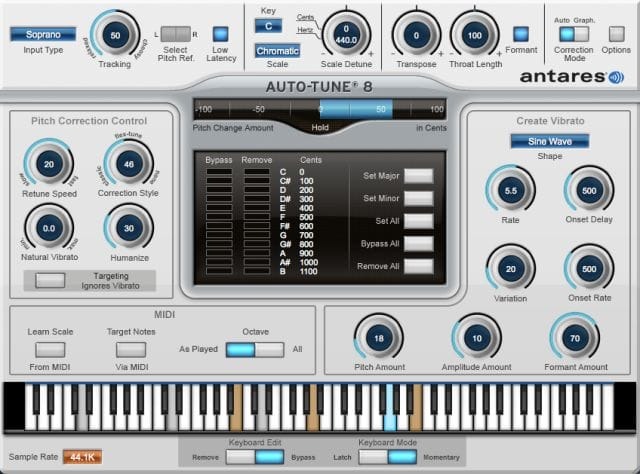
It started as a joke. In 1996, Andy Hildebrand, a former oil industry engineer turned music tech innovator, was told by a colleague’s wife she wished there was a way to sing perfectly in tune. Hildebrand, who knew his way around some heavy-duty math, went to work — and a year later, on September 19, 1997, Auto-Tune was born. Instead of a clunky vocoder or talk box, it used a smart autocorrelation algorithm to nudge wayward notes to the nearest perfect pitch. Studios loved it because it could quietly clean up vocal takes. Singers loved it because they could hit “record” without fearing that one bad note would ruin the magic.
But then came Cher. In 1998, she took a subtle studio tool and turned it into a pop culture earthquake. On “Believe,” producers cranked Auto-Tune’s retune speed to the max, slicing away all the natural slides between notes. The result? A robotic, futuristic vocal that sounded like nothing else on the radio. Fans thought it was a vocoder. Producers smirked. Labels panicked. Cher didn’t care — she told them they could take it out “over her dead body.” And so, the “Cher effect” was born.
From there, Auto-Tune became a part of the studio. Daft Punk made it sleek and shiny on “One More Time.” Radiohead made it eerie and alien on Amnesiac. Eiffel 65 rapped through it. Suddenly, the question wasn’t who used Auto-Tune — it was how they’d twist it next.
Enter T-Pain. By the mid-2000s, the Florida singer/rapper had taken Auto-Tune and wrapped an entire career around it. To him, it was an instrument. His voice became the hook, the melody, the glue that held songs like “Buy U a Drank” together. Everyone wanted the sound. Lil Wayne grabbed it for “Lollipop,” Snoop Dogg slid it into “Sexual Eruption,” Kanye West built a whole album (808s & Heartbreak) around it.
By the time the Black Eyed Peas hit #1 with “Boom Boom Pow” in 2009, Auto-Tune was the sound of the charts. Pop, hip-hop, R&B, country, raï, trap — every genre found a way to make it their own. Faith Hill, Shania Twain, and Tim McGraw quietly kept it in their live toolkit. Vince Gill, Trisha Yearwood, and Martina McBride proudly left it at home.
And it didn’t stop. Future and Young Thug bent Auto-Tune into the wavy, melodic heart of modern trap. Travis Scott, Lil Uzi Vert, and Playboi Carti followed, pushing it into stranger and more atmospheric territory. In North Africa, raï singers fused it with traditional rhythms. In clubs, DJs snapped it onto voices like another synth line.
Today, Auto-Tune is everywhere — and almost invisible. It’s in stadium anthems and bedroom demos, Grammy winners and TikTok hits. It’s still a safety net. It’s still a paintbrush. And, more than 25 years later, it’s still making people argue about whether it “ruined music” or just changed it forever. Andy Hildebrand probably just smiles. After all, it only took a math problem and a good joke to change the sound of the world.