


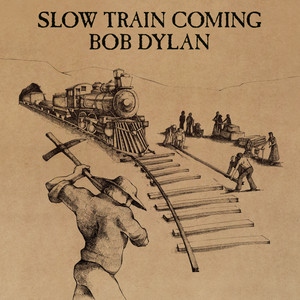
When Bob Dylan released Slow Train Coming in August 1979, he stood at a crossroads unlike any in his career. Fueled by a sudden religious awakening, the record fused gospel fire with Muscle Shoals groove, producing platinum sales and a Grammy-winning single. Beyond the headlines, the story of the album is full of fascinating details.
1. A Cross Sparked the Journey
At a San Diego concert in 1978, a fan tossed a silver cross onto the stage. Dylan pocketed it and later, in a Tucson hotel room, experienced what he described as a vision of Christ. That moment ignited the songs and spiritual urgency that became Slow Train Coming.
2. Dire Straits Meets Dylan
Mark Knopfler was invited after Dylan heard “Sultans of Swing.” The Dire Straits guitarist joined the Muscle Shoals sessions, adding clean, understated lines that wrapped Dylan’s new spiritual messages in sharp precision. His manager was surprised when every song turned out to be about God.
3. Jerry Wexler, the “Jewish Atheist,” at the Controls
Dylan chose legendary producer Jerry Wexler for the album’s big funk feel. Wexler joked about the irony of being asked to “get the Jesus sound,” but his deep soul pedigree gave the record its tight, polished Muscle Shoals backbone.
4. “When He Returns” Began as a Guide Vocal
Dylan originally planned for one of his backup singers to deliver the final track. After recording a guide vocal with Barry Beckett’s piano, Dylan reconsidered. He returned the next day, sang eight takes, and produced what critics call one of his most powerful studio performances.
5. Outtakes With Their Own Lives
Three songs didn’t make the final cut: “Trouble in Mind,” “Ain’t No Man Righteous,” and “Ye Shall Be Changed.” All resurfaced later, either on singles, compilations, or bootlegs, proving that Dylan’s Christian period was even more prolific than one album could contain.
Slow Train Coming combined Dylan’s newfound faith with Muscle Shoals muscle, gospel urgency, and some of the sharpest studio players of the era. With “Gotta Serve Somebody” leading the charge, it stands as one of Dylan’s boldest statements—an album that still shakes with conviction.