


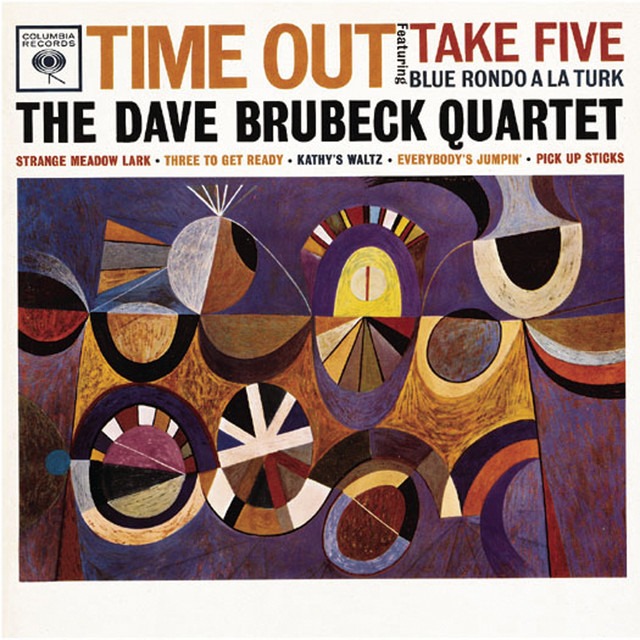
The Dave Brubeck Quartet shattered the conventional boundaries of jazz with the 1959 release of their landmark studio album ‘Time Out’. Inspired by rhythms Brubeck encountered during a State Department-sponsored tour of Eurasia, the record boldly experimented with unconventional time signatures like 9/8 and 5/4 that were previously unheard of in mainstream Western music. Despite initial skepticism from record executives, the album became a historic commercial triumph, becoming the first jazz LP to sell over one million copies. Its signature track, “Take Five,” redefined the cool jazz sound and proved that complex, intellectual arrangements could still capture the public’s imagination. This body of work is a factual testament to the power of cross-cultural inspiration and rhythmic innovation. Witnessing the transition from standard swing to these lopsided, hypnotic grooves remains a definitive highlight for any lover of American music history.
The Turkish Folk Inspiration
The album’s opening track, “Blue Rondo à la Turk,” was born from a direct observation Brubeck made while traveling through Turkey. He encountered a group of street musicians performing a traditional folk song in a rare 9/8 time signature, subdivided into an unusual 2+2+2+3 pattern. Brubeck was so captivated by the “short and long” zeybek rhythm that he adapted it for the quartet, creating a complex rhythmic structure that challenged the standard 4/4 swing of the era while playfully nodding to Mozart in the title.
A “Throwaway” Million-Seller
Despite its status as the biggest-selling jazz single of all time, “Take Five” was originally considered a “throwaway” track by its composer, saxophonist Paul Desmond. The piece was never intended to be a radio hit; rather, it was specifically written as a vehicle for a Joe Morello drum solo. Desmond nearly left out the melodic bridge that eventually became the song’s most recognizable hook, and he later expressed surprise that a song in such an odd meter could achieve such massive mainstream popularity.
Arduous Recording Struggles
Capturing the perfect “sexy” groove for “Take Five” was a factual battle in the studio. During the first recording session on June 25, 1959, the band struggled for over 40 minutes and failed more than 20 times because the members kept losing the unfamiliar 5/4 beat. Producer Teo Macero eventually suspended the session out of frustration. It wasn’t until a week later that the group finally settled into the “sitting in the groove” feel that was successfully captured in just two takes.
The “Gone with the Wind” Bargain
Columbia Records president Goddard Lieberson was initially very hesitant to underwrite an album as experimental as ‘Time Out’. He only agreed to release the project on the condition that the Brubeck Quartet first record a much more conventional album of traditional Southern songs titled ‘Gone with the Wind’. This professional bargain allowed Brubeck to pursue his creative vision, ultimately resulting in the first jazz album to reach number two on the Billboard charts.
Misspellings And Beatle Connections
The track “Kathy’s Waltz” was a factual tribute to Brubeck’s daughter, though her name was accidentally misspelled as “Kathy” instead of “Cathy” on the original release. Beyond the family connection, music critics have speculated that the song’s unique rhythmic ending later inspired Paul McCartney when writing the Beatles classic “All My Loving.” Both songs share remarkably similar rhythmic phrasing at the end of their melodies, highlighting the subtle influence Brubeck’s experiments had on the future of pop and rock.